
Commentary
Energies that Care for Life: How autonomous communities are shaping the energy transition in Colombia
Country:
Colombia,
Organisation:
Business and Human Rights Centre,
The discussion surrounding the phase-out of coal has once again taken centre stage in Colombia, within a context defined by the convergence of the climate crisis and geopolitical tensions. While extreme events including droughts, wildfires, and flooding intensify worldwide, disputes over energy resources and strategic territories continue to shape global politics. Control over such routes as the Strait of Hormuz—through which nearly one fifth of the world’s oil passes—highlights the persistence of a “fossil geopolitics” in which oil and gas remain decisive. This situation reflects a structural contradiction: although climate science warns of the urgent need to drastically reduce the extraction of fossil fuel to limit global warming to 1.5°C, the global energy system remains deeply dependent on these energy sources, and conflicts associated with energy security tend to reinforce that dependence.
In Colombia, this tension has taken on a unique dimension due to the country’s historical economic reliance on fossil fuel. The coal-producing regions near to the Caribbean Sea, especially La Guajira and Cesar, account for nearly 90% of national coal production, yet this has not translated into regional well-being: high levels of poverty, fragile labour markets, and low productive diversification persist. At the national level, oil rents accounted for approximately 8.4% of the government’s revenue in 2024, while oil and coal remain cornerstones of the export basket. In this context, moving away from coal is not merely a technological issue; it is a profoundly political question about how to transform an economic model anchored in fossil rents.
Rethinking Energy: Community energy in Colombia
There is still much debate over coal phase-out and its alternatives, as well as the limits and contradictions of the fossil model—including certain corporate transitions that reconfigure extractivism under new guises. Within this debate, it is necessary to broaden our understanding of what we mean by “energy,” where its social and political meaning is produced, and how to prevent reproducing the inequalities of the fossil model during the expansion of renewable energy. Within this framework, community energy (energy that is created by and run for the benefit of local communities) emerges as not only a technological alternative but also a way of reorganising the production, management, and use of energy based on territorial rooting, autonomy, and care.
Territorial experiences with community energy are shifting the debate towards energy justice, participation, and the construction of new socio-ecological horizons. These socio-ecological horizons are challenging the historical logic of dispossession, accumulation of resources, and territorial subordination that has structured the mining-energy model. They question the ways in which energy has been produced, governed, and appropriated under centralised and corporate regimes.
In different parts of Colombia, rural, Afro-descendant, and Indigenous communities, as well as organised urban groups, are testing concrete responses to these dilemmas. Far from waiting for centralised decisions, these processes build forms of energy autonomy linked to water management, food production, and stronger territorial economies. In these contexts, energy is no longer reduced to a technical input or a commodity; instead, it is understood as part of a web of social and ecological relationships linked to sustaining life and defending the territory.
It was precisely these initiatives that motivated a series of meetings and territorial tours involving social organisations and communities that are already building alternatives within their own territories. Between August and September 2025, the Fondo Socioambiental Emerger—a community philanthropy initiative aimed at strengthening autonomy, knowledge, and territorial capacities in the defence of life, territories, and common goods—organised “community autonomy tours” in different regions of the country.
Challenging Dominant Energy Narratives with Local Lessons
The first territorial tour took place in Antioquia. It began on the high slopes of Medellín, in the community of El Pacífico, where a community aqueduct, urban gardens, and a risk management system have been built. A community energy park initiative is also underway, which features a micro-hydroelectric plant that is designed to respond to emergencies, such as grid disconnection, and strengthen neighbourhood autonomy. In a territory historically marginalised by institutions, this experience is summarised in a motto that expresses a particular form of political engagement with the state: “with the state, without the state, and in spite of the state.”
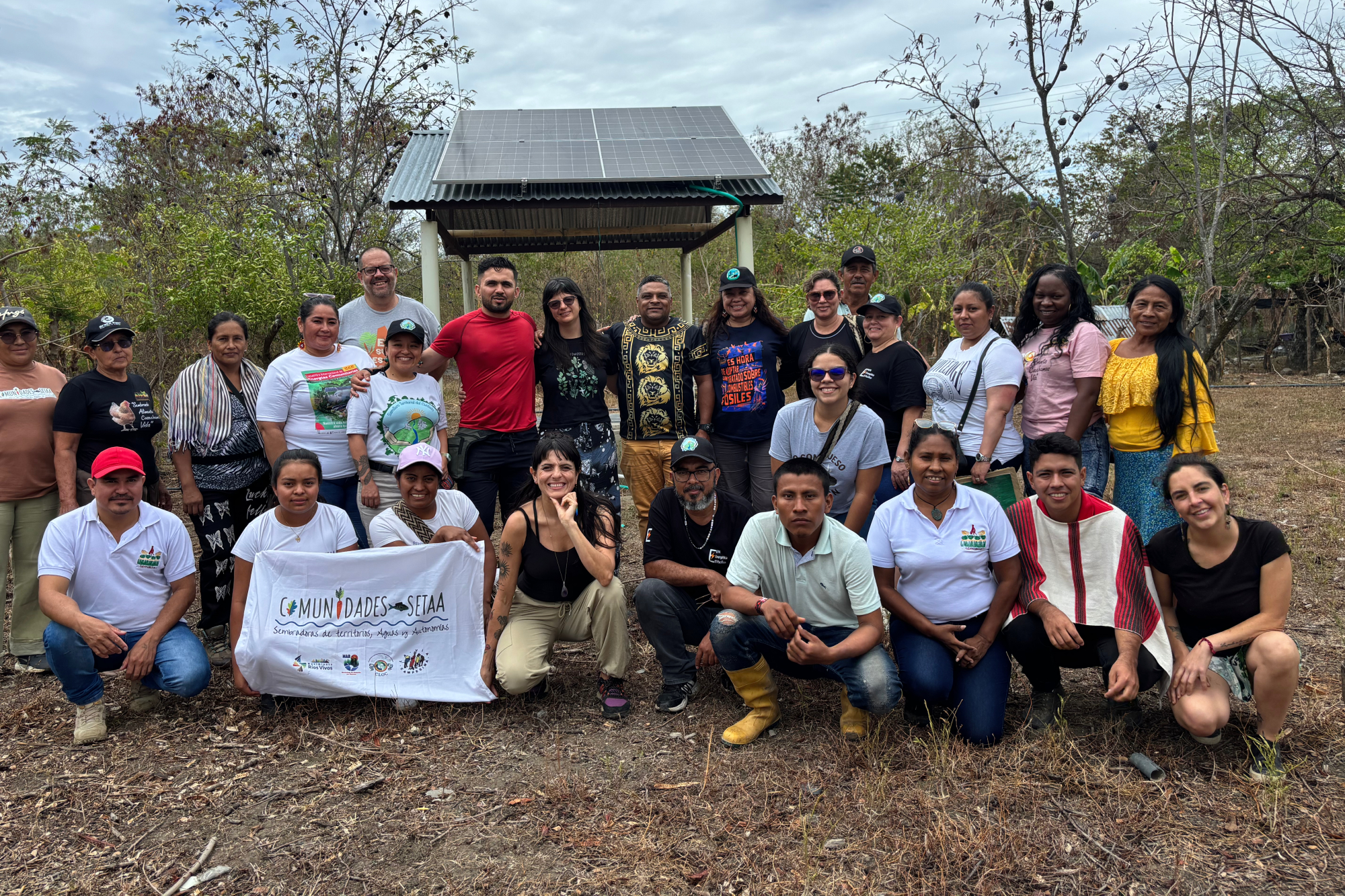
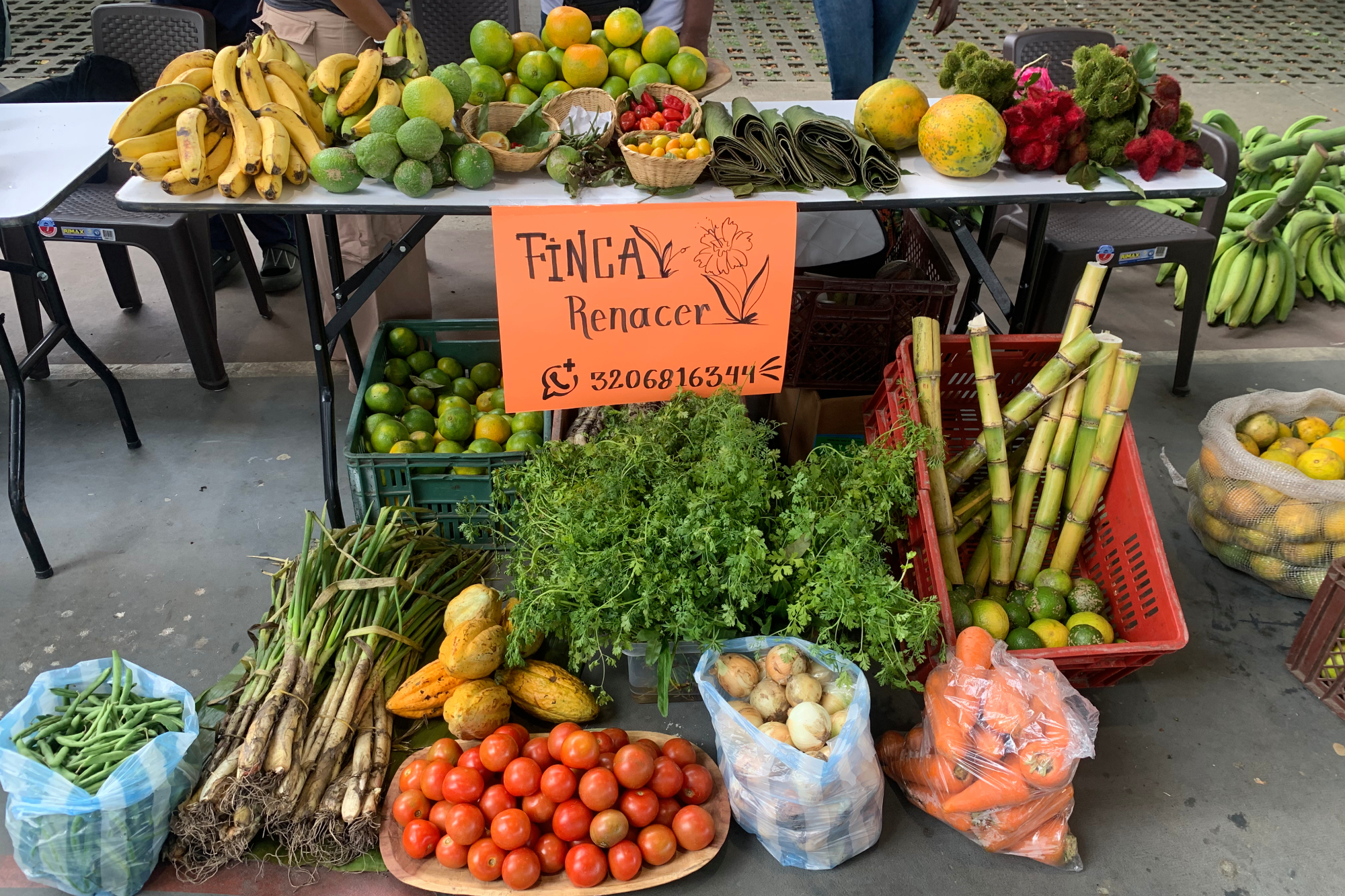
In the rural areas of Eastern Antioquia, processes such as Comunidades Seeta (Sowers of Territories, Waters, and Autonomies) have developed an environmental pedagogy based on “harvesting energy,” which builds on biodigesters, efficient stoves, agroecological gardens, solar panels, and rainwater harvesting systems. These practices integrate appropriate technologies with farmers’ knowledge and popular environmental education processes, involving children and young people through schools. In this context, they broaden the understanding of energy by linking it to water cycles, food production, and the daily reproduction of life in territories strained by hydroelectric expansion, pressure on water sources, and the dynamics of urbanisation and land speculation.
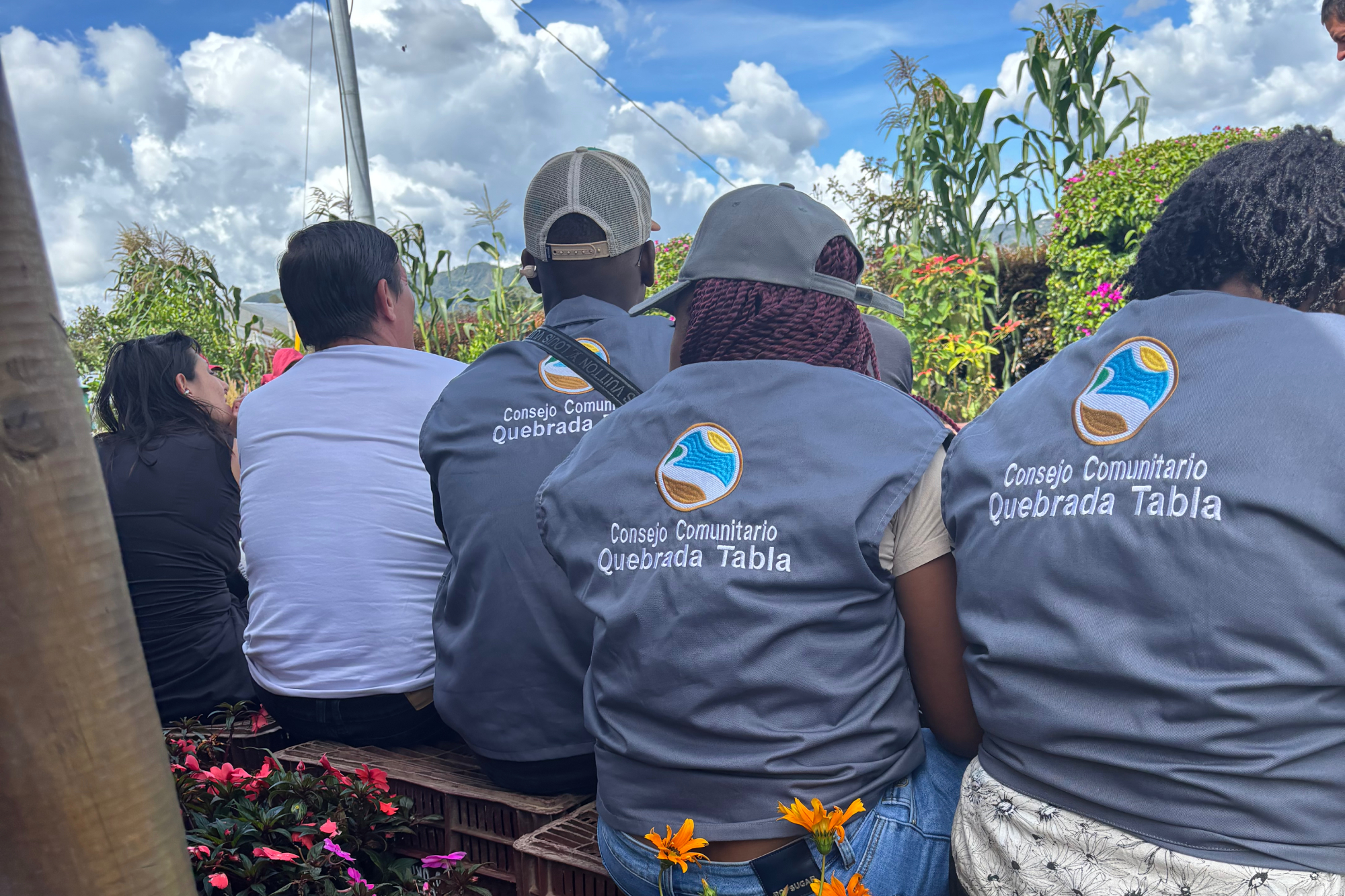
The second tour took place in the departments of Northern Cauca and Southern Tolima. These territories have been deeply affected by the agro-industrial sugar cane model, which is characterised by land concentration (when a small number of people and organisations own a large area of land), intensive water use, the application of agrochemicals, and crop burning, with significant impacts on health, ecosystems, and local ways of life. In the Villa Rica settlement, the Consejo Comunitario Quebrada Tabla, which defends the rights of Black communities, has consolidated community water management systems through collective wells, strengthening territorial governance. Their maintenance through tongas, or communal work parties, reinforces cooperation and collective control of the territory in the face of pressure from monocultures.
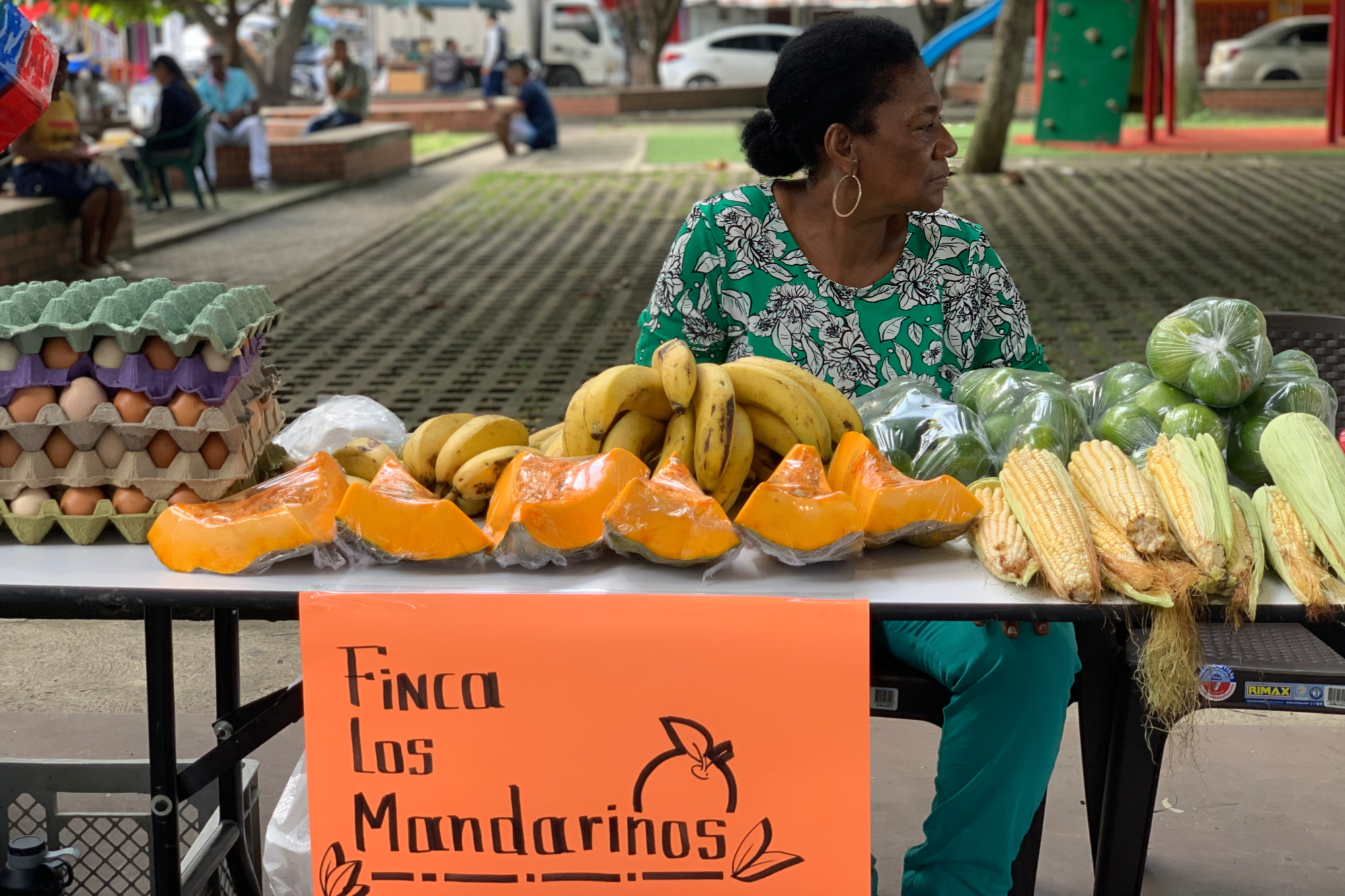
In Natagaima, Tolima, the Coosaviaunidos cooperative has promoted social economy, agroecology, and energy technologies including biodigesters, solar pumping, and efficient stoves. In this region, also affected by the expansion of monocultures, the cooperative promotes community-scale solutions that strengthen the following: food sovereignty; the cooperative model of savings and credit; autonomous land management; and productive diversification.
Taken together, these experiences add nourishment to the discussion on energy transition by providing real examples of concrete practices where forms of production, decision-making, and distribution do not necessarily respond to the dominant logic of the energy sector.
Socio-Environmental Safeguards for a Just Energy Transition
From these meetings emerged a collective proposal entitled Socio-environmental Safeguards for a Just Energy Transition, which is aimed at preventing the inequalities entrenched by the fossil model from being reproduced during the expansion of renewable energy. The safeguards are intended to serve as an instrument to strengthen and protect rights and common goods within the context of development and energy transition projects.
Currently, these safeguards function as a non-binding framework and have yet to be formally institutionalised. Their value lies in the fact that they are born from community processes, territorial tours, and regional exchanges that seek to guide the energy transition based on criteria of socio-ecological justice, territorial defence, and human rights. Their main purpose is to offer a political and technical framework to demand effective participation, reparation, redistribution, and protection of common goods. The biggest risk is that, if the safeguards are not adopted and used directly by communities, they will end up as mere principles of good intention or empty rhetoric without the capacity to transform power relations. Therefore, rather than substituting territorial struggles, the safeguards must strengthen community agency and recognise decades of resistance and “re-existence.”
The safeguard proposal can be summarised in five principles:
- Community energy and territorial sovereignty: Recognising and strengthening community energy—water, sun, hearth, gardens, and collective gatherings—as a basis for autonomy, caring for life, and collective management of common goods.
- Binding, intergenerational, rights-based participation: Guaranteeing the effective participation of communities, children, young people, elderly people, women, and diverse groups in all phases of projects, including consultation beforehand and Free, Prior, and Informed Consent (FPIC) where applicable.
- Popular socio-ecological transition: Promoting a transition built from below, which overcomes extractivism and understands life as a network of relationships between territory, water, food, energy, memory, and care.
- Reparation, restorative justice, and protection of the web of life: Recognising and repairing the socio-environmental liabilities of the fossil model and applying precautionary criteria to new technologies, critical minerals, and large-scale projects.
- Energy democratisation and community control: Redistributing benefits, decentralising decision-making, strengthening community oversight, and ensuring independent licensing free from corporate capture.
These safeguards also represent a conceptual shift that seeks to understand energy not as a commodity, but as a common good alongside water, food systems, care, and territorial economies. This process was enriched by exchanges with organisations in Chile and Brazil, where communities have similarly organised and proposed safeguards to confront the inequalities and limited participation associated with large-scale renewable energy projects.
These experiences show that the energy transition is a contested field: it can contribute to tackling the climate crisis and opening sustainable socio-ecological pathways, or it can reproduce extractivism in new forms under the guise of sustainability. In the face of this risk, territorial initiatives show that there are already alternatives based on self-management, cooperation, and the care of common goods. Far from being marginal experiences, they constitute attainable horizons for reconfiguring the meaning of energy and advancing towards a truly just transition.
Isabel Preciado is an anthropologist, holder of a master’s degree in critical development studies, and a researcher at the Centre for Business and Human Rights. She works on energy transition, extractivism, community alternatives, and carbon markets from the perspectives of political ecology, ecofeminism, and socio-ecological justice.
Related Posts
Stay Informed and Engaged
Subscribe to the Just Energy Transition in Coal Regions Knowledge Hub Newsletter
Receive updates on just energy transition news, insights, knowledge, and events directly in your inbox.