
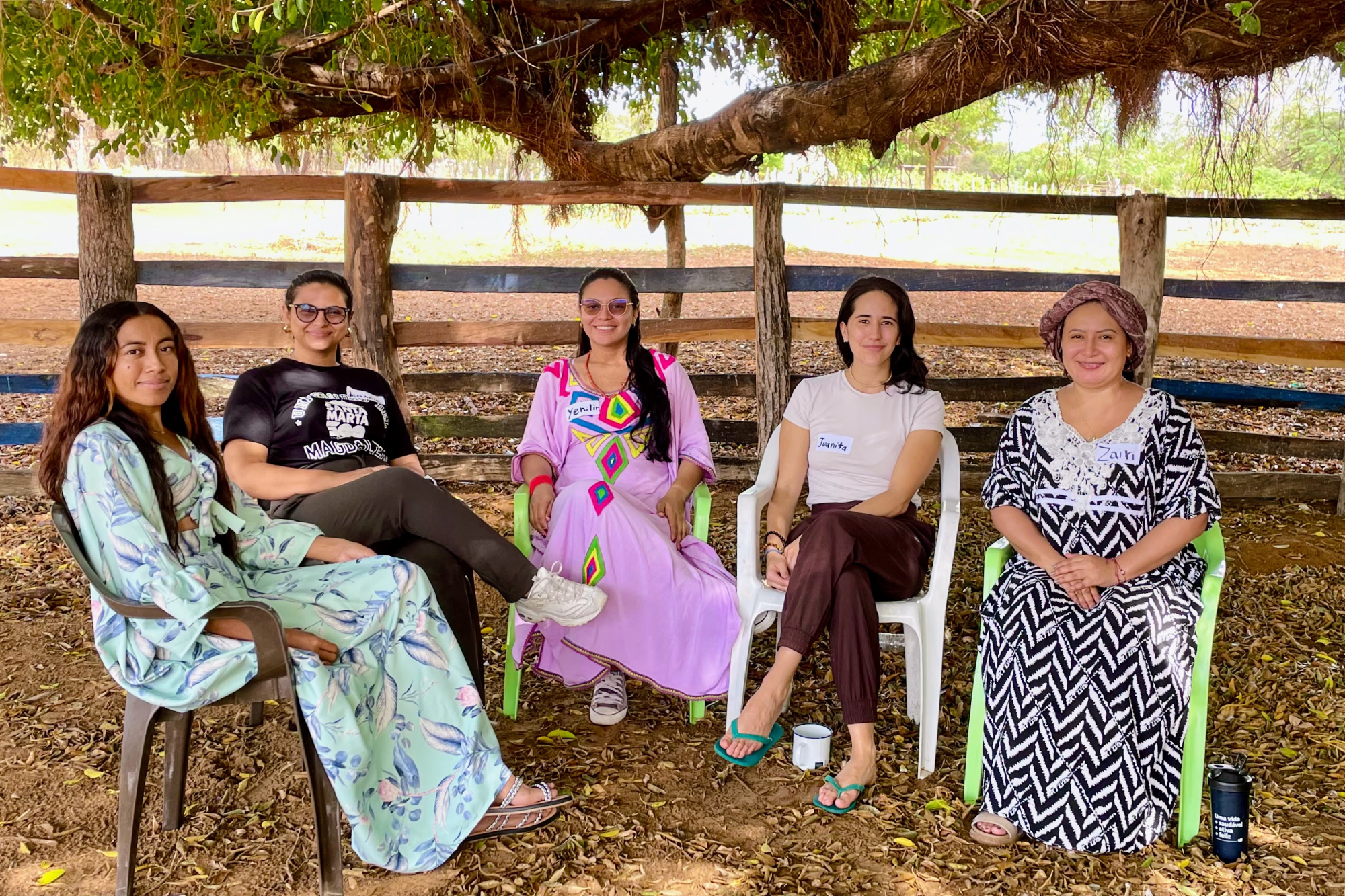
Sol Viviana Zapata (second from left) and Juanita Fonseca (second from right).
In Colombia, the concept of energy communities has quickly become a flagship idea for democratising the energy transition. But in many territories, especially non-interconnected zones (regions not served by the country’s national electricity grid), communities are prioritised by the government for solar programmes without clear timelines, sustained support during the initiative’s lifespan, or institutional clarity needed to provide a reliable service. So what happens when a community with decades of lived experience running its own energy utility sits down—on the community’s own territory—with Indigenous Wayuu leaders who are just beginning that journey?
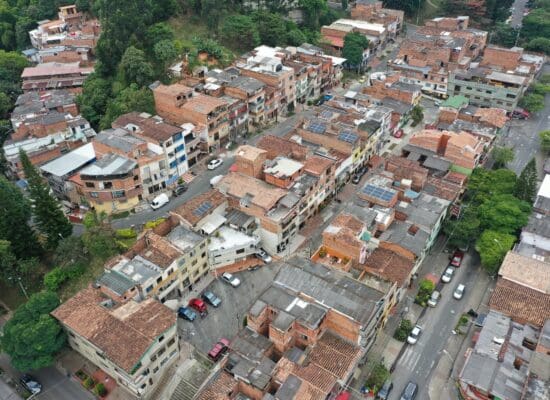
In this conversation, Sol Viviana Zapata, administrator of ElectroPalmor (an energy community built around a 245-kW hydroelectric plan) and Juanita Fonseca, co-founder of Seyba (a non-governmental organisation [NGO] that supports community-based energy projects with a focus on women’s leadership and territorial organisations) reflect on a three-day, in-person exchange with the Wayuu community of Tekia. Their reflections offer a grounded lesson: sustainable energy communities are built less on technological solutions than on governance, financial planning, leadership, and long-term support.
ElectroPalmor is recognised today in the context of energy communities, but the story goes back much further. How did it come about?
Sol Viviana Zapata: I always emphasise that this project is becoming visible now because of the energy community agenda. But the truth is that its roots go back more than three decades. Thanks to the enormous efforts of our leaders at that time, we have the opportunity to receive recognition today—and that comes with a responsibility. We’re in a different era now: the community is growing, and realities are changing. The challenge is to maintain the legacy that those leaders left us.
What is ElectroPalmor, how does it function today, and what is your role?
Sol Viviana Zapata: The story goes back to 1985; the project was led by a community leader, who put body and soul into making it happen. Many people didn’t believe it could work—community-based energy projects are not easy. At that time, we were a community of around 120 families. Over time, the structure evolved. In 2016, ElectroPalmor obtained legal status and became a non-profit association made up of community members.
We have a governance model where a board of directors representing the community is the highest authority. I took on the leadership and administration of ElectroPalmor in 2022, around the time when the national conversation on energy communities began to grow.
Back then, the organisation had four employees. Today we have nine people. We have operators for the powerhouse and the local power network; people in charge of metering and billing; and an environmental and social coordinator who covers everything from occupational risk to waste management. We also now have a permanent accountant.
We serve affordable electricity to around 680 consumers, including around 100 coffee-farm users who pulp coffee, and about six “industrial” users, who use coffee-drying silos, which demand the most energy.
What do you see as the central challenge for new energy communities?
Sol Viviana Zapata: One of the biggest lessons is related to finance. Communities need to budget for depreciation and investment. Many communities don’t do it—not because they don’t care, but because of day-to-day pressure, because they want to keep consumer costs down, or because there’s no routine planning for replacing worn parts. But equipment depreciates, communities grow, and energy demand increases with technology. If you don’t plan, you reach the point where a key component fails and there’s no money for replacing it.
There’s another key point: the community is not just a “beneficiary”. It is, or should be, an owner with responsibilities. In our case, the project also had community co-financing early on. Our leaders contributed 10% of the project value, supported by a loan from a local bank. That changes the mindset: yes, we want affordable electricity, but we must also sustain the service over time.
How did the idea of bringing ElectroPalmor‘s experience to Tekia emerge?
Juanita Fonseca: From my perspective, the key word is information. Information is power. When we started working through Seyba, we asked what was missing for community energy projects to be sustainable. We concluded that it wasn’t just technical training—it was also access to information and to real-life examples.
It doesn’t help for someone like me—a lawyer from a big city—to explain leadership or community enterprise. Instead, having a case that’s closer to home, such as ElectroPalmor, is powerful because it proves what is possible. Seyba’s role in this work was to facilitate the peer-to-peer engagement between ElectroPalmor and Tekia.
We chose Tekia because we were looking for a community with at least some governance already in place, as we know how crucial that first step is. Tekia was also prioritised under the government’s energy communities strategy, but like many communities, they were still waiting, without clear answers or resources. We wanted to understand their expectations: what did they understand by “energy community”? Tekia is also in the zone of influence of the Cerrejón coal mine, with community members connected to mining livelihoods. And unlike other places where labour reconversion strategies are already emerging, no structured transition initiatives existed in that immediate context yet. That made it both urgent and strategic.
Can you describe the approach Seyba is taking to support energy communities?
Juanita Fonseca: At Seyba, we don’t believe in one-off training courses like how to clean solar panels, for example. The work must happen over time and must include legal, financial, leadership, communications, and technical skills.
Our model is to train, support, and connect. Support means the community isn’t left to its own devices after a weekend workshop. Communities need someone to call when they face basic governance and rights questions: how to budget, how to amortise, what legal tools are available, and what to do if institutions don’t respond. Connect means using networks, pro bono legal support, proposal-writing support, bilingual capacity, and mobilising capital so communities co-design from the start instead of receiving a donation they don’t know how to manage.

What’s special about Tekia as a community?
Juanita Fonseca: Tekia is an organised community with a legal status and visible leaders. It has around 400 inhabitants from roughly 50 families. The community has access to water, and they cultivate some food for their own consumption. Regarding energy, they have individual solar panels received as a donation, but the energy those panels provide isn’t enough for everything. The community also has experience working with different institutions, such as the University of Magdalena, various NGOs, and the Ministry of Mines and Energy. Yenilin Lubo Bonivento, Tekia’s leader, is 28 years old and is well respected across the community.
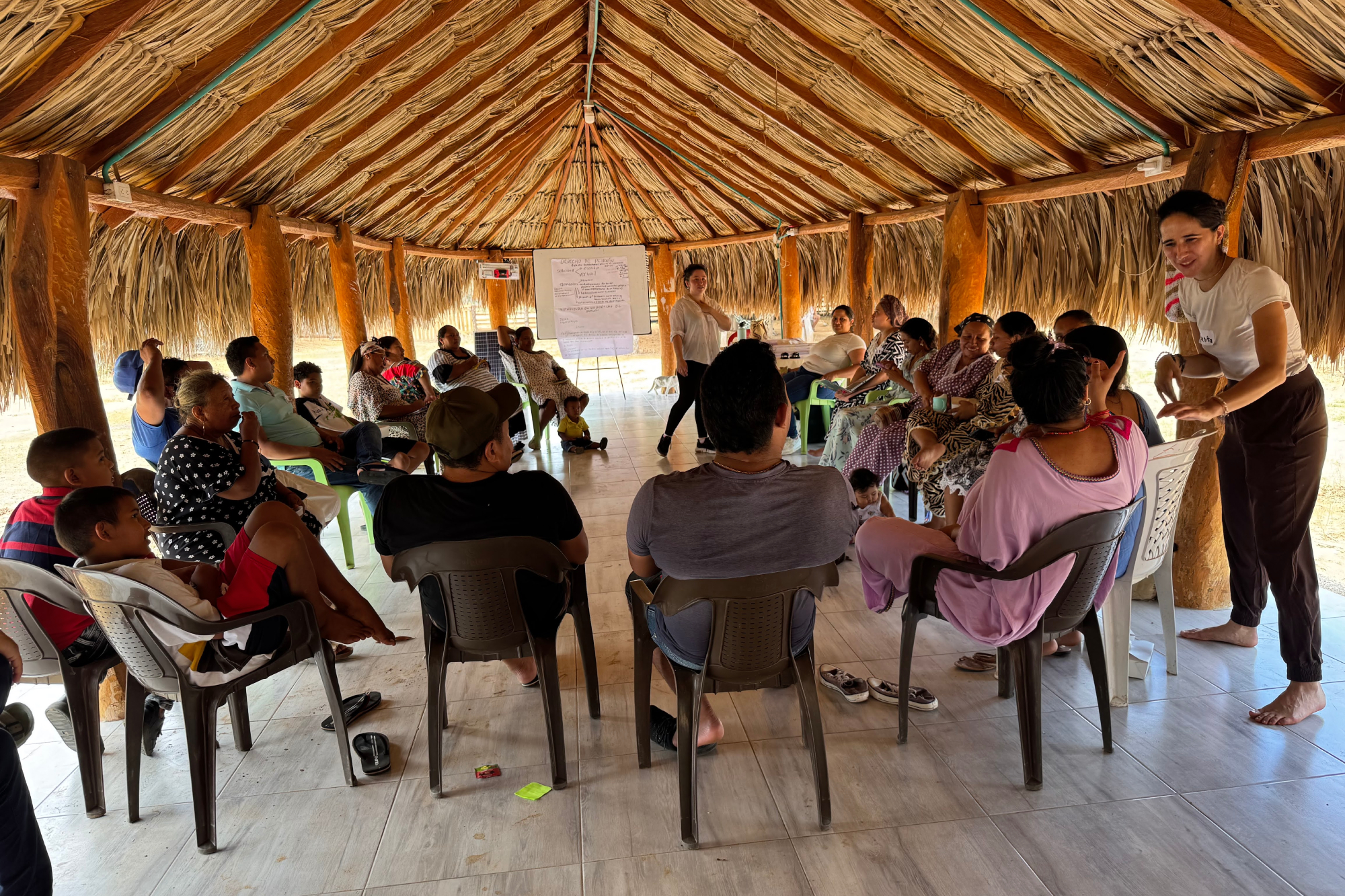
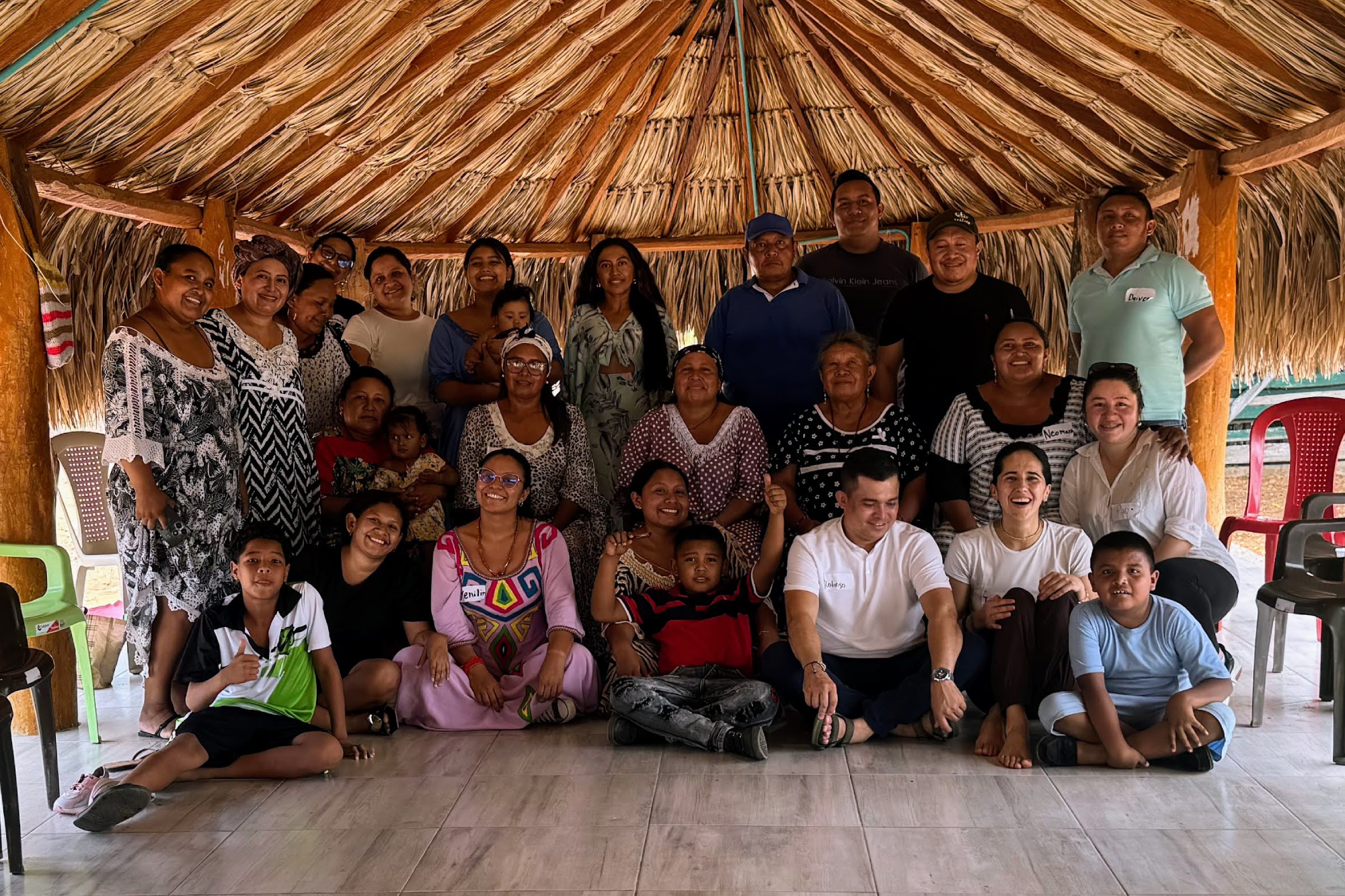
We learned a lot of relevant cultural lessons. For example, if you are designing a women’s leadership space in this context, you must plan a space for children. Women do not attend meetings without their children—this is cultural practice, and it must be respected. We were able to adapt because we brought materials that children could use, and one team member improvised activities for them.
How did you design the workshop? What did you decide was essential to bring from ElectroPalmor?
Sol Viviana Zapata: We worked three in-person days, plus multiple virtual sessions beforehand—especially with Yenilin. At the end, we produced and delivered booklets compiling contributions from each facilitator so the community would have something lasting. We had around 30 participants, more women than men, including young people and older adults. We didn’t read from a poster but looked at real-life cases, and the sessions were dynamic, with breaks and food—so the long days could flow.
We structured the days as a set of sessions led by different team members from ElectroPalmor and Seyba according to experience. We started with women’s leadership—because in many territories, leadership is still assumed to belong to men. ElectroPalmor has also lived that reality. We discussed how inclusion begins, what role men can play, and how this is not about gender as a confrontation; it’s about capacities. In my case, the men in my community were fundamental in supporting me to take on my role. We then discussed how to make decisions democratically—with transparency, open meetings, and legitimate elections.
The participants from the Tekia community asked many legal questions in particular: about how the structure works, how we have sustained the project for 34 years, and what mistakes have taught us, especially about depreciation and investment. And it truly was an exchange. They opened their homes to us. We slept in their space—my first time sleeping in a chinchorro (a traditional Wayuu hammock). They welcomed us through rituals and a bonfire space for storytelling, and they closed with a traditional dance that they hadn’t done in a long time. Trust went both ways.
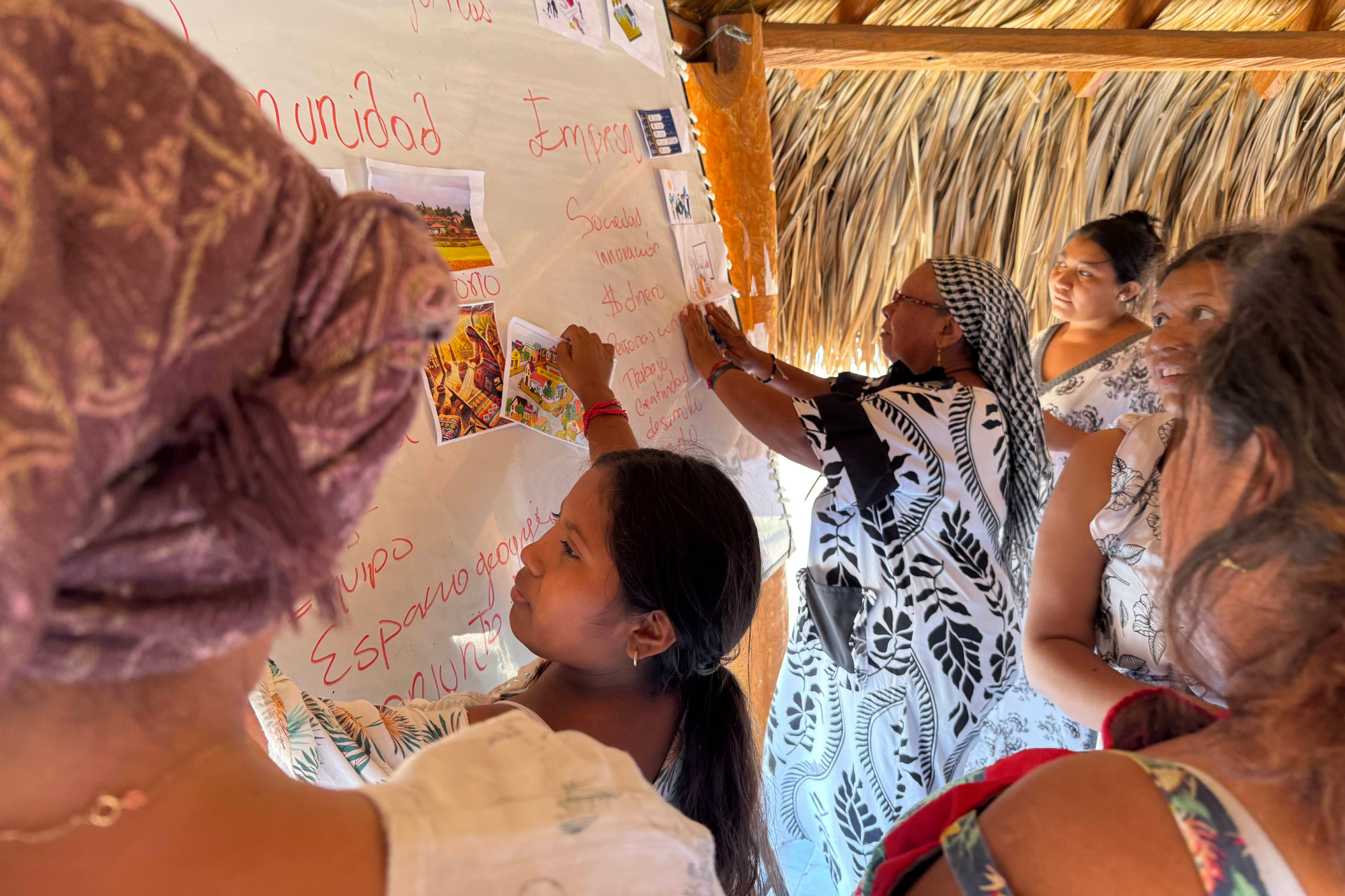
Juanita Fonseca: We intentionally combined general topics with what could be “landed” in Tekia. The arc was: women’s leadership; what an energy community is; basic reference to regulation; leadership and concepts like territorial leadership and climate justice; spokespersonship and communication—how telling your story can unlock resources; transition and livelihoods; and practical legal tools, such as what a right of petition is, what happens if the state doesn’t respond, and when a writ of tutela (a rapid legal mechanism in Colombia that allows anyone to seek immediate judicial protection for fundamental rights) applies.
We also worked through more basic everyday energy literacy: how to read an electricity bill, what energy efficiency means, and practical appliance use. And it’s important to say that this was in person. That comes with a cost, but the impact is visible. People in their own territory feel safe and respected. It changes everything—who speaks, who opens up, and how trust forms.
What did you observe in participants’ reactions?
Juanita Fonseca: Seeing even children taking notes was powerful. At the end of each day, we asked for reflections. Women who were initially shy began to speak with confidence, referring to their notes.
There was one moment in particular that struck me. A woman stood up and said: “I learned that I am the water leader.” She had been shy at first. But she named her role and responsibilities, including organising water collection logistics, hoses, and distribution—and the community applauded her. It planted a seed: everyone is an agent of change.
Sol Viviana Zapata: Another important moment came from a young man. In a session on women’s leadership, he shared that he didn’t feel considered to be a leader because he is seen as too young—he’s about 21 years old and a university student. That expanded our understanding that inclusion isn’t just about women; it’s about ensuring that young people are recognised too. He found space to speak, and that mattered.
What should the energy community agenda take from this?
Sol Viviana Zapata: These projects should not solely centre around the technical equipment generating electricity. A person can learn how to maintain panels, but sustainability depends on administrative and financial decisions. Communities need trained roles and structures to keep projects alive over time.
Juanita Fonseca: My call is about resourcing what works. This is a small glimpse of what is possible if more funding is mobilised towards initiatives working systematically in such territories—building trust and strengthening capabilities over time. We have the intention and the hands to do the work. The constraint is getting the required funding to do it.
Photos by Paola Pulido from Seyba and Jeannie Carolina Sánchez from the University of Magdalena.
Related Posts
Stay Informed and Engaged
Subscribe to the Just Energy Transition in Coal Regions Knowledge Hub Newsletter
Receive updates on just energy transition news, insights, knowledge, and events directly in your inbox.