
The global energy transition will have economic and social effects on coal regions, putting local livelihoods at risk while also offering opportunities for sustainable and low-carbon development.
In the case of Colombia, the regions of Cesar and La Guajira present deep complexities that cannot be ignored in the design and implementation of a truly just energy transition. Community dynamics, their histories, and forms of community organisation directly influence how this process is lived, interpreted, and appropriated.
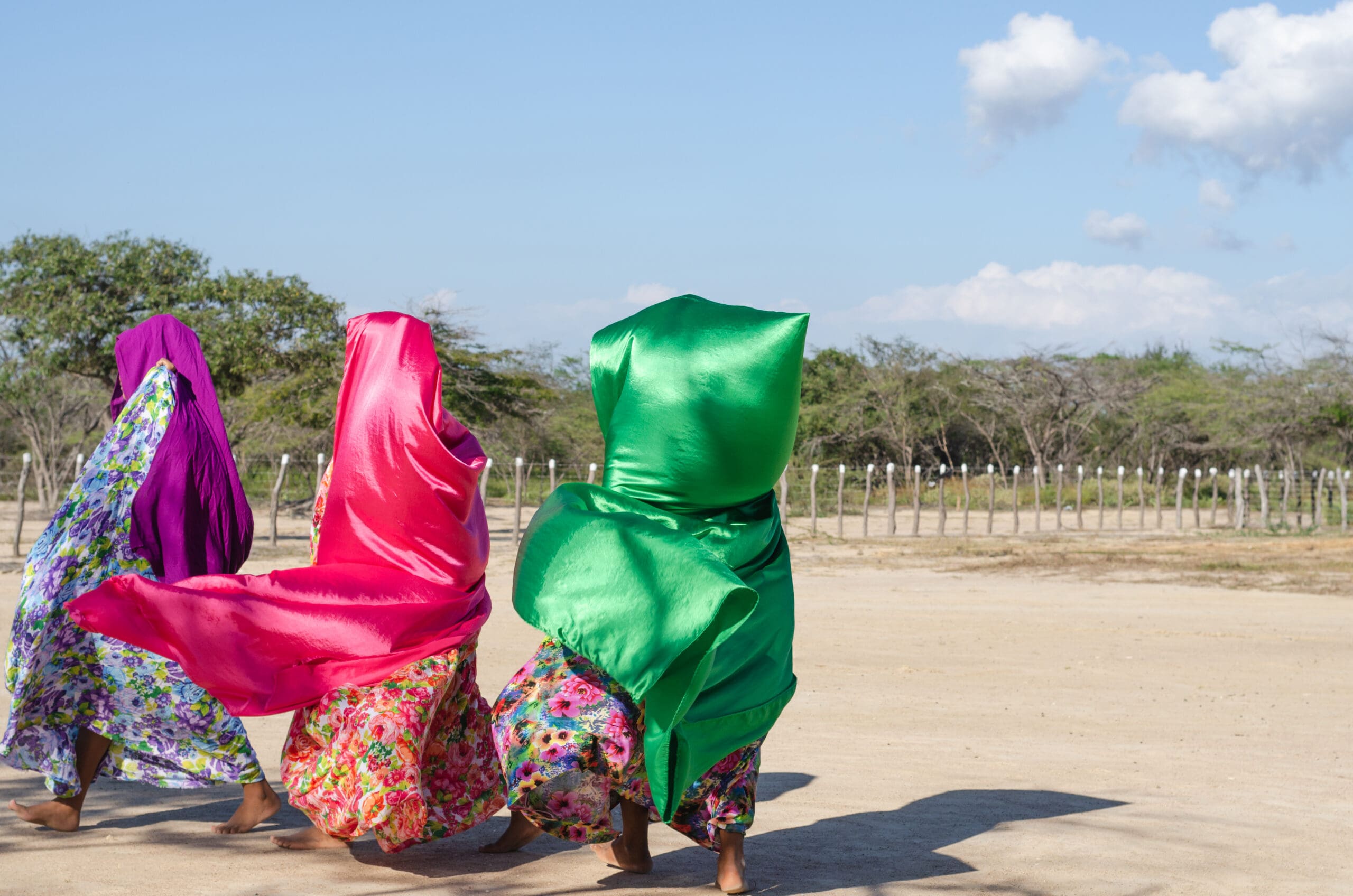
In La Guajira, community life is integrated with cultural systems, where women serve as guardians of memory, lineage, and the spiritual identity of the territory. Their leadership, often not formalised, is revealed through the spoken word, weaving, community mediation, and the transmission of knowledge. These responsibilities limit women’s access to formal education, political participation, and economic independence. Even so, many Wayuu women are transforming these roles, assuming leadership positions from their cultural identity and actively participating in processes related to the energy transition in their communities.
In communities along the mining corridor of Cesar, women have been key figures in the processes of memory, justice, and reconstructing the social fabric after decades of large-scale mining. They have brought to light the socio-environmental impacts, called for reparations, and promoted productive alternatives that contribute to an energy transition rooted in social justice and territorial equity.
Through the Innovation Regions for a Just Energy Transition (IKI JET) project, the Deutsche Gesellschaft für Internationale Zusammenarbeit (GIZ) GmbH team in Colombia has compiled territorial experiences, reflections, and lessons learned from its engagement with communities to support a just energy transition and the creation of energy communities. The purpose of this document is to improve our understanding of the role played by women and Indigenous Peoples in the just energy transition in Cesar and La Guajira. These territories have long been highly dependent on the mining sector, especially coal, the dynamics of which directly and indirectly affect their communities.
Territorial Experiences in Cesar and La Guajira
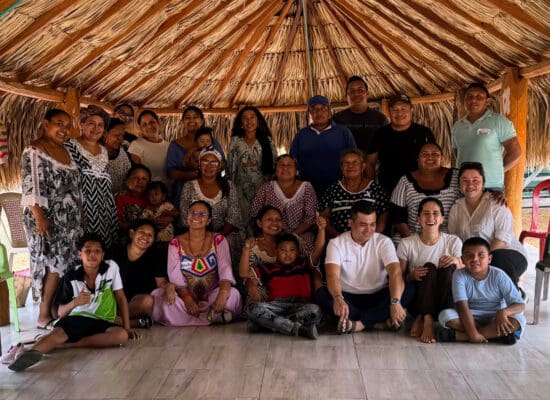
Throughout more than a year of spending time in affected communities, it was evidenced that women’s participation does not depend exclusively on holding formal positions; rather, it relies on the leadership that emerges from community recognition, traditional knowledge, and social relationships. Identifying these forms of leadership, sometimes invisible to external actors, was one of the main challenges of the support process.
In one of the communities, the daughter of the traditional authority figure assumed key roles in decision-making, despite not holding an official position. This form of leadership, based on internal trust and knowledge of the territory, was essential for the progress of the process.
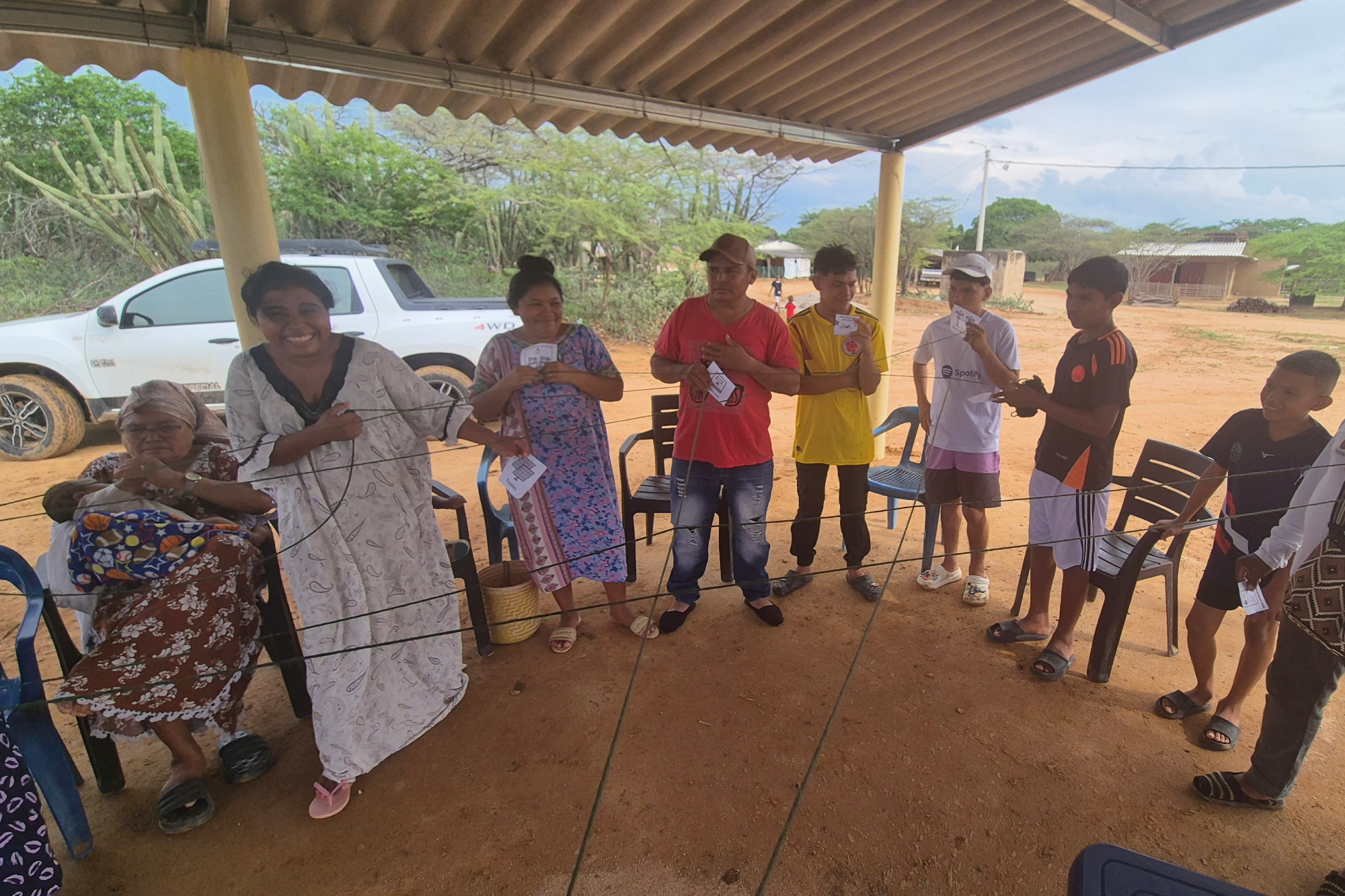
On several occasions, women attended meetings with children in their care; this required adjusting schedules, transport, catering, and workshop dynamics. These changes are not logistical details; they are enabling conditions for effective participation.
Ensuring the participation of young people in productive and organisational processes required methodologies that allowed them to coexist in spaces with more traditional leaders without one replacing the other.
Respect for the forms of organisation and the use of the mother tongue allowed the processes to advance with greater openness. In the case of Wayuu people, for example, recognition is also expressed through the e’iruku1 as part of their own forms of identification within the social fabric.
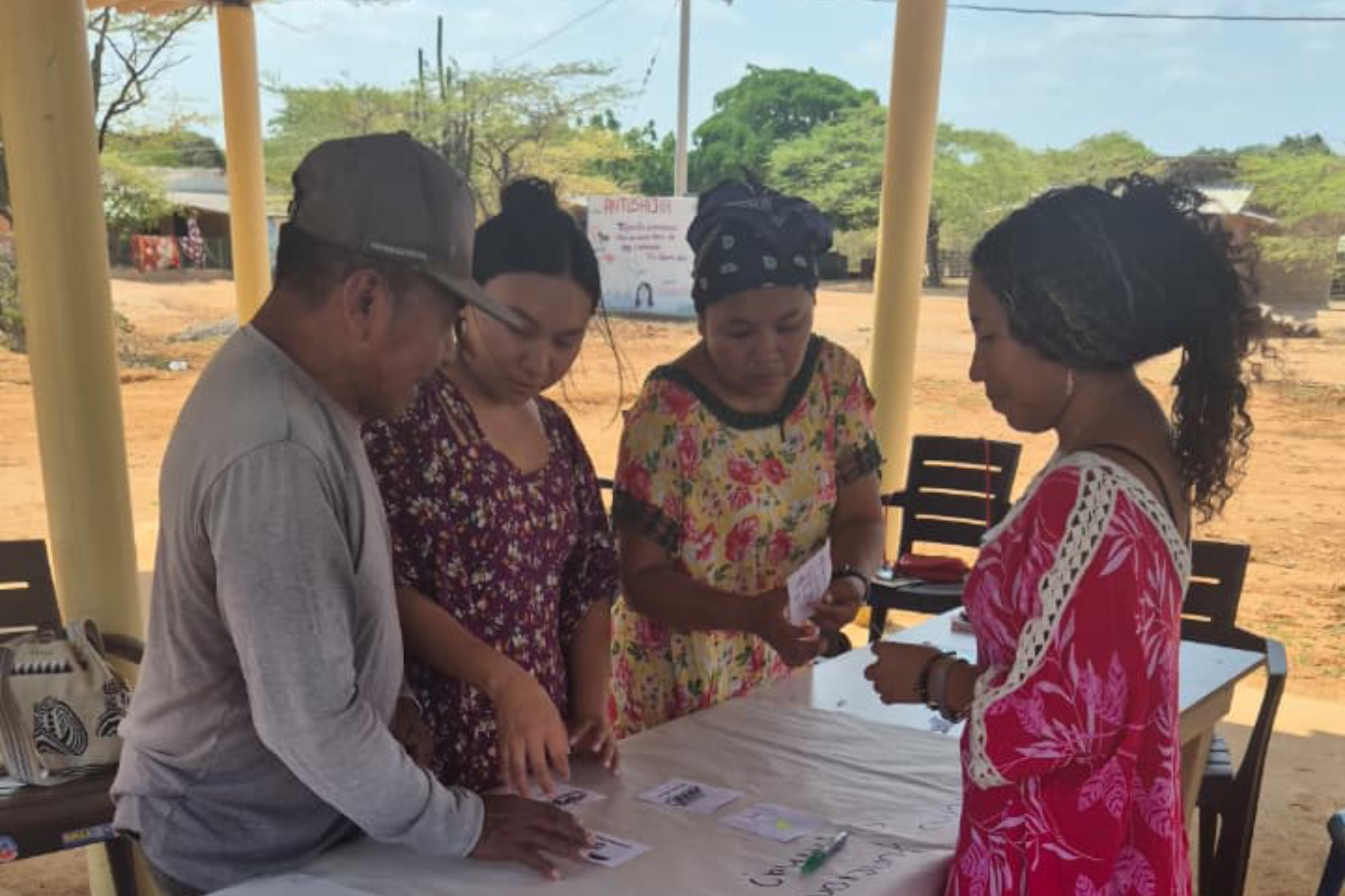
In the workshops with Wayuu communities, an interpreter was present and priority was given to the use of images with translations in the mother tongue and adapted to the context. Alongside this, playful dynamics facilitated participation and recognised the natural presence of children in community spaces.
In fishers’ associations, as women lead on the commercialisation of products, they do not participate as much in technical spaces. In these cases, their participation was prioritised in workshops related to commercialisation, business plans, and governance to avoid homogeneous approaches that would not respond to existing roles in the territory.
Reflections
The activities showed that interventions must be adapted to local contexts if they are to be effective. Likewise, it was confirmed that the energy transition within communities is not maintained through technical choices, but is based on relationships of trust, reciprocity, and mutual recognition. In this process, the gender approach also influenced how these relationships were built.
From the team’s experience, and in particular from the author’s perspective as a Wayuu woman, it was possible to achieve a more direct approach to forms of female leadership and women’s participation in the community structure. This allowed for rethinking roles and practices and for redistributing opportunities, ensuring that young people and women participated from their own contexts rather than as a result of their adaptation to imposed structures.
Principles for Territorial Action
Based on territorial experience and in coherence with the gender strategies of IKI JET and GIZ, the following guiding principles were identified:
- Transformation with territorial and cultural meaning: Promoting changes without undermining worldviews or community dynamics.
- Situated intersectionality: Recognising that gender is intertwined with ethnicity, age, language, social class, and territory.
- Do no harm: Avoid re-victimisation, overloading of responsibilities, or the weakening of protective cultural practices.
- Permanent intercultural dialogue: Building decisions collectively in a way that respects native languages and the dynamics of the territory.
- Recognition of non-formal types of leadership: Valuing the role of women and integrating their knowledge into transition processes.
Conclusions
The following key lessons emerged from this process. These lessons may guide other initiatives seeking to advance towards a more just and inclusive energy transition:
- Design inclusive and culturally pertinent calls for participation, using clear, non-sexist language and supported by mother tongue communication tools.
- Coordinate with local organisations and territorial leaders as a basis for providing continuity in processes and trust-building.
- Guarantee logistical conditions that facilitate participation in productive activities by adjusting schedules, transport, and childcare.
- Include a gender and intersectionality focus in training activities by adapting methodologies and discourse to the territory, recognising inherent social structures (such as the matrilineal system of the Wayuu people), and including gender-differentiated exercises (such as emotional mapping).
- Use accessible participatory methodologies, prioritising dynamics and visual tools that do not depend on reading and writing.
The just and inclusive energy transition will only be possible if it is built with and from the communities who are affected by it to ensure that their voices, leaders, and visions are central in creating a path towards new energy models.
[1] E’iruku refers to the maternal clan within the Wayuu social structure. Each person belongs to an e’iruku that defines their lineage, identity, and community ties. This form of introduction applies only within Wayuu cultural contexts.
Aisama Muñoz Iguarán is a technical advisor on energy transition for GIZ and the IKI JET project, where she works to promote a just energy transition and the development of energy communities. She holds a master’s degree in Renewable Energies from Universidad del Rosario and a degree in Mechanical Engineering from Universidad Central.
Related Posts
Stay Informed and Engaged
Subscribe to the Just Energy Transition in Coal Regions Knowledge Hub Newsletter
Receive updates on just energy transition news, insights, knowledge, and events directly in your inbox.