
Commentary
Colombia's Presidential Election: What's at stake for a just energy transition?
Mary Londoño Oikawa in conversation with Felipe Corral Montoya
Lea el artículo en español.
Country:
Colombia,
Organisation:
Midsummer Colombia SAS,
The 2026 presidential election in Colombia—which will determine who will succeed leftist president Gustavo Petro—will be a defining moment for the country’s energy policy, including the future direction of its just energy transition (JET). With the first round of voting on 31 May and a possible second round in June, the electoral field includes 14 candidates from across the political spectrum: three from the left, five from the centre, and six from the right, reflecting different visions for the country’s energy future.
To unpack the dynamics at play, we spoke with Felipe Corral Montoya, an expert in public policy and coordinator of Colombia’s JET roadmap, about the achievements and shortcomings of the current administration, the political tensions shaping the presidential race, and the structural challenges involved in achieving a just transition in Colombia.
What are the Petro government’s key achievements regarding JET?
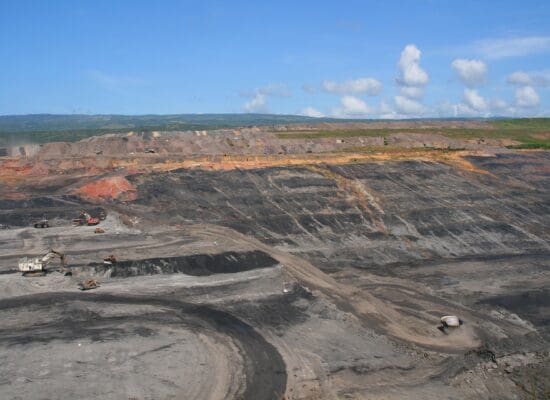
Since 2022, Colombia’s first left-wing government has significantly reshaped the mining and energy sector by moving away from the “mining-energy locomotive” model—a political and economic strategy introduced in the 1980s, which treated the extraction of oil and coal as the main engine for the country’s broader economic development—and positioning the JET as a flagship priority. The government closed the extractive frontier for new mining megaprojects in coal regions (such as the Cañaverales project in La Guajira), as well as for fracking and large-scale metal mining, thereby fulfilling its commitment to halt this manifestation of extractivism.
In the renewable energy sector, operational capacity has increased from 200 megawatt (MW) operational in 2022 to 4,363 MW by May 2026, with further acceleration expected in the coming years. This progress was partly supported by efforts to prevent and address territorial conflicts through community dialogue and new forms of economic participation. A major milestone was the repositioning of Ecopetrol—the state energy company and the central pillar of the national economy—as a leader in the transition. The company has consolidated a 3-GW portfolio of wind and solar projects and helped to mobilise investment from other companies by building on its own experience, especially in coal regions, such as La Guajira.
In the renewable energy sector, operational capacity has increased from 200 megawatt (MW) operational in 2022 to 4,363 MW by May 2026, with further acceleration expected in the coming years.
Another substantial achievement was to eliminate the petrol subsidy without triggering major social conflict. This measure, complemented by new taxes on vehicles with internal combustion engines, has helped to triple sales of electric vehicles and position Colombia as a regional leader. Together with instruments to promote national reindustrialisation through the assembly of passenger vehicles, buses, and electric motorcycles, these measures point to a broader effort to develop new productive sectors and local employment. This diversification has also been reflected beyond transport, with growth in tourism, renewed momentum in agriculture (coffee and cocoa, in particular), and international remittances helping the economy to absorb the decline of the fossil fuel sector while maintaining positive growth and historically low unemployment.
What have been the shortcomings, and which unresolved challenges remain?
Some important gaps remain. Productive diversification, especially in Cesar and La Guajira, has stagnated, while the labour transition for coal miners is only now beginning to take shape. The decommissioning of coal-fired power plants has also seen limited progress, creating uncertainty for workers and communities.
In the hydrocarbon sector, the absence of a clear strategy to replace fossil gas consumption has widened the gap between supply and demand. This has revived pressure to introduce fracking and ultra-deepwater gas extraction and to increase fossil imports. These challenges are reflections of the institutional inertia, pressure from industry, and fiscal constraints that have slowed political action. However, with concrete measures to accelerate the deployment of renewable energy and reduce demand for fossil gas across key consuming sectors, imports of gas could eventually be eliminated.
To what extent has JET been incorporated into the public agenda?
Assessing the JET across regions as diverse as La Guajira, Boyacá, Cesar, and Casanare is complex. In my opinion, those of us involved in formulating the JET policy could have done more to explain the transition and foster dialogue, especially with companies and workers who are most vulnerable to the decline of the fossil fuel sector.
There is still limited understanding of why global dynamics—driven by physics, economics, and geopolitics—are moving away from Colombia’s specific fossil fuel resources. Colombia does not have the most competitive geology for oil; nor is it located close to the remaining coal market. As a result, market forces themselves are now a central driver of the decline of these sectors.
This has contributed to the JET being perceived as a “whim” or as an externally imposed agenda. It is therefore essential for citizens and candidates to understand that the transition is not merely an ideological project, but a logical response to the rise of cheaper, more flexible, and less polluting technologies than the fossil fuel that our economy currently depends on.
Which advances in Colombia’s JET would now be difficult to reverse, and which remain more vulnerable to a change in leadership?
While I remain an optimist, I have learned to be cautious about what we consider to be “irreversible” in human societies. Although there is now a broad consensus that renewables are cheap and agile energy sources, recent years have shown that such consensus can be fragile under industry pressure. The main risk is the reactivation of an “extractivist locomotive” that seeks to make up for “lost time” by indiscriminately distributing mining titles and hydrocarbon blocks, even where these do not make economic or territorial sense.
The main risk is the reactivation of an “extractivist locomotive” that seeks to make up for “lost time” by indiscriminately distributing mining titles and hydrocarbon blocks, even where these do not make economic or territorial sense.
At the same time, some trends will be difficult to reverse, including the obsolescence of coal-fired power plants and the decline in external coal sales. The danger is not that these realities will evaporate, but that, under a new leadership, they could lose political priority. This would leave communities more vulnerable to the effects of structural changes that will unfold regardless of the election results.
How realistic are the presidential candidates’ proposals for Colombia’s JET, especially when it comes to productive diversification, labour transition, and replacing fossil fuel revenues in affected regions?
There is consensus on the need to expand renewables and improve energy efficiency, especially in transport and in households. Beyond this, however, their positions diverge substantially. Only a few candidates, mainly from the left, oppose further extractive expansion. By contrast, several prominent right-wing candidates support fracking, without sufficiently addressing whether this makes economic or geological sense in a context where cheaper alternatives are available and global competitors are better positioned for the markets of the future.
The most concerning gap is the lack of concrete proposals for productive diversification and labour transition in regions that are likely to face declining demand for, or supply of, thermal coal and oil. I have not seen the candidates express much specific interest in scaling current initiatives around productive diversification, territorial associativity, or greater social equity. Much more work is needed to bring the structural crisis of coal regions into the centre of the agenda. This should be a priority for civil society, business associations, unions, and territorial actors engaged in advocacy.
Candidates also lack specific plans for replacing regional economic activity and mining revenues. In the best case, their proposals remain general; in the worst case, they amount to wishful thinking: assuming that reactivating the extractive sectors at any cost will be able to finance both climate action and the protection of the Amazon.
What should Colombia’s next government prioritise to achieve productive diversification in fossil fuel-dependent regions?
If I had the opportunity, I would recommend that the different candidates identify sectors with strong potential to contribute to productive diversification with a low risk of territorial conflict, and build minimum agreements around them that could be reflected in effective legal instruments. International experience shows that genuine transformation becomes possible only when such agreements are backed by dedicated budgets, tools, and clear actions. Sectors such as the farming economy, the supply of drinking water, digital connectivity, railway corridors, tourism, and the just deployment of renewable energy in regions like La Guajira and Cesar offer promising starting points where opposition would be unlikely.
Felipe Corral Montoya is currently manager of Midsummer Colombia SAS. He has worked at think tank POLEN Transiciones Justas, in the Colombian Ministry of Mines and Energy, and as a researcher at the Technische Universität Berlin. Originally a political economist from Universität Heidelberg, he also holds a master’s degree in public policy from the Hertie School and is a PhD candidate in economics at the Technische Universität Berlin.
Related Posts


Stay Informed and Engaged
Subscribe to the Just Energy Transition in Coal Regions Knowledge Hub Newsletter
Receive updates on just energy transition news, insights, knowledge, and events directly in your inbox.