

Expert Exchange
Putting Workers at the Centre of Just Transition Research
Country:
Brazil,
Colombia,
South Africa,
Organisation:
Solidarity Center,
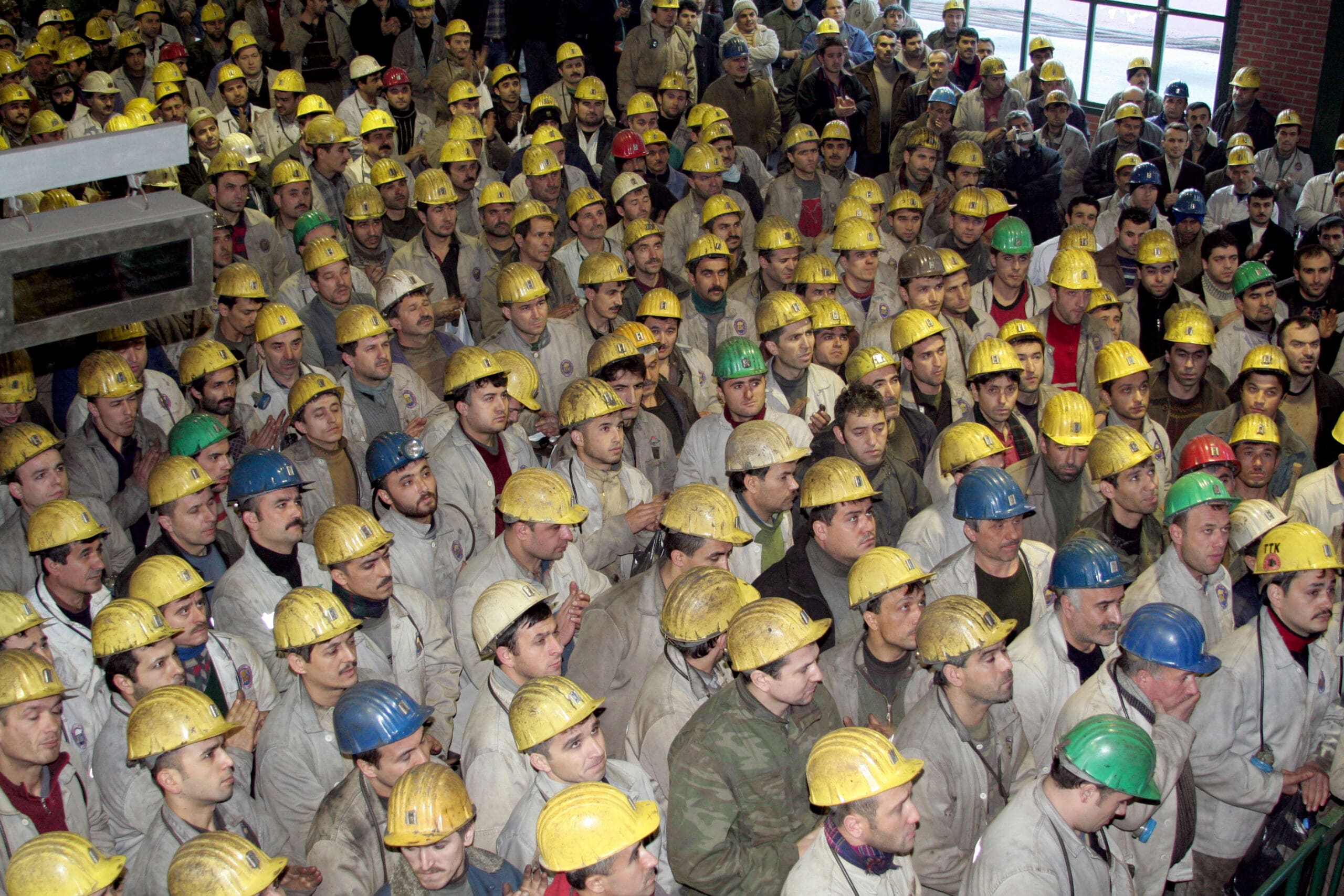
On 27 May 2026, the Solidarity Center convened frontline labour leaders, economists, and policy experts for an Expert Exchange under the Innovation Regions for a Just Energy Transition (IKI JET) programme. The panel shone the spotlight on union-linked research institutes that are operating on the front lines of coal transitions, demonstrating how participatory, worker-led research is shaping union strategies, collective bargaining positions, and proactive policy advocacy—effectively filling the gaps between policy and lived realities.
Experts examined the socioeconomic realities of energy transitions across South Africa, Colombia, and Brazil, discussing how to build a strategic bridge between international policy and the practical experiences of workers and their communities. The exchange featured:
- Sinenhlanhla Sithole, Researcher at the Sam Tambani Research Institute (SATRI), South Africa
- Igor Díaz, Director of the Center for Innovation and Research for the Just Development of Colombia’s Mining and Energy Sector (CIPAME) and former leader of Sintracarbón, a coal workers’ union in Colombia
- Nelson Karam, Coordinator of Studies and Research on Labour and the Environment at the Inter-Union Department of Statistics and Socio-Economic Studies (DIEESE), Brazil
Research Insights
South Africa: Grounding policy in community realities
Sinenhlanhla Sithole described the trajectory of South Africa’s decarbonisation, the pursuit of justice for workers, and how SATRI’s research is trying to bridge the gap between policy proposals and grounded experiences. South Africa has a significant structural dependency on coal, which fuels 75% of the national electricity matrix. Twelve coal-fired power stations are clustered in Mpumalanga, making the province the most densely concentrated coal region in the world.
Sithole pointed out that, despite widespread anticipation that the 2022 decommissioning of the Komati power station would serve as a blueprint for a just transition, it instead became a profound example of how not to manage the process—proving not to be inclusive, equitable, or fair. The decommissioning lacked comprehensive social dialogue, heavily favoured private capital, and ultimately failed to deliver tangible livelihood alternatives for the affected workers and communities.
In its work with the National Union of Mineworkers (NUM) and the broader labour movement, SATRI explicitly looks beyond formal, unionised employees to encompass the “invisible economy.” This includes workers in the informal economy, such as local street vendors and people who own small shops, whose livelihoods vanish when a power station closes. SATRI’s research is successfully building bridges between high-level policy analysis and on-the-ground realities. For instance, in a report on the role of government in transitions, SATRI uncovered that only 10% of climate funding was reaching the municipalities tasked with carrying out local development, infrastructure, and socioeconomic activities.
“Policy analysis is very important,” said Sithole, “but equally important is sitting under a tree with a community and discussing the issues that affect them.”
Through participatory action research, SATRI is helping grassroots workers to understand that their resistance is a valid reaction to an unjust transition. Together, SATRI and workers are reclaiming the concept as an organised labour demand centred on sustainable industrial policies and local manufacturing.
Colombia: Proactive alternatives to corporate abandonment
Igor Díaz shared the volatile trajectory of coal extractivism in Colombia’s Cesar and La Guajira regions and explained how the unions had created CIPAME to respond to uncertain regional transition plans. During the COVID-19 pandemic, multinational corporation Glencore abruptly attempted to surrender its operational concessions at the Prodeco mine in Cesar and sought to terminate the jobs of 1,200 direct employees under the guise of an imminent coal crisis. Despite the government’s opposition to the corporation surrendering its licence, the company abandoned the mine in practice. In a region where the informal economy employs 65% to 70% of workers and mining is the economic backbone, this experience served as a major wake-up call.
To proactively design economic alternatives before Glencore’s contract for Cerrejón (a large open-pit mine in La Guajira) expires in 2034, regional mining and energy unions established CIPAME with the support of international trade union solidarity organisations. Díaz explained that because of the institute’s union-based structure, researchers can leverage pre-existing, trust-based access to workers, which has strengthened the participatory nature of their data.
Because the local economy is heavily dominated by coal, CIPAME and its partner unions are surveying workers to map alternative regional production for resilient economic diversification. CIPAME has already registered an “energy community” through the Ministry of Energy and Mining to develop household solar projects, while dedicating the rest of the land to agriculture and livestock farming. Furthermore, by drawing on worker engagement and scientific expertise, the institute is researching alternative markets for other viable products (such as solar panels, farming products, and beauty products made from the black soldier fly) to break the region’s near total dependency on extractivism.
Brazil: Transforming mutual fear into organising tools
Nelson Karam outlined the unique, localised landscape of coal in Brazil. Here, coal accounts for just 1.5% of the national electricity matrix and is tightly concentrated within small municipalities in the south. Despite its modest share of the matrix relative to the country’s 88% renewable energy capacity, coal generation is still the dominant economic driver in these southern towns. Crucially, these coal activities pay roughly four times the national minimum wage—double the average compensation found in the region’s renewable energy sector.
To move past workers’ initial hesitance to discuss the energy transition, DIEESE deployed a qualitative, psychosocial research methodology rooted in people’s memories and lived experiences. This worker-centred approach revealed that beyond the economic anxiety of leaving the coal industry without securing decent alternative employment, the transition represents a profound loss of cultural identity for many.
Crucially, Karam’s research uncovered that fear was the unifying narrative across all social actors: workers feared losing jobs, companies feared losing business, municipalities feared losing revenue, and those who had moved to the area feared losing land. By identifying this mutual vulnerability, DIEESE transformed its research into an organising tool, breaking down institutional barriers and bringing together opposing players who had previously refused to communicate. This grounded evidence has successfully empowered unions to insert mandatory transition protection clauses into their collective bargaining agreements.
Key Takeaways
Benefits of Worker-Centred Research
- Methodologies as tools for organising: In union-linked research, the data collection process gives us insight into two areas. Researchers gather the lived experiences and priorities of workers and community members while simultaneously identifying the root causes of their resistance to transition. Backed by ongoing, trust-based engagement, this research naturally evolves into an organising process. By adopting this approach, these institutes are building sustainable community relationships that endure long after a specific project ends.
- Capturing the “invisible economy”: Engaging with the entire workforce is essential, and pre-existing union relationships provide an invaluable head start. Each expert emphasised the importance of capturing the invisible economy—specifically, subcontracted, informal, and care workers—who face immediate ruin when an anchor plant closes, yet are frequently neglected by policies and plans. Trust-based union alignments give researchers a solid baseline of data with which they can successfully initiate these broader community conversations.
Common Transition Challenges
- Inadequate economic substitutes: In all three countries, current economic alternatives fail to match the scale needed to sustain communities. High-quality, well-paying industrial careers are frequently replaced by unequal alternatives, such as temporary, low-wage solar installation jobs that pay half the amount of coal industry wages (as seen in Brazil) or superficial, localised “climate-smart agriculture” projects like cucumber gardens (as seen in South Africa).
- Lack of enforceable tripartite governance: Every expert highlighted that insufficient social dialogue consistently leads to unjust transitions. High-level transition frameworks are frequently drafted without input from unions, resulting in plans that completely miss the lived realities of workers. To remedy this, panellists called for legally binding, enforceable tripartite frameworks that hold governments and companies legally accountable for front-loading labour protection, reskilling programmes, and community reparation.
See the full recording here:
Related Posts

Stay Informed and Engaged
Subscribe to the Just Energy Transition in Coal Regions Knowledge Hub Newsletter
Receive updates on just energy transition news, insights, knowledge, and events directly in your inbox.