

 Reload document
 Open in new tab
News post
From Mangroves to Markets: Wayuu communities shaping a just transition in Musichi, Colombia
Country:
Colombia,
Organisation:
CAN International,
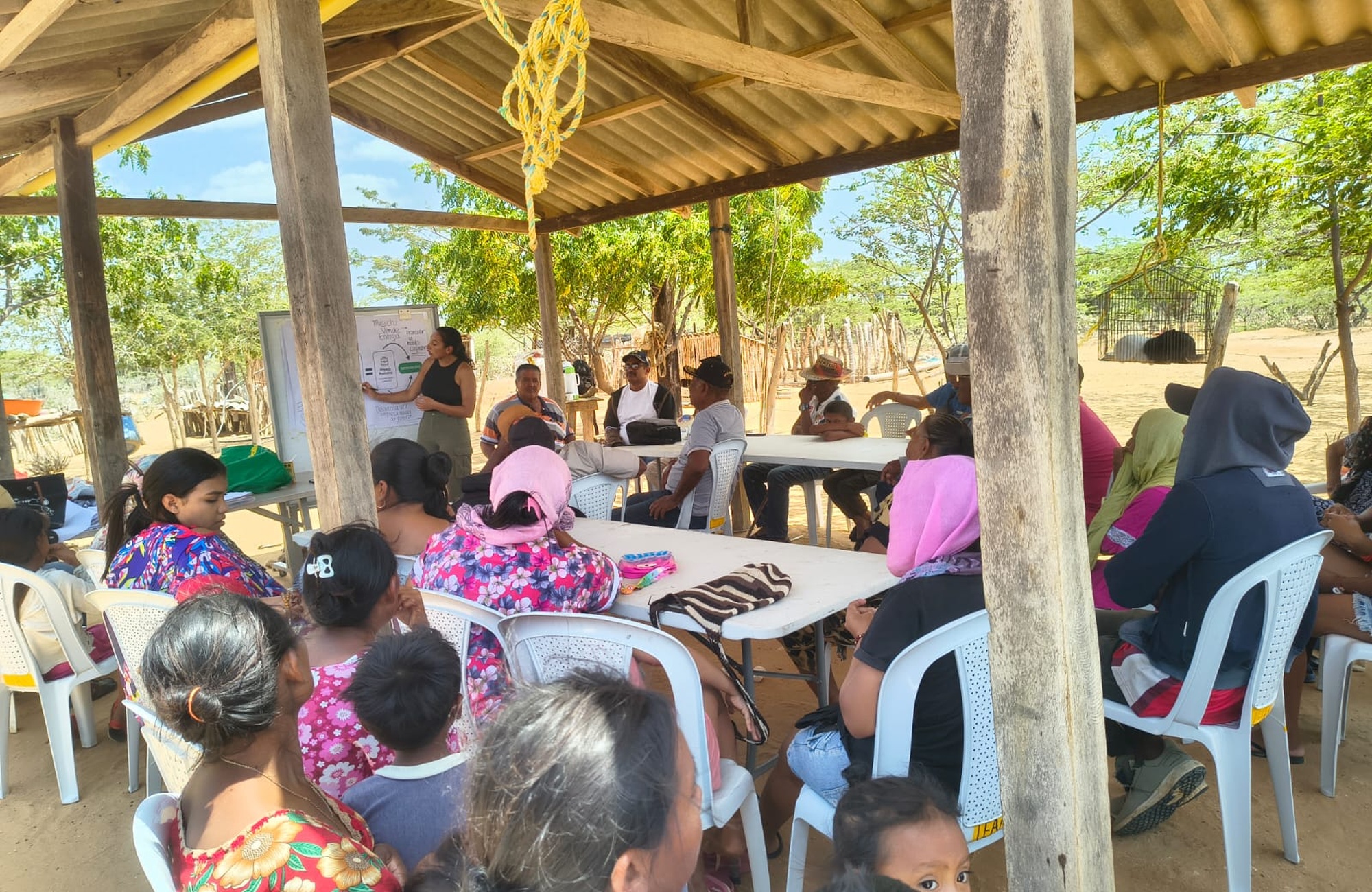
In Musichi, on Colombia’s Caribbean coast, Wayuu communities are bringing together elements that are often dealt with separately in transition planning: restoring degraded mangroves, strengthening traditional shrimp-based livelihoods, improving access to sustainable energy, and building a stronger community voice in decisions about the future of their territory.
The Musichi Integrated Management District (DMI), in the municipality of Manaure, La Guajira, is a protected coastal landscape of mangroves, lagoons, and wetlands located within Wayuu ancestral territory. For the communities living there, water, mangroves, fishing, salt harvesting, and other traditional activities are part of an interconnected social, economic, and cultural system. Yet this biocultural richness exists alongside long-standing socio-economic exclusion, geographical isolation, and significant gaps in basic services.
A coal region, but an unequal energy story
La Guajira has played a central role in Colombia’s coal economy, and it now finds itself at the centre of the country’s energy transition. As Colombia advances its just energy transition agenda in regions historically linked to fossil-fuel extraction, the questions are not only about what replaces coal but also about who participates in deciding what comes next, and who benefits.
The questions of who participates and who benefits are especially important for Indigenous communities that have historically lived alongside extractive and energy development without enjoying equal access to energy services, employment opportunities, or decision-making spaces. The Wayuu communities of Musichi illustrate this contradiction clearly. Their livelihoods are not primarily based on coal mining. Families maintain a mixed subsistence economy centred on seasonal artisanal fishing, salt harvesting, and goat herding. Yet rural communities continue to face serious interruptions when it comes to electricity, water, and other basic services.
For a just energy transition to be truly inclusive, therefore, communities such as these must be more than beneficiaries of policies designed elsewhere. They need the means to identify their own priorities, develop credible proposals, and participate effectively in the institutions and processes that will shape La Guajira’s future.
An in-country support measure built around community priorities
This was the logic behind the in-country support measure (ICSM) implemented in Musichi as part of Climate Action Network International’s work under the Innovation Regions for a Just Energy Transition (IKI JET) project.
The ICSM was carried out through technical assistance provided by the Association of Professionals and Environmentalists of La Guajira (Asociación de Profesionales y Ambientalistas de La Guajira), working closely with participating Wayuu communities and their Traditional Authorities. The initiative was endorsed by the Traditional Authorities of Las Tunas and San Juan and responded to priorities identified directly in the territory.
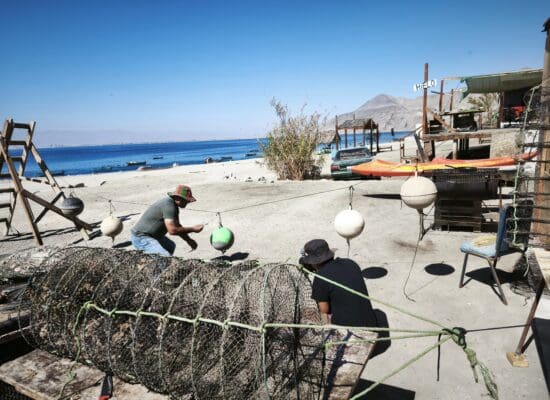
The environmental and economic challenges are closely linked. The Musichi lagoons have been affected by mangrove degradation, hypersalinity, and disrupted freshwater flows, which, during dry periods, can affect both juvenile shrimp and the mangrove ecosystem. At the same time, shrimp harvesting remains largely seasonal and subsistence-based, without an adequate cold-chain infrastructure or systematic production-cost calculations. Without these things, families are often forced to sell a highly perishable product quickly through intermediaries.
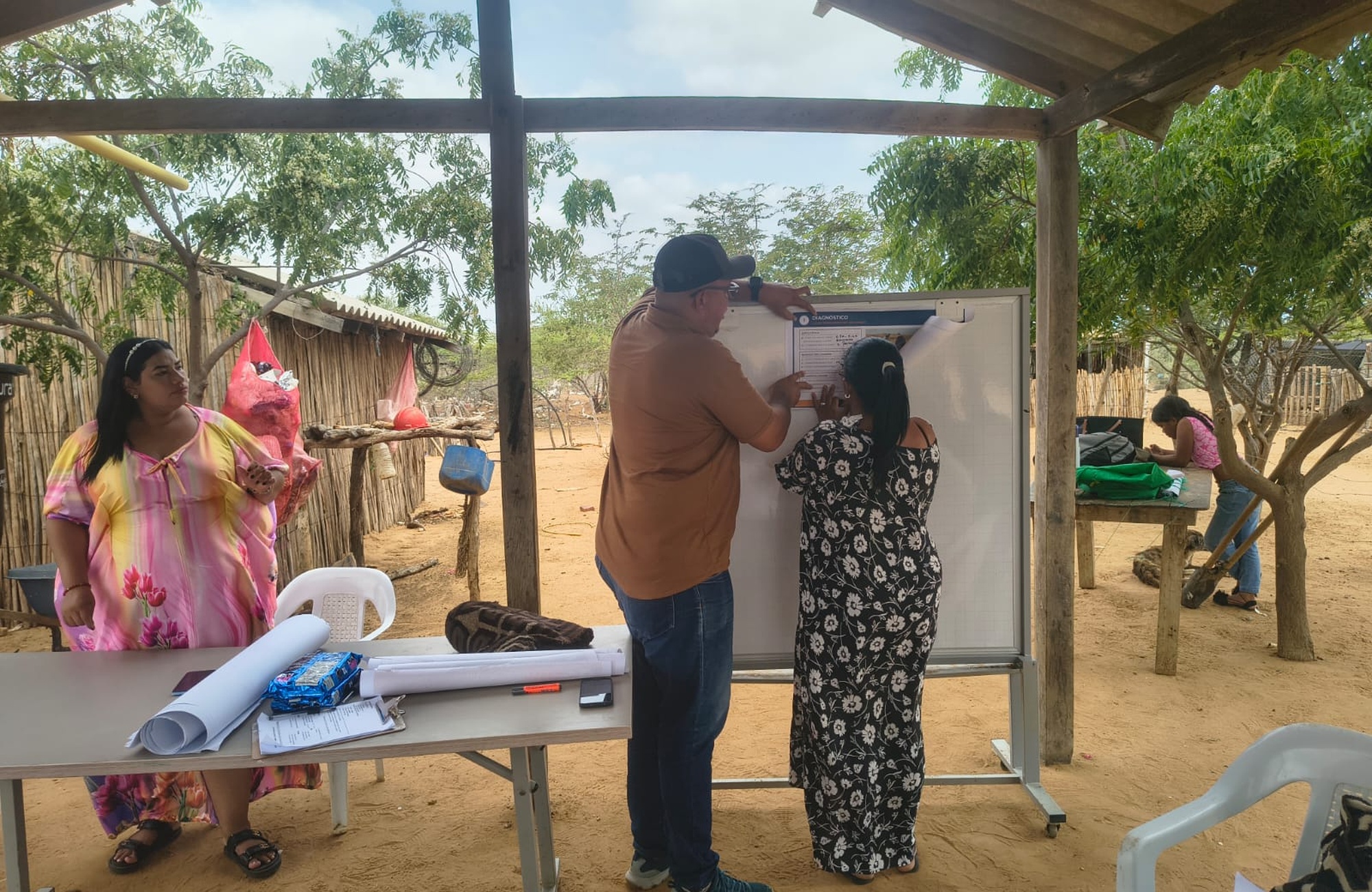
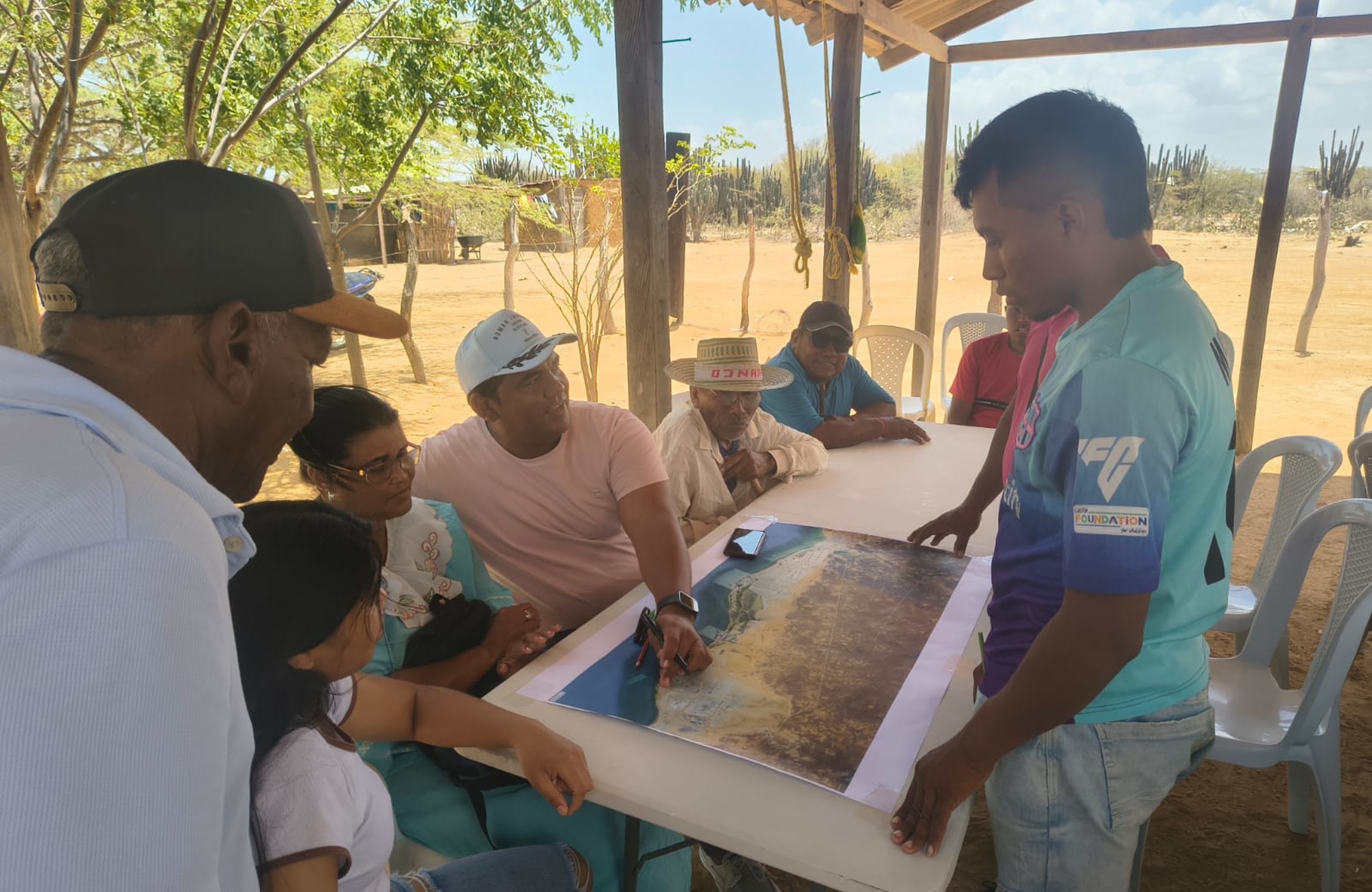
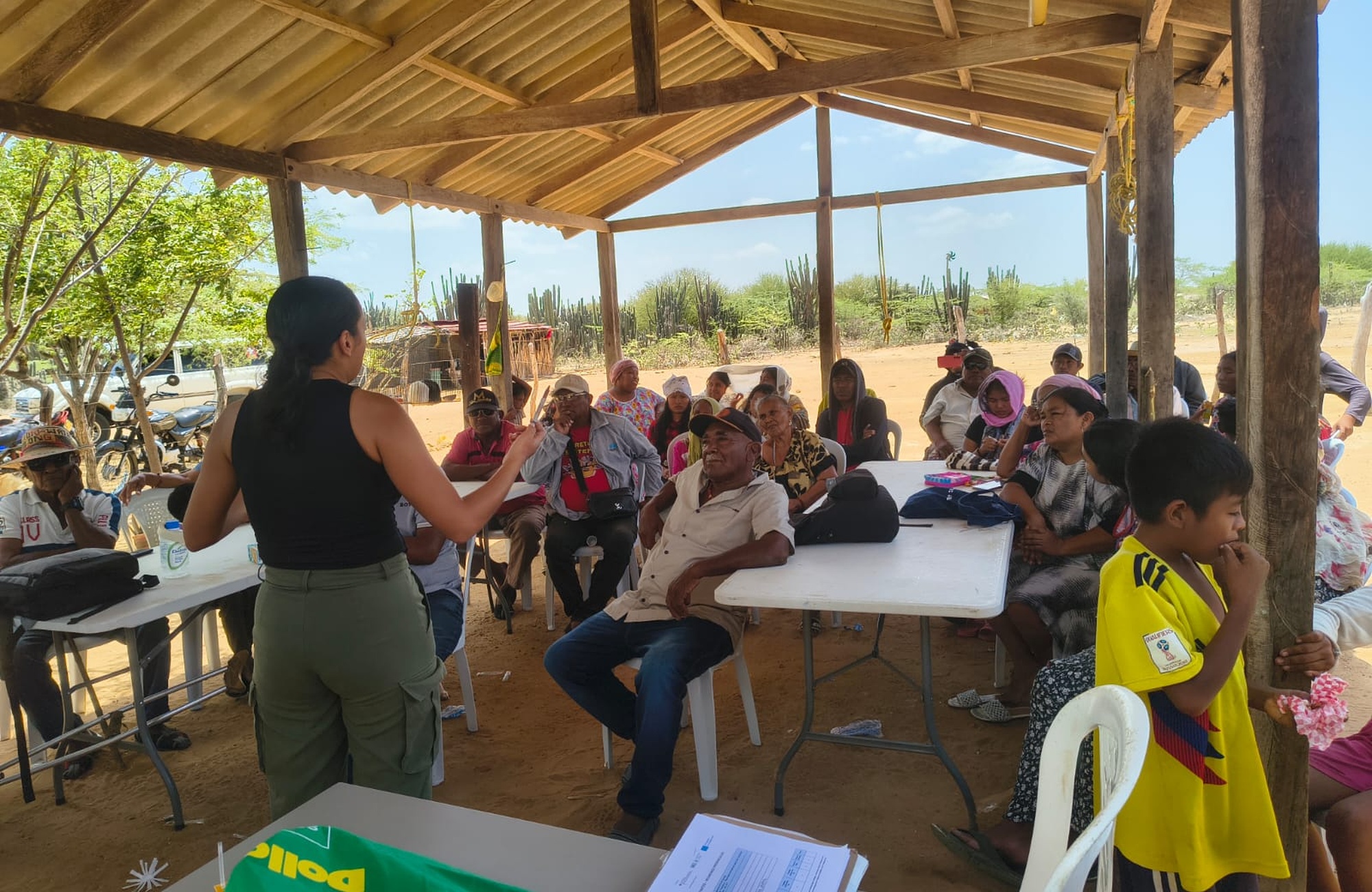
Community participation shaped the ICSM process from the beginning. An initial socialisation and validation phase was followed by two modules from the Water and Mangrove Field School which community members were invited to complete. These were followed by lessons on business and governance and by a Minga de Pensamiento, a community-led space for collective reflection and dialogue grounded in the Wayuu normative system, the Law of Origin, and ancestral knowledge. Participants worked on participatory mapping, mangrove ecology, water monitoring, restoration techniques, production costs, market access, community organisation, and just energy transition planning.
The approach also drew on anaakuaipa — often translated as “good living” or “living well” — as a Wayuu reference for thinking about territory, development, and the relationship between people and nature. This helped to ensure that technical knowledge complemented (rather than replaced) community knowledge and governance.
From community knowledge to practical plans
One of the main outcomes of the ICSM is a connected set of technical, economic, educational, and advocacy tools that communities can use beyond the project period.
The work started from a territorial analysis of the environmental, socio-economic, productive, and energy-related conditions in Musichi. That analysis highlighted the close links between mangrove degradation, disrupted water flows, limited livelihood opportunities, weak market access, and energy poverty. Rather than treating these challenges separately, the intervention brought them together within an integrated bioeconomic model that linked food sovereignty, mangrove restoration, sustainable shrimp production, renewable energy, and community participation.
Building on this analysis, a Mangrove Management and Restoration Plan was developed to provide a 3-year technical pathway for restoration activities and set out a longer-term environmental pathway. It identifies a critical 100-hectare area affected by degradation, hypersalinity, sedimentation, and loss of hydrological connectivity. It proposes the progressive restoration of at least 100 hectares of red and black mangrove, alongside the hydrological recovery of at least 50 hectares of coastal lagoon and continued community monitoring. The plan is intended to guide implementation, coordination between institutions, and the mobilisation of resources, while further restoration activities will depend on additional technical support and financing.
The project also improved practical capacity in the territory. A community core group was trained in using physicochemical water-monitoring kits and GPS equipment. The equipment was then formally transferred to the community, allowing local monitoring of salinity, pH, temperature, dissolved oxygen, and other indicators to continue after the end of the project.
The Bioeconomic Business Plan, Camarón de Origen Musichi, addresses the productive side of the model. It proposes a gradual move away from largely subsistence-oriented shrimp harvesting towards an organised community value chain, without replacing Wayuu practices. The plan covers the following areas: community collection and post-capture management; solar-powered cold-chain infrastructure; packaging and dispatch; traceability and local branding; direct commercialisation; organisational formalisation; and reduced dependence on intermediaries.
Importantly, the plan does not assume that investments in these areas have already been made. It establishes a phased implementation timescale of up to 60 months and sets out production scenarios, investment needs, and potential markets. This makes it a tool that communities can use to approach public programmes, cooperation agencies, and investors for the financing and technical support needed to move from planning to implementation.
The Biocultural Community Guide brings together technical and Wayuu knowledge on water, mangrove restoration, sustainable shrimp production, and territorial practices in a visual and culturally accessible format. Coordination with the Porchi Educational Institution, which serves children and young people in the area, is intended to support its use in local environmental education and the transmission of intergenerational knowledge.
Alongside the guide, five audiovisual microcapsules were produced with the participation of community members and young people. These materials document and make visible traditional fishing practices, environmental challenges, what the communities are already doing, and their ideas and priorities for the future, while also serving as advocacy tools to bring these perspectives into wider institutional and public discussions. The audiovisual process helped to lay the foundations for the community-led School of the Sea, which gives younger generations opportunities to continue documenting and communicating Wayuu territorial knowledge in their own voices.
 Loading...
Building a community agenda for the just energy transition
One of the most important products from the perspective of the wider IKI JET project is the Community Just Energy Transition Roadmap.
The roadmap was developed collectively to translate community needs into priorities, actions, and advocacy pathways. It connects ecosystem and hydrological restoration, intergenerational transmission of Wayuu knowledge, sustainable shrimp production, and the equitable distribution of benefits and renewable-energy access, as well as identifying the initial steps towards forming an energy community.
This matters because strengthening community participation was one of the central purposes of the ICSM. As well as giving communities information about the energy transition, it aimed to strengthen their ability to enter just transition discussions with their own evidence and priorities.
The roadmap gives communities a practical basis for doing so. Its post-project workplan includes community restoration and monitoring, the establishment of conservation groups, further development and formalisation of the shrimp initiative, identification of land for a future collection unit, registration as a green business, and laying the initial groundwork for an energy community.
Institutional dialogue was built into the process rather than added at the end: during implementation, the support measure’s relevance was discussed with representatives of Colombia’s Ministry of Mines and Energy, including officials working on La Guajira. The ministry representatives particularly valued the focus on historically marginalised and underserved territories and communities, as well as the effort to strengthen participation and generate tangible social, environmental, and economic benefits.
On 17 June 2026, the process culminated in a Regional Advocacy and Exchange Forum in Rioacha, which brought together Wayuu community representatives, Wayuu Traditional Authorities, and representatives from the Government of La Guajira’s environmental and agricultural sectors, the National Learning Service (SENA), and the La Guajira Chamber of Commerce to present the materials and plan.
Creating the conditions for continuity
Sustainability was built into the design of the support measure through several complementary pathways. The restoration plan, business plan, monitoring capacity, roadmap, Biocultural Community Guide and School of the Sea each carry their own framework, timeline, or set of actions for the years ahead. Together, they function as implementation, advocacy, and resource-mobilisation tools, giving communities a stronger foundation from which they can seek public, private, and cooperation financing; maintain institutional dialogue; and develop their own proposals.
The experience in Musichi therefore offers a broader lesson for coal-transition regions. A just transition cannot be defined only by what happens to mines, power plants, or workers directly employed in fossil-fuel industries. It must also consider communities in the same territories whose livelihoods, ecosystems, and basic rights have been shaped by extractive development, but who have had far less access to energy, investment, and decision-making.
For the Wayuu communities involved in Musichi, participating in the transition means more than being consulted about decisions made elsewhere. It means being able to define their own vision for the territory, translate that vision into technically credible proposals, and enter decision-making spaces with the tools needed to be heard. The Musichi experience shows how a just energy transition can begin to move from the abstract to the territorial: from communities affected by decisions about energy and development towards communities shaping their own pathways forward.
Hear from the Wayuu community in their own words and watch the five audiovisual microcapsules here:
Related Posts
Stay in the loop
Subscribe to the Just Energy Transition Knowledge Hub Newsletter
Get the latest just energy transition news, analysis, reports, and events delivered to your inbox.