
News post
Drawing on Chango Knowledge to Restore Ecosystems and Diversify the Economy for a Just Transition in Mejillones
Country:
Chile,
Organisation:
CAN International,
Mejillones is among the Chilean territories most affected by industrial and coal-fired power generation activities. Now, Chango communities are developing proposals that connect the restoration of coastal ecosystems with sustainable, locally rooted livelihood opportunities.
A transition already underway in Mejillones
Located around 65 kilometres north of Antofagasta, Mejillones developed into one of northern Chile’s main industrial and energy hubs over several decades as coal-fired generation, ports, mining-related infrastructure, and other industries expanded around its bay. The commune is now experiencing first-hand the transition away from coal: at the end of 2025, two coal-fired units were disconnected after almost three decades of operation, while another began its conversion to natural gas. These changes are part of Chile’s ongoing decarbonisation process, with the country’s 2025 Decarbonisation Plan including a dedicated focus on just transition and communities.
That transition is taking place against the backdrop of a longer environmental legacy. An official investigation, which was initiated after local artisanal fishers raised concerns, classified the environmental condition of the bay of Bahía Mejillones del Sur as “deficient” and showing a trend towards deterioration. The communities’ own assessment also points to a progressive decline in some natural shellfish banks due to a combination of pollution, overexploitation, and climate change. This is especially significant for Chango communities, whose culture, knowledge, and livelihoods are still closely connected to the sea through their involvement in artisanal fishing and other sea-based activities. In this context, restoring marine ecosystems is not separate from the economic dimension of the transition: it is part of sustaining the resources, practices, and territorial knowledge on which local livelihoods depend.
These initiatives were strengthened through an in-country support measure that focused on Chango-led ecosystem restoration, livelihood diversification, and participation in just transition processes. The support measure was promoted by Climate Action Network International (CAN-I) under the project Stakeholder Engagement of Civil Society and Local Communities across Regions in the Just Energy Transition, implemented as part of the Innovation Regions for a Just Energy Transition (IKI JET) project.
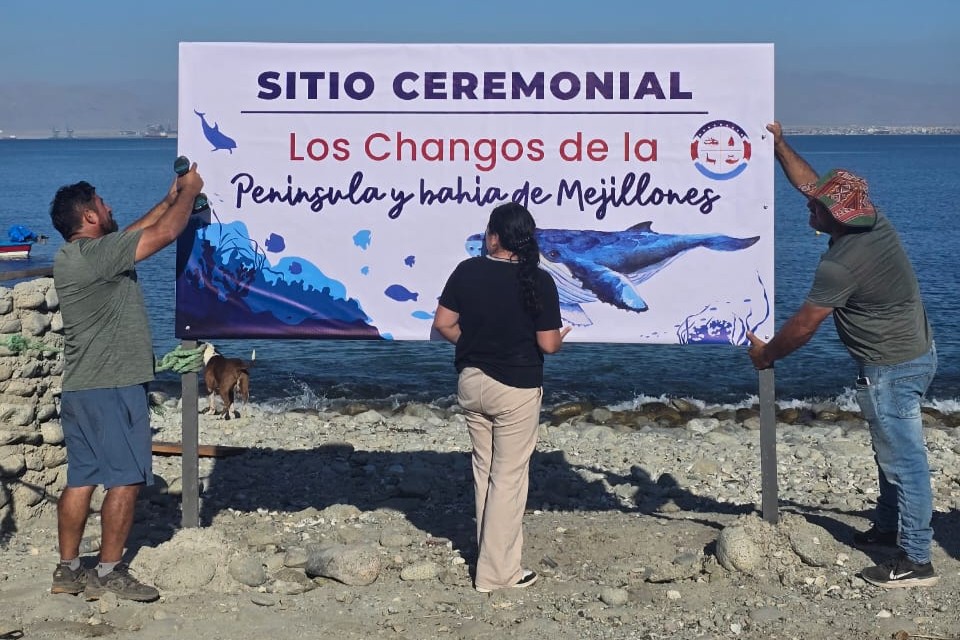
Under the support measure, technical assistance and capacity-building support were provided to members of three Chango communities in Punta Cuartel and Hornitos by Sustentarse, a Chilean non-profit with experience of accompanying Chango communities in the Antofagasta Region on socio-environmental rights and participation, together with Fundación Tantí, which works with communities in northern Chile on environmental and territorial issues, including just transition, biocultural heritage, and the impacts of mining and energy development. The participating Chango organisations were the Changos de la Península y Bahía de Mejillones (in Punta Cuartel), and the Changos Ancestrales de Hornitos and Changos Tierra del Sol de Hornitos (in Hornitos).
Building on Chango knowledge and livelihoods
The support measure aimed to transform existing community initiatives into more structured and viable proposals that could contribute to economic diversification and to the communities’ participation in Just Transition dialogue and decision-making processes. Rather than introducing new activities from outside, the measure built on initiatives that community members were already developing around ethno-tourism, traditional sea-based livelihoods, local gastronomy, and restoring ecosystems. These areas were closely connected: the health of coastal ecosystems directly affects fishing and other livelihoods, while stronger and more visible community initiatives can create opportunities to diversify income and to participate in decisions about the territory. The work therefore focused on the following: ethno-tourism and maritime livelihoods; ecosystem restoration and bivalve (shelled molluscs) cultivation; and stronger community participation in just transition processes.
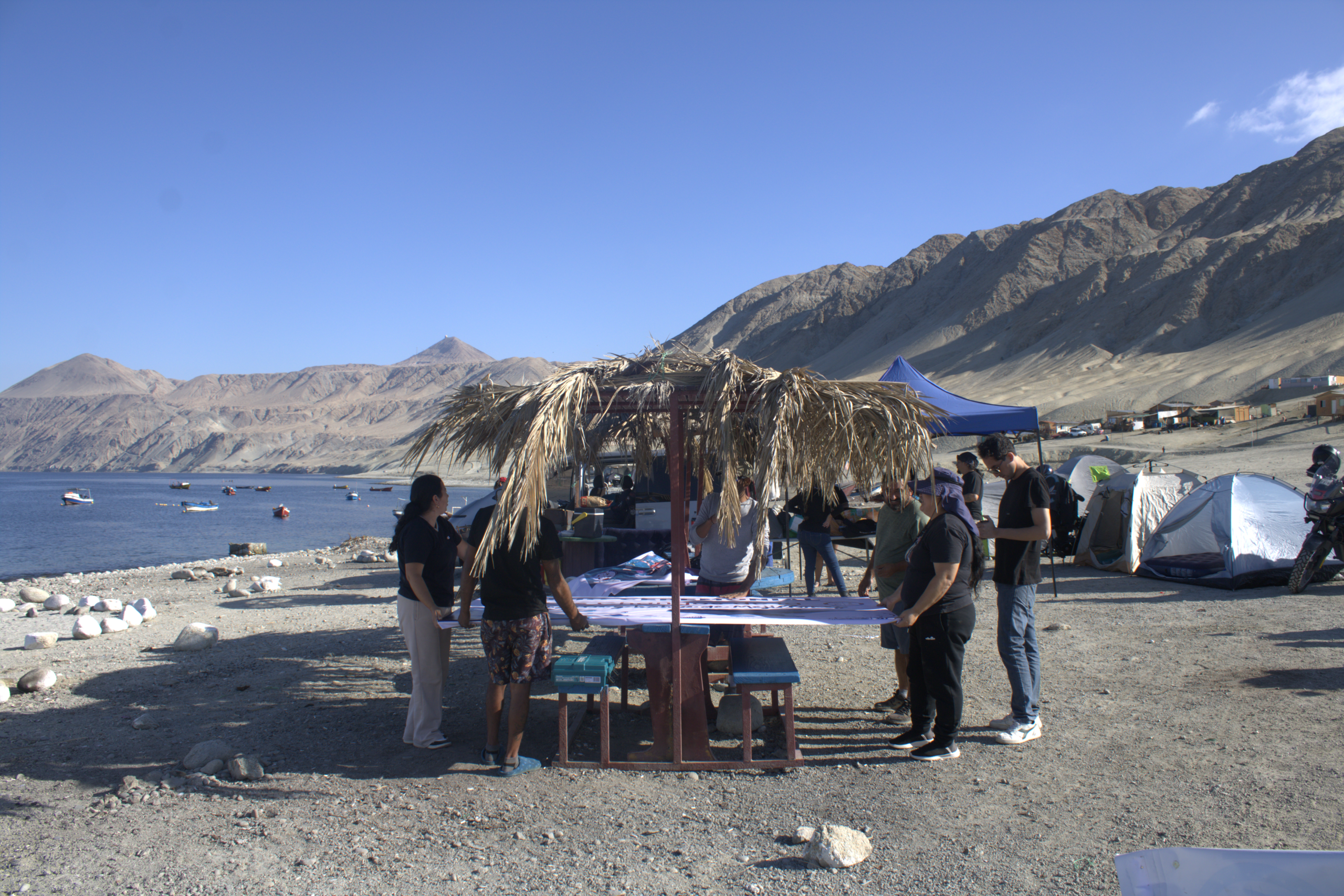
The practical parts of the process included participatory mapping, guided coastal walks and boat trips, marine sampling, community meetings, and training provided by the Community Popular School. Community members helped to identify places, species, practices, and knowledge that were important to them, while technical support connected this local knowledge with expertise from public institutions and the University of Antofagasta. Taking this participatory approach meant that the resulting guides, maps, and proposals were built from community knowledge rather than produced as external products and presented only at the end.
From the information gathered, three guides were produced on ethno-tourism, maritime livelihoods, and edible algae and bivalves, together with a participatory map identifying 15 areas of interest and three potential ethnocultural tourism routes. These materials help to organise and showcase opportunities rooted in biocultural heritage, gastronomy, artisanal fishing, and traditional knowledge, opening avenues for Indigenous tourism and other local economic activities. Take the ethno-tourism work, for example: the community mapping and guided visits in Punta Cuartel and Hornitos were used to identify sites of cultural, ecological, and tourism interest and to connect them through potential routes. The resulting materials bring together Chango history, traditional sea-based jobs, gastronomy, local initiatives, and knowledge of the coastal area to provide a practical basis for tourism rooted in community identity and priorities.
Together, these products turn knowledge that is often transmitted orally or held within individual families and livelihoods into resources that the communities can use collectively—to tell the story of the territory, strengthen local initiatives, and make their proposals more visible to institutions and visitors.
The Community Popular School complemented this work with practical sessions on issues such as access to public land, maritime concessions, and sanitary requirements for productive activities. These are barriers to community initiatives linked to tourism, gastronomy, and seafood products, so the training intended to strengthen the communities’ ability to develop and formalise their activities over time.
Restoring ecosystems and diversifying local economies
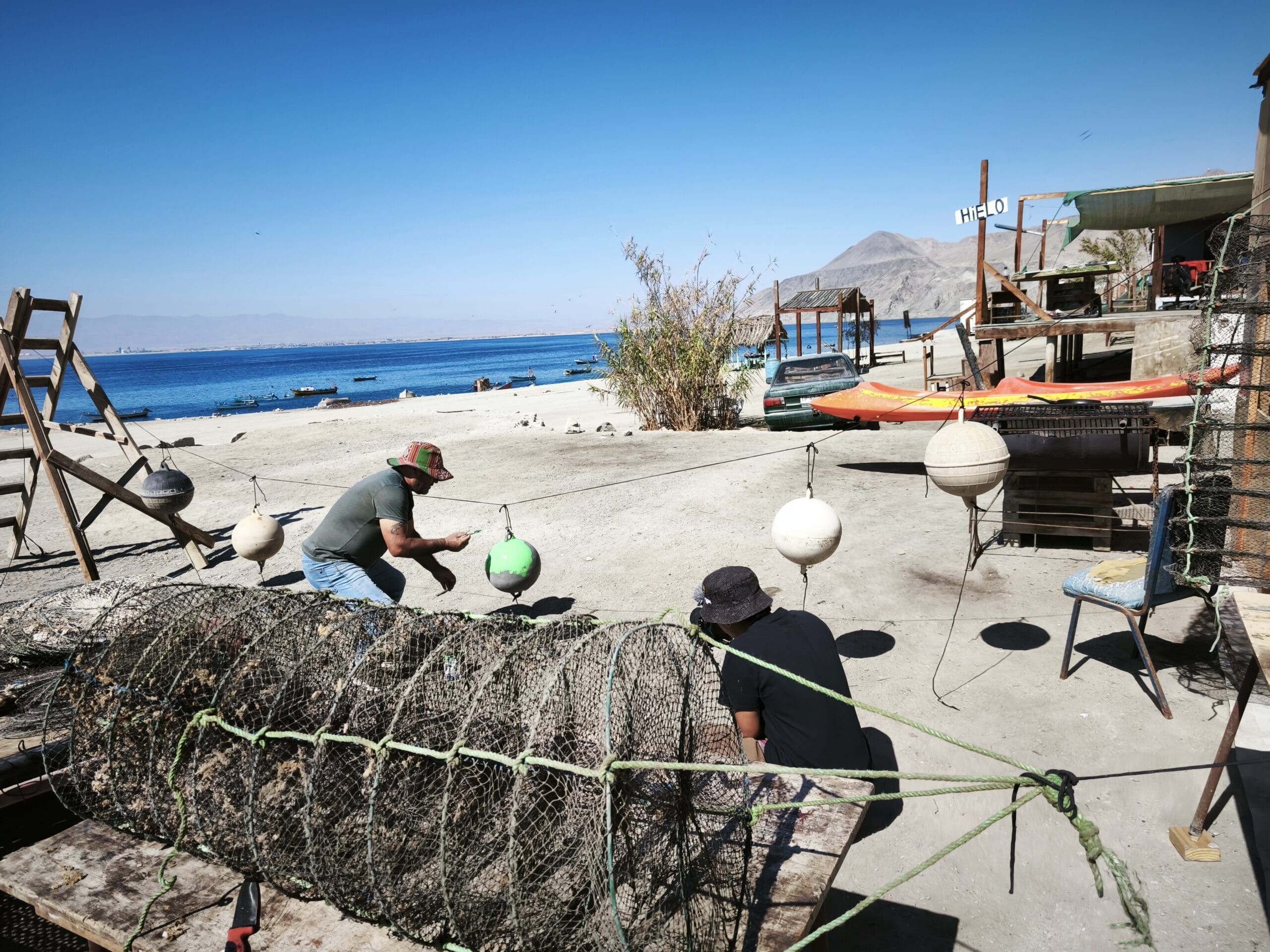
In the realm of ecosystem restoration, equipment for bivalve cultivation was repaired and technical links were established with the University of Antofagasta and Chile’s Undersecretariat for Fisheries and Aquaculture (Subpesca), a government agency under the Ministry of Economy, Development and Tourism. Community members visited a cultivation site linked to the University of Antofagasta, where they observed an operating system and received technical guidance, before working on selecting, repairing, and maintaining their own “lantern” cultivation equipment. The process was later complemented by training on small-scale aquaculture provided by Subpesca. The aim of this part of the support measure is to advance a model that combines marine ecosystem restoration with small-scale aquaculture, income diversification, and the commercialisation of locally sourced, traceable seafood products. With the necessary maritime concessions and with further technical support, bivalve cultivation and repopulation could help recover marine resources while creating more opportunities to add value, market seafood products, and develop gastronomy linked to tourism—complementing rather than replacing existing artisanal fishing and sea-based livelihoods.
A documentary was also made through the project. Knowledge of the Chango People: Just transition from the sea brings together the voices of the communities, their relationship with the coastal territory, and their proposals for addressing the historical impacts of industrialisation. In the documentary, Raúl, a Chango community leader, explains: “Mejillones is not just desert and sea. Beneath its waters are real underwater forests and wetlands that sustain our existence, nourish our traditions, and remind us that the future is also written in what we choose to protect.”
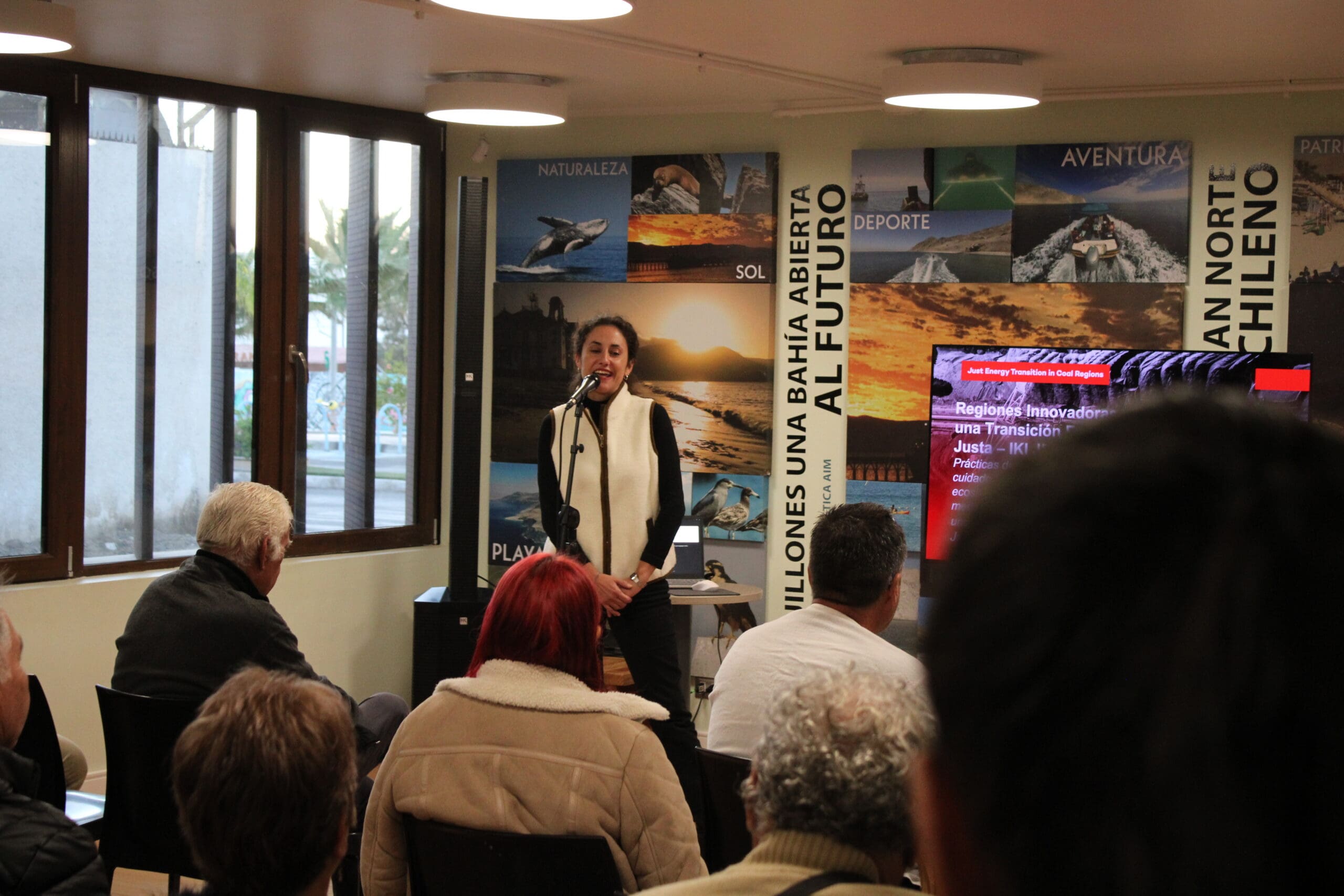
Together with the guides and maps, the documentary is a tool that can be used to increase the visibility of these initiatives and present them to public institutions, economic actors, and governance spaces. The documentary, guides, and maps were publicly presented on 29 May 2026 at the Museo Raúl Mavrakis Morales in Mejillones, where community representatives, local public institutions, academics, community organisations, and civil society gathered together. The materials are still available for community education, promoting local initiatives and continued engagement in just transition and territorial decision-making spaces.
The experience in Mejillones shows that a just transition must generate concrete economic alternatives for local communities and recognise that restoring ecosystems, protecting biocultural heritage, and diversifying livelihoods are interconnected elements of the same territorial development strategy. In a territory where the phase-out of coal is already underway, it also shows why a just transition must not be limited to changes in the energy system: it must also address the environmental legacy of industrial development and create space for affected communities to shape what comes next from their own knowledge, livelihoods, and priorities.
Sabrina Haboba is a just energy transition project manager at Climate Action Network (CAN), where she coordinates community-led programmes for the IKI JET project. She holds a degree in political science from the University of Buenos Aires, and two Master’s degrees—one in social policies from the University of Avignon (France), and another in diplomacy and international relations from the Diplomatic School of Spain.
Related Posts
Stay Informed and Engaged
Subscribe to the Just Energy Transition in Coal Regions Knowledge Hub Newsletter
Receive updates on just energy transition news, insights, knowledge, and events directly in your inbox.