
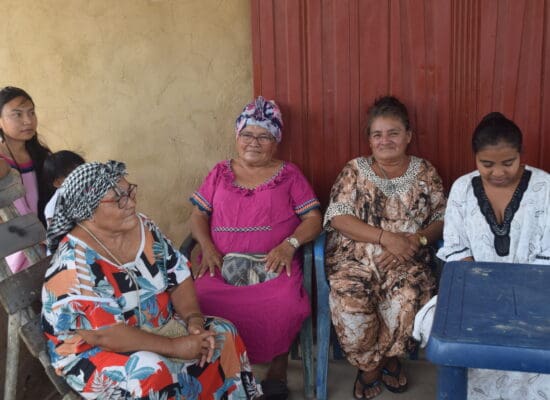
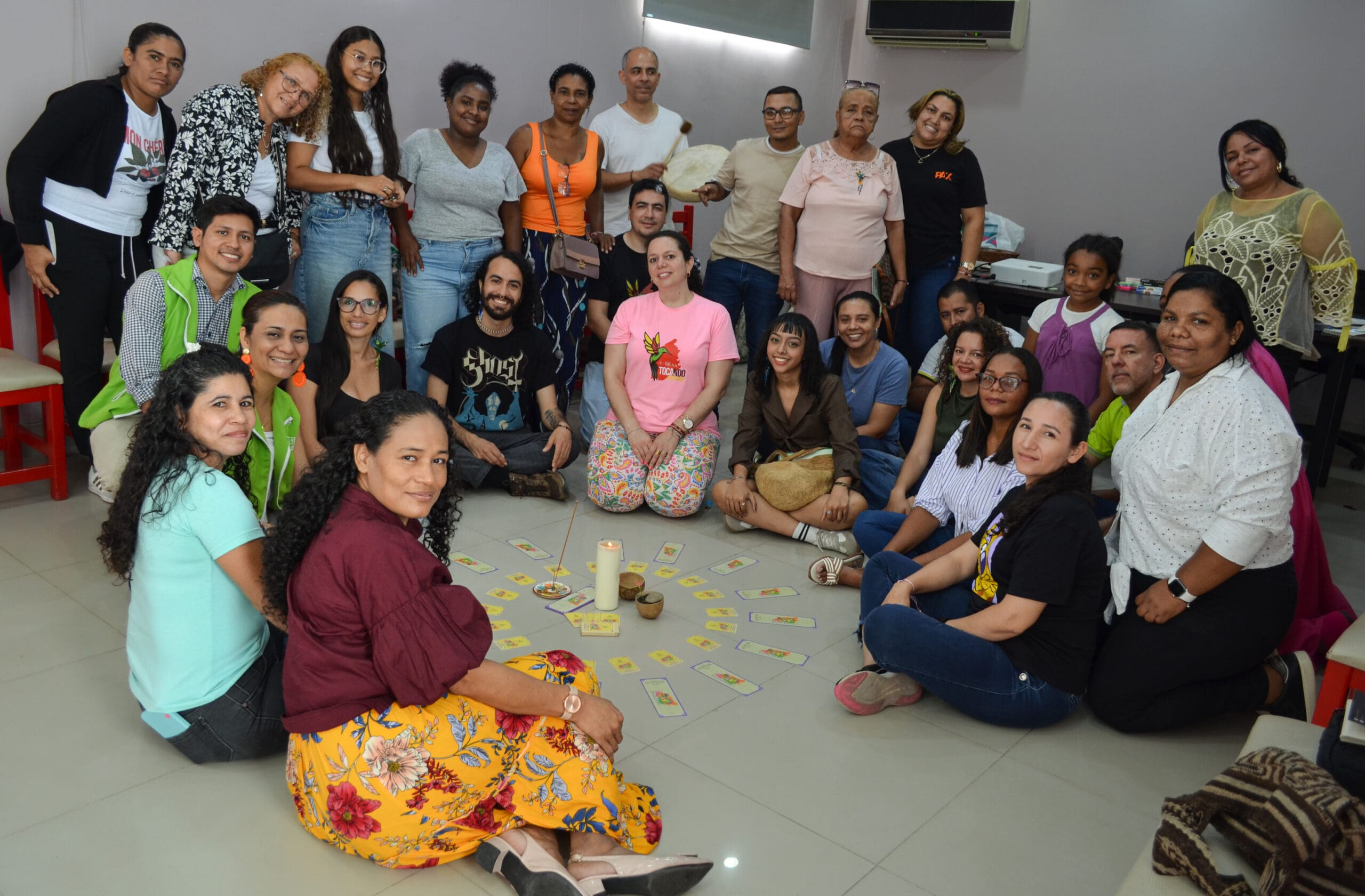
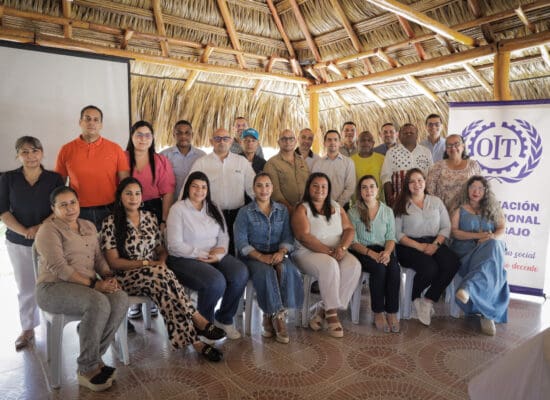
Closing ceremony of the first workshop on psychosocial resilience.
In 2020, several coal mines in Colombia’s Cesar mining corridor suspended operations. By that time, coal had been powering the regional economy, people’s livelihoods, business, public revenues, and social life for more than 25 years. The suspensions not only removed jobs, but also exposed a deeper fragility—an economy built around a single extractive activity, with limited capacity for social or psychological recovery after the boom ended.
Yet Cesar’s story is not just one of decline. Along the mining corridor, small community organisations have been crafting practical responses to the challenges of the transition. Their initiatives—often informal, rooted in place, and run by women—are already producing models that can be replicated: strengthening local governance, diversifying livelihoods, and rebuilding social fabric. A key lesson emerging from the territory is that a just energy transition (JET) cannot be delivered through national plans alone. It must be built from the ground up, reinforcing what communities are already doing and scaling up locally rooted solutions.
The Wuppertal Institute is focusing on these locally led initiatives within the framework of the Innovation Regions for a Just Energy Transition (IKI JET) project. A key milestone was reached in July 2025, when two case-based mutual learning sessions (cbMLS) brought together civil society, government, academia, and communities to learn from local organisations working on two core challenges: the psychosocial empowerment of women and the strengthening of family-farming livelihoods.
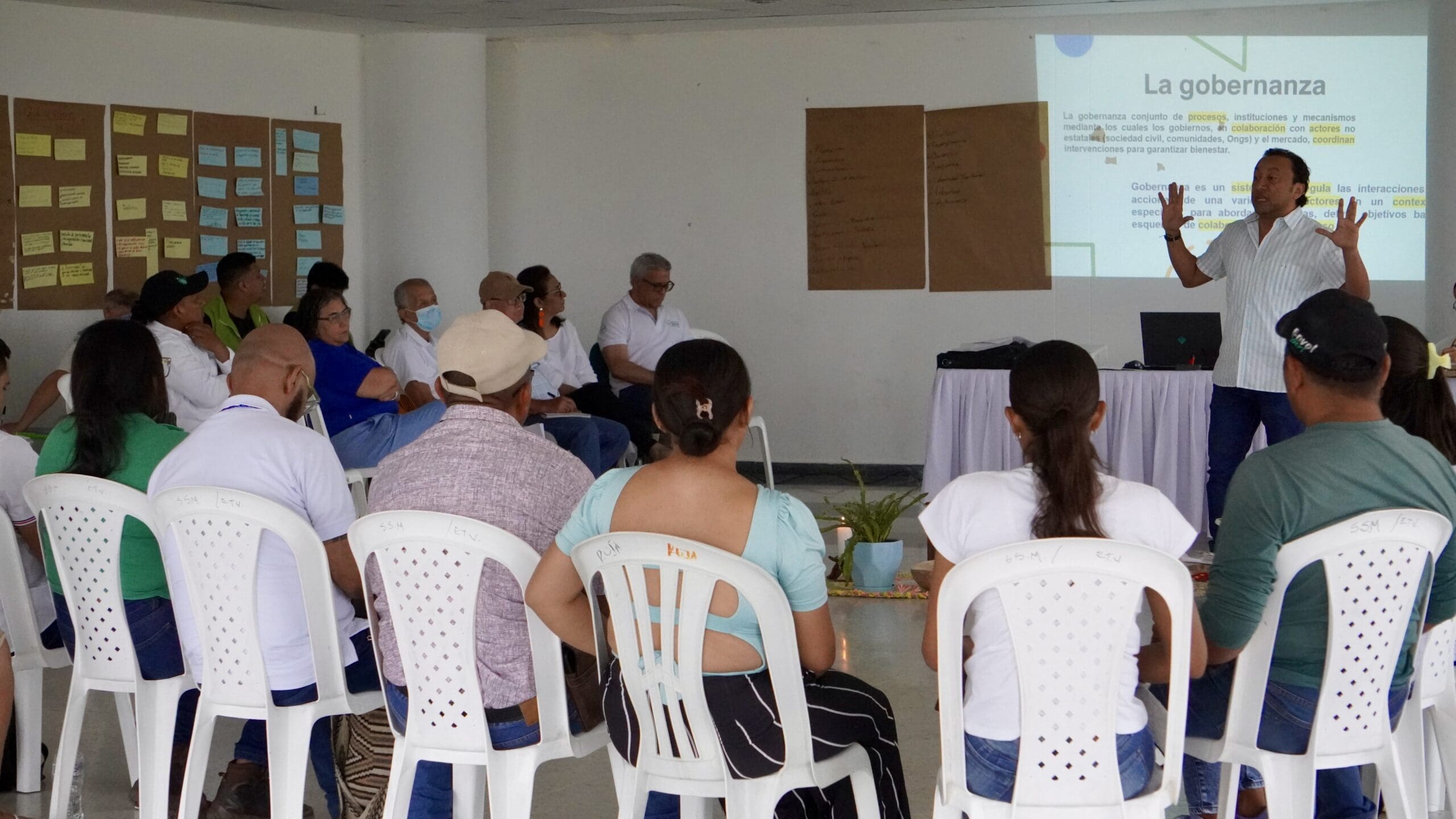
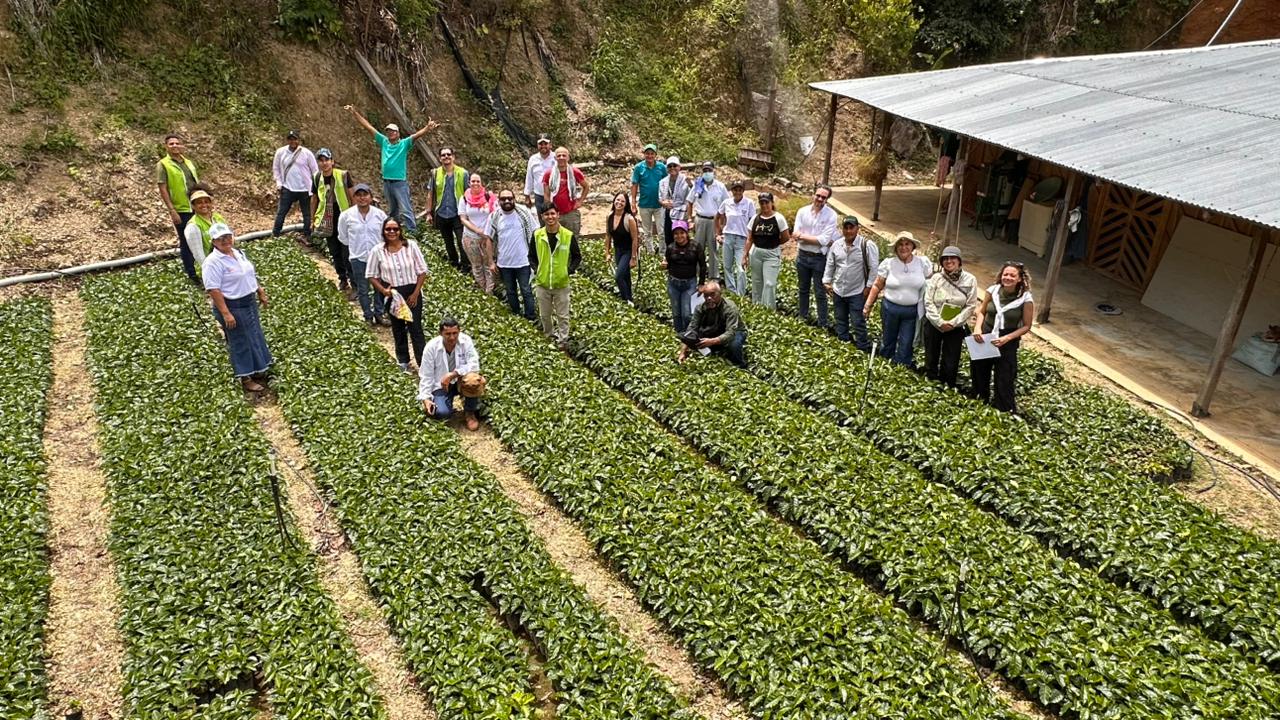
Introductory talk on collaborative governance during a session on family farming governance.
From Local Practice to Scalable Solutions
The IKI JET project supports coal regions in Latin America, Africa, and Asia to design and implement transition pathways towards low-carbon development that are aligned with the Paris Agreement and the International Labour Organization’s Just Transition Guidelines. In Colombia, the Wuppertal Institute is using the innovation lab methodology to co-develop strategies for strengthening, replicating, and scaling grassroots innovations that transform socio-economic structures by creating or reinforcing sustainable livelihoods.
The innovation lab methodology is structured in four stages:
- Understanding: Building trust, defining shared visions, and establishing baseline indicators.
- Co-designing: Developing action plans through workshops, expert input, and peer learning.
- Experimenting: Testing solutions in real contexts, monitoring progress, and adjusting as needed.
- Co-evaluating: Extracting lessons, developing scaling strategies, and formulating policy recommendations.
In Cesar, where national transition plans often feel abstract or detached from everyday realities, the innovation labs bridge technical debate and lived experience. They translate local knowledge—often framed in terms of grief, survival, and dignity—into concrete insights that can inform broader policy.
The cbMLS in July 2025 were conceived as intensive learning spaces rather than conferences. Their purpose was to let institutions and experts learn directly from grassroots organisations already practising transition work, often with scarce resources but with deep territorial understanding. For facilitating this mutual learning process, two sessions were organised in which representatives from local and national governmental agencies, academia and research institutions, mining companies, and international donors worked with leaders of more than 20 locally rooted organisations. The sessions focused on two crucial fields of the regional transformation:
- Psychosocial strengthening and gender in the mining corridor
- Collaborative governance and family farming within the “Cesar Corridor of Life”
Across both, one message was consistent: local initiatives may be small, but they hold strong potential for replication and scaling—if they are supported by coherent policy, stable financing, and long-term institutional accompaniment.
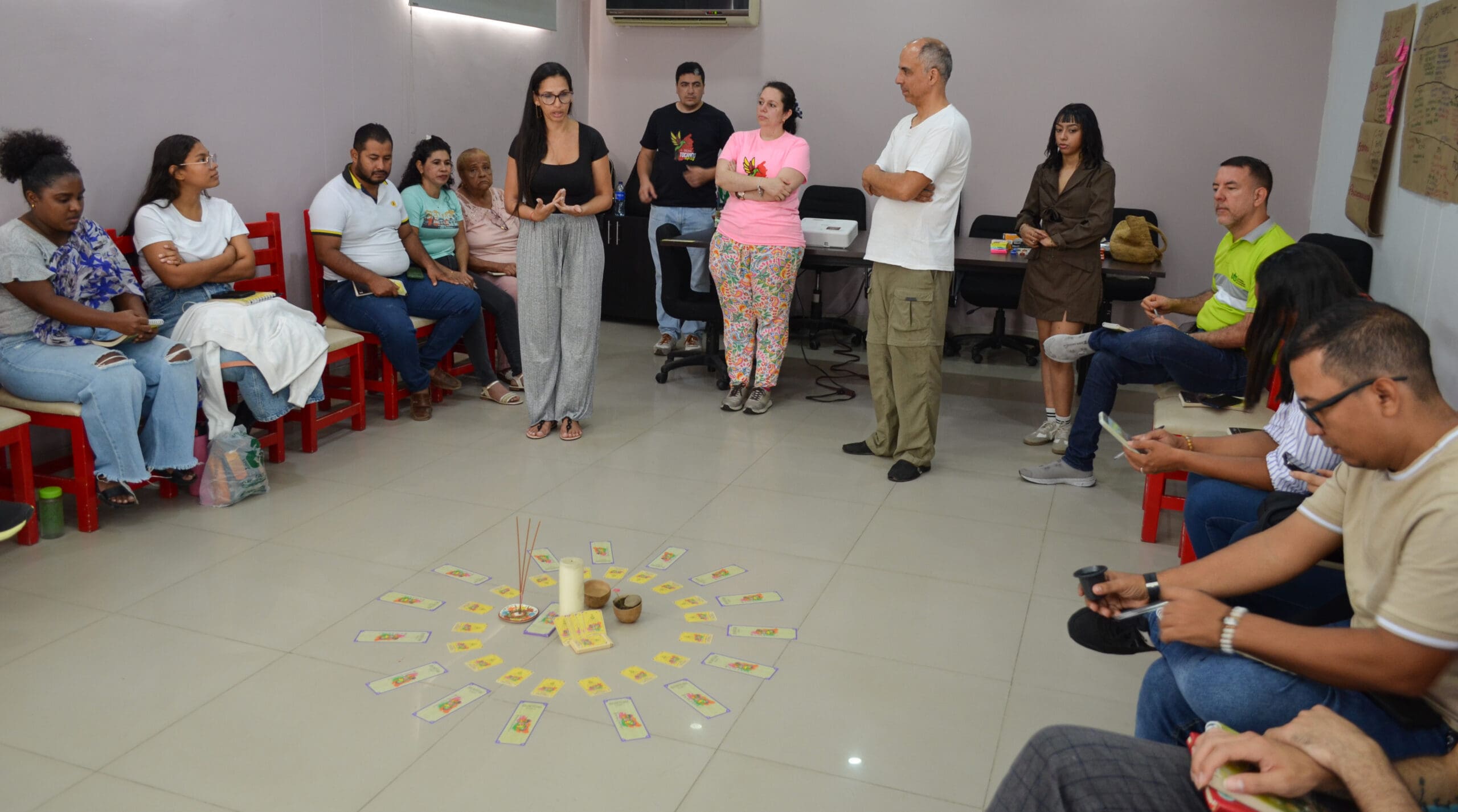
Closing ceremony of the first workshop on psychosocial resilience.
Session 1: Psychosocial Recovery and Women’s Empowerment
Coal mining not only transformed the land—it also reshaped social life. In this session, which was co-organised by the Center for Social Justice Studies (Tierra Digna) and Magdalena University, participants described how the industry reoriented economic, social, and emotional structures over decades. Traditional livelihoods were eroded as communities reorganised daily life around mining-related subsistence. Once mining operations ceased, the psychosocial impacts became starkly visible.
Women’s experiences stood out in particular. As mining expanded, many moved away from agriculture into precarious service work, while shouldering heavier household burdens. The mining boom exacerbated gender-based exclusion and created new vulnerabilities. Participants agreed that to address the “social factor” of the transition, it is necessary to centre women’s experiences and leadership.
Memory, loss, and resilience
A collective memory exercise brought together communities, institutions, and researchers to map how mining altered life. From a gender perspective, the participants traced a journey from an early “mirage of progress” to widespread loss. Young people left school believing in coal’s promise; families sold land under pressure; women faced exclusion and suffered from increased gender-based violence. The promise of prosperity was replaced by the realities of illness, displacement, and silence.
Yet resilience also emerged after the mine closures. Women’s groups organised savings associations, rebuilt livelihoods through agriculture and crafts, and reimagined community identity. Empowerment, they noted, began in solidarity.
Diverging narratives of transition
The workshop revealed contrasting perspectives:
- Directly affected communities in La Jagua de Ibirico and La Loma described extensive unemployment, despair among young people, and rising mental health challenges. Women have become central to social reconstruction—forming associations, cultivating cacao and coffee, and sustaining local life through care and creativity.
- Institutions and external actors recalled past prosperity but recognised its fragility and the distance between policy discourse and lived experience.
This gap underscores a critical challenge: if institutional transition narratives ignore psychosocial realities, they risk deepening alienation rather than healing it.
Healing as infrastructure
The second day began with a symbolic “healing welcome,” using aromatherapy and sweets of different flavours to represent pain, memory, and hope. Far from supplementary, such practices were recognised as core to rebuilding trust and cohesion.
In coal regions, psychosocial recovery is essential for a just transition. Psychosocial recovery includes addressing trauma and restoring dignity; diversification strategies lack the social foundation they require.
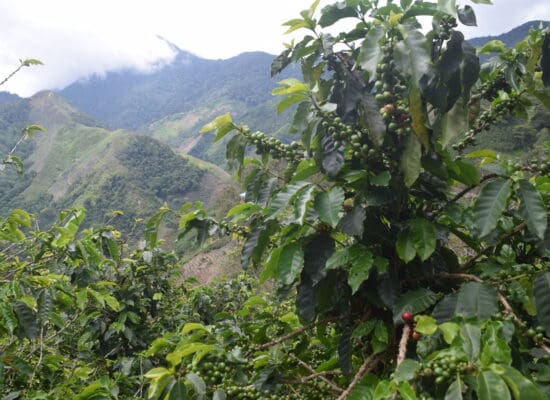
Visit to a coffee farm affiliated with Asotepros.
Session 2: Governance, Family Farming, and the “Cesar Corridor of Life”
The second cbMLS focused on diversifying livelihoods beyond coal by strengthening family farming and collaborative governance. Participants agreed that Cesar and La Guajira have natural and cultural assets that can anchor new regional economies.
The workshop, co-organised by the non-governmental organisation Cesar and La Guajira Development and Peace Program (PDPCG), Magdalena University, and the Wuppertal Institute, gathered local organisations, officials, academics, and donors to examine how grassroots associativity can sustain transition efforts. Two associations were highlighted:
- The Becerril Green Farmers’ Association (ASOVECAB)
- The Association of Technicians, Professionals, and Producers in Support of the Serranía del Perijá (ASOTEPROS)
Associativity as collective governance
Participants stressed that associativity must go beyond forming legal entities. True organisational strength depends on setting clear goals, practising participatory decision-making, and implementing flexible governance structures that empower communities. Collaborative territorial governance should, they proposed:
- Place citizens and territory at the centre
- Recognise the environment as a living asset
- Promote inclusive economies and cultural revitalisation
- Build autonomy from dependence on extractive industries
Dependence, they argued, limits collective growth—especially in regions shaped by decades of external control.
Two paths; shared challenges
ASOTEPROS presented its journey since 2014 and its coffee brand Xagua Café, which integrates sustainable production with renewable energy and conservation. Its collaborative partnerships were cited as key to the association’s resilience.
ASOVECAB shared how training and planning have helped consolidate the association’s operations. It promotes biodiversity-based livelihoods, using native tree species like the guáimaro to restore water sources and develop marketable products.
A recurring barrier was commercialisation: while communities can produce and process goods, they lack stable access to markets. Participants suggested that public procurement frameworks could be adapted to favour local, solidarity-based economies.
A call for accountability
In a striking moment, a community leader asked all institutional representatives to stand and face the community, demanding visibility and reciprocity. The gesture underscored a powerful idea: communities should not be treated as beneficiaries but as co-owners of the transition. It also challenged the short-term project logic that treats territories as sites of implementation rather than as long-term partners.
Strengthening livelihoods in coal regions requires better tools to manage and lead the associations, market-building, and sustained alliances.
Implications for Policy and Practice
Two overarching insights emerged from both sessions:
First, local initiatives already embody transition solutions. Even when small, they reflect local ownership and adaptability. Replicating and scaling these models requires policies that recognise their legitimacy and provide stable technical, psychosocial, and financial support.
Second, public policy must shift from delivering programmes to enabling capacity. The role of government and institutions is to reinforce, not replace, local agency—by aligning interventions, funding, and coordination around community priorities.
Ultimately, coal regions need more than new jobs; they need restored social fabric, trusted institutions, and resilient local economies. In Cesar, the seeds of that transition are already being planted by the communities themselves.
Related Posts
Stay Informed and Engaged
Subscribe to the Just Energy Transition in Coal Regions Knowledge Hub Newsletter
Receive updates on just energy transition news, insights, knowledge, and events directly in your inbox.