
Colombia
What Role Did Just Transition Play in the Santa Marta Climate Talks?
By convening a “coalition of the willing“ in pursuit of fossil fuel phase-out, the Santa Marta conference made history. But how did just transition feature in the talks—and what happens next?
Lea el artículo en español.
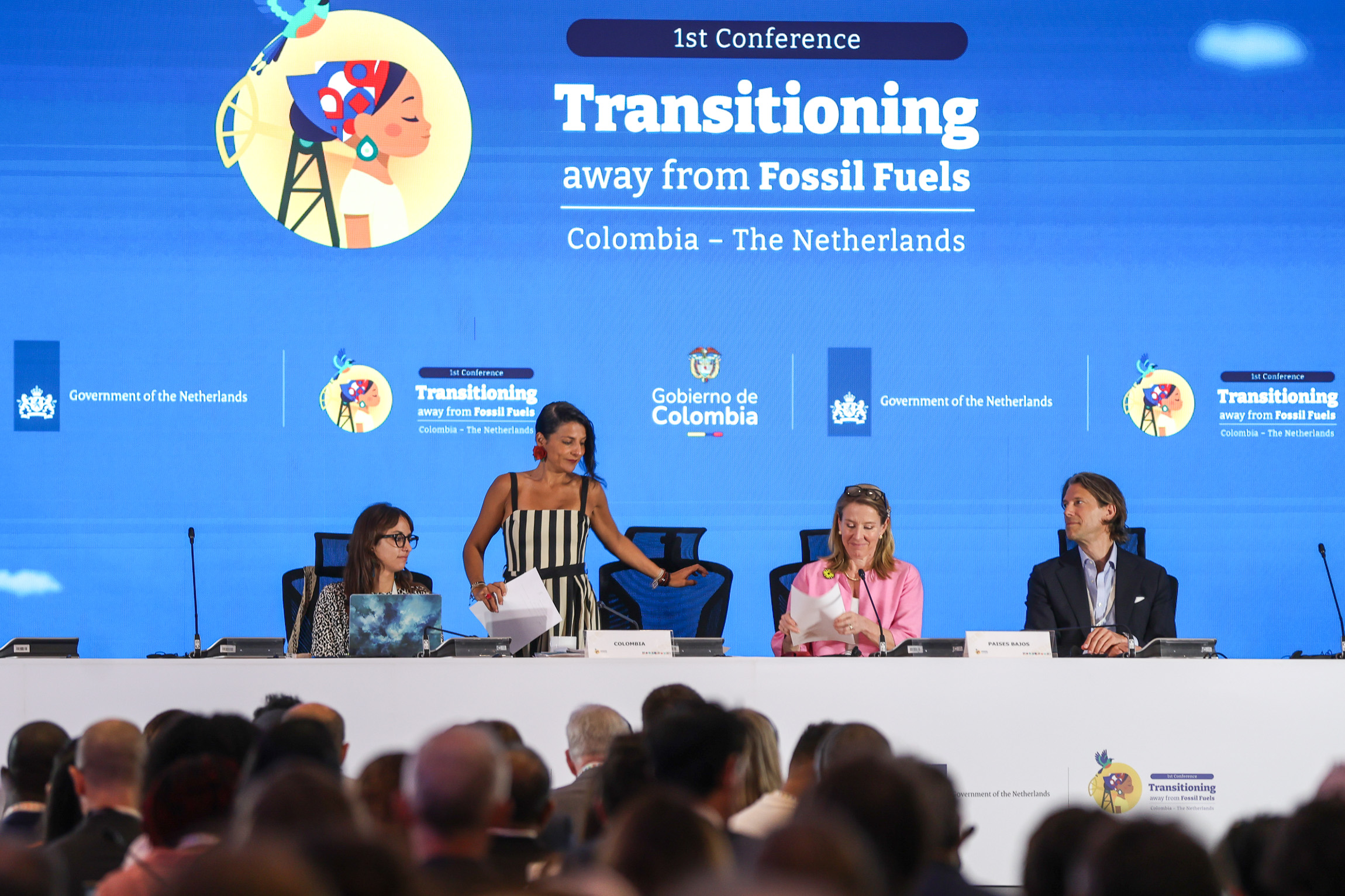
Opening Plenary. Photo by IISD/ENB | Mike Muzurakis
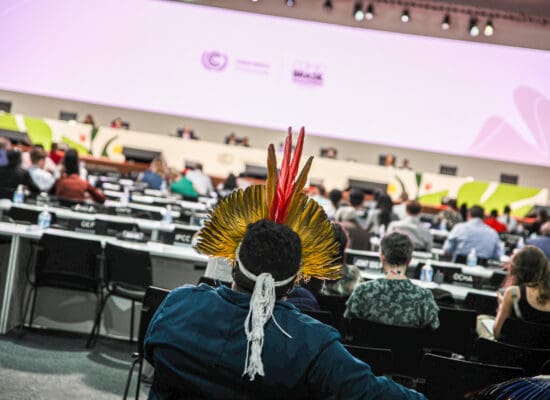
In April 2026, the city of Santa Marta, Colombia, hosted the First Conference on Transitioning Away from Fossil Fuels (TAFF 1). The milestone event was made up of three parts: an Academic Dialogue providing scientific evidence and expertise; a People’s Summit offering social and territorial legitimacy; and a High-Level Conference attended by governments from 57 countries to mobilise political will. Co-hosted by the governments of Colombia and the Netherlands, the gathering consolidated a bloc of nations committed to advancing an equitable and territorial decarbonisation. While the broader discussions focused on how countries can reduce their economic dependence on fossil fuel, the topic of just transition, as an important enabler for such a shift, was also widely discussed.
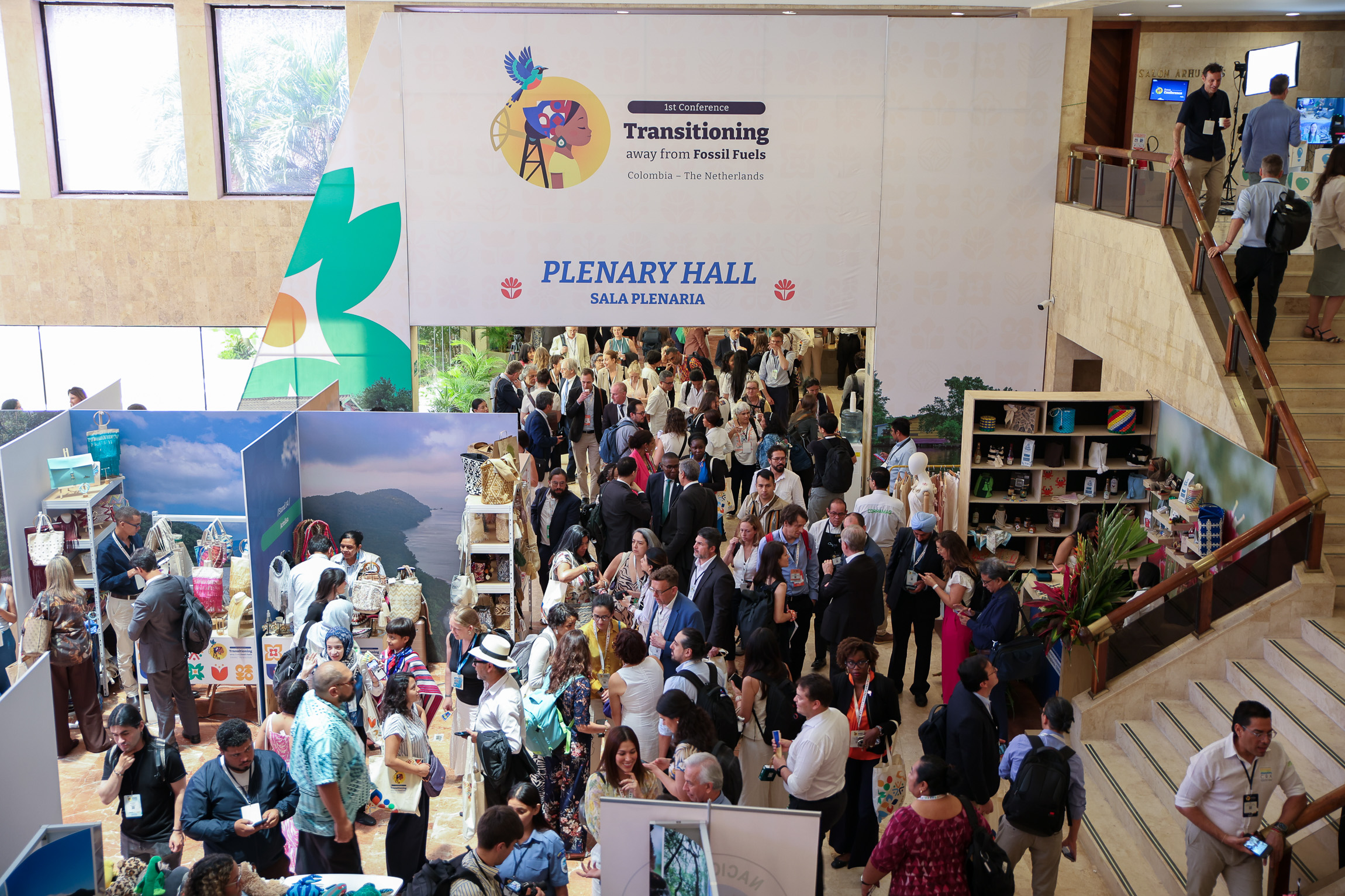
Photo by IISD/ENB | Mike Muzurakis
TAFF 1 Pre-Conference: Academic Dialogue – Scientific insights
The pre-conference meetings began with voices from the scientific community and grassroots organisations. The aim of this dialogue was to inform the governmental discussions to be held a few days later.
Through various working sessions that involved researchers, policy advisors, and other experts from academic institutions, think tanks, and non-governmental organisations (NGOs), the scientific component shared insights through its Santa Marta Action Repertoire (SMART) Summary.
Just transition is reflected throughout the SMART framework as a central condition for successfully transitioning away from fossil fuel, rather than as a standalone issue. The document repeatedly emphasises that the transition must be fair, inclusive, participatory, and grounded in justice. This is most explicit in Action Insight 2, which calls for proactive protection of livelihoods and workers through retraining, skills development, social dialogue, economic diversification, and regional redevelopment to ensure that the costs and benefits of the transition are distributed fairly. In addition, Action Insight 11 highlights the importance of procedural justice and meaningful stakeholder participation, including the involvement of workers, Indigenous Peoples, women, young people, and marginalised communities in decision-making processes.
Beyond labour issues, just transition is linked to broader development priorities, such as reducing structural inequalities, improving human welfare, supporting vulnerable fossil fuel-dependent regions, ensuring access to transition finance and technology, and protecting communities from negative social impacts. The document therefore frames just transition not only as compensation for the workers who are affected, but also as a comprehensive approach in which the transition’s success is defined by tangible social progress and improvements in human welfare.
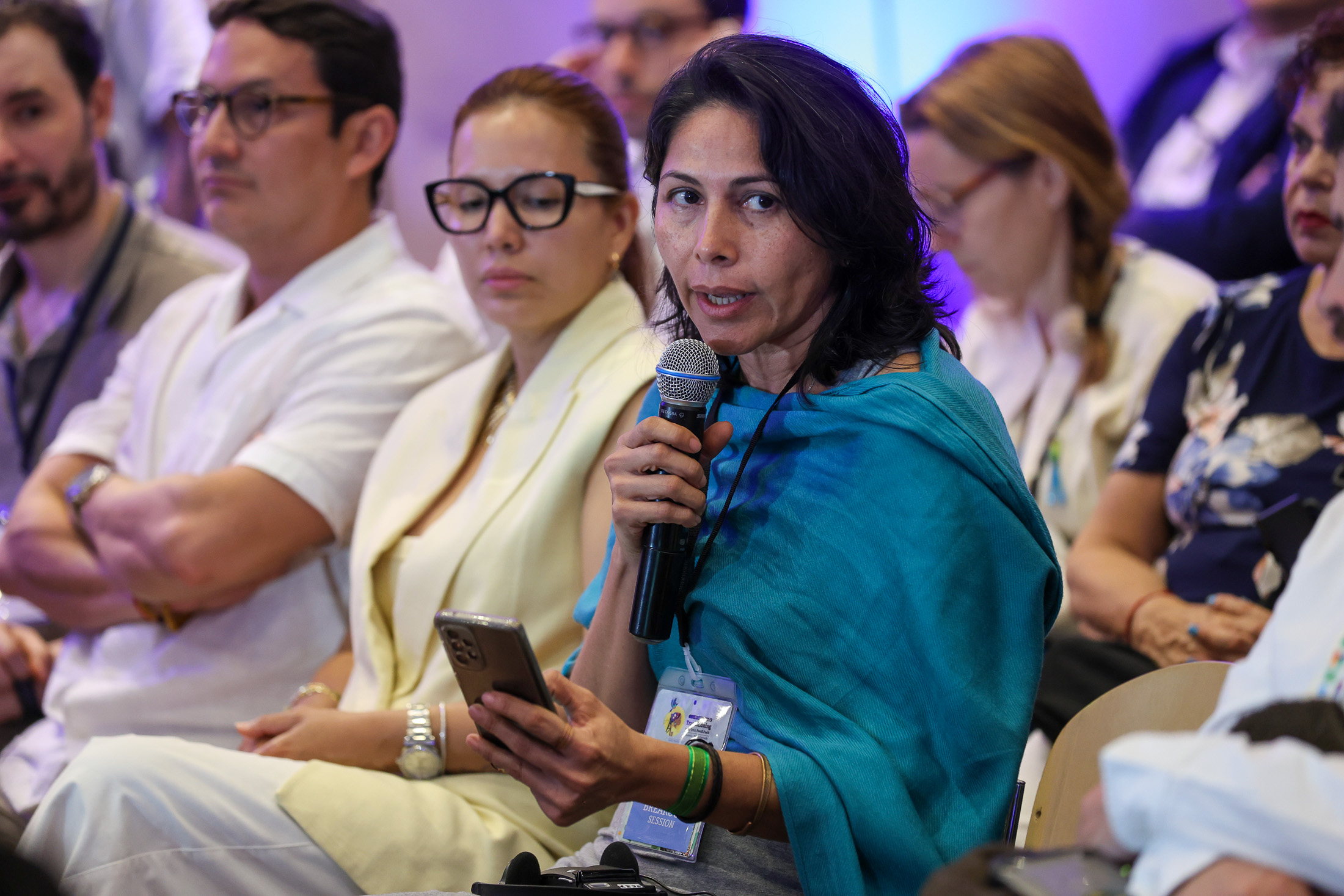
Ángela León, peasant farmer organisations. Photo by IISD/ENB | Mike Muzurakis
TAFF 1 Pre-Conference: People’s Summit – Indigenous and civil society voices
The People’s Summit brought together trade unions, environmental leaders, Indigenous groups, farmers, and gender and youth advocates from across the globe. Organised by global networks including the Climate Action Network (CAN), the event was instrumental in amplifying these voices and resulted in a People’s Declaration for a Rapid, Equitable, and Just Transition for a Fossil-Free Future. The declaration rejects the “climate chaos and extreme inequality” caused by an extractivist model that perpetuates colonial patterns.
The demands made – also supported by the global Fossil Fuel Non-Proliferation Treaty initiative – call for a systemic transformation grounded in energy sovereignty, historical reparation, and reparative justice. The transition, they argue, must be rapid, funded by those with the most historical responsibility, and led by the affected communities themselves. In this context, organisations including Friends of the Earth International (FOEI) stressed that the transition process must actively dismantle existing inequalities, rather than reinforcing them.
The calls to action were urgent: an immediate halt to new fossil fuel infrastructure, and a managed reduction in fossil fuel demand based on principles of equity, with the Global North taking the lead. Governments were urged to stop subsidising fossil fuel and the destruction it brings and instead invest in clean, public, and community-led energy systems.
In summary, the existence of this people’s space ensured that justice was treated not as a peripheral issue, but as a prerequisite for political viability and durable transitions. By creating a space in which territorial voices and affected communities could share their views, the People’s Summit helped set the tone for the subsequent government discussions, pushing them beyond isolated policy measures to confront deeper structural challenges.
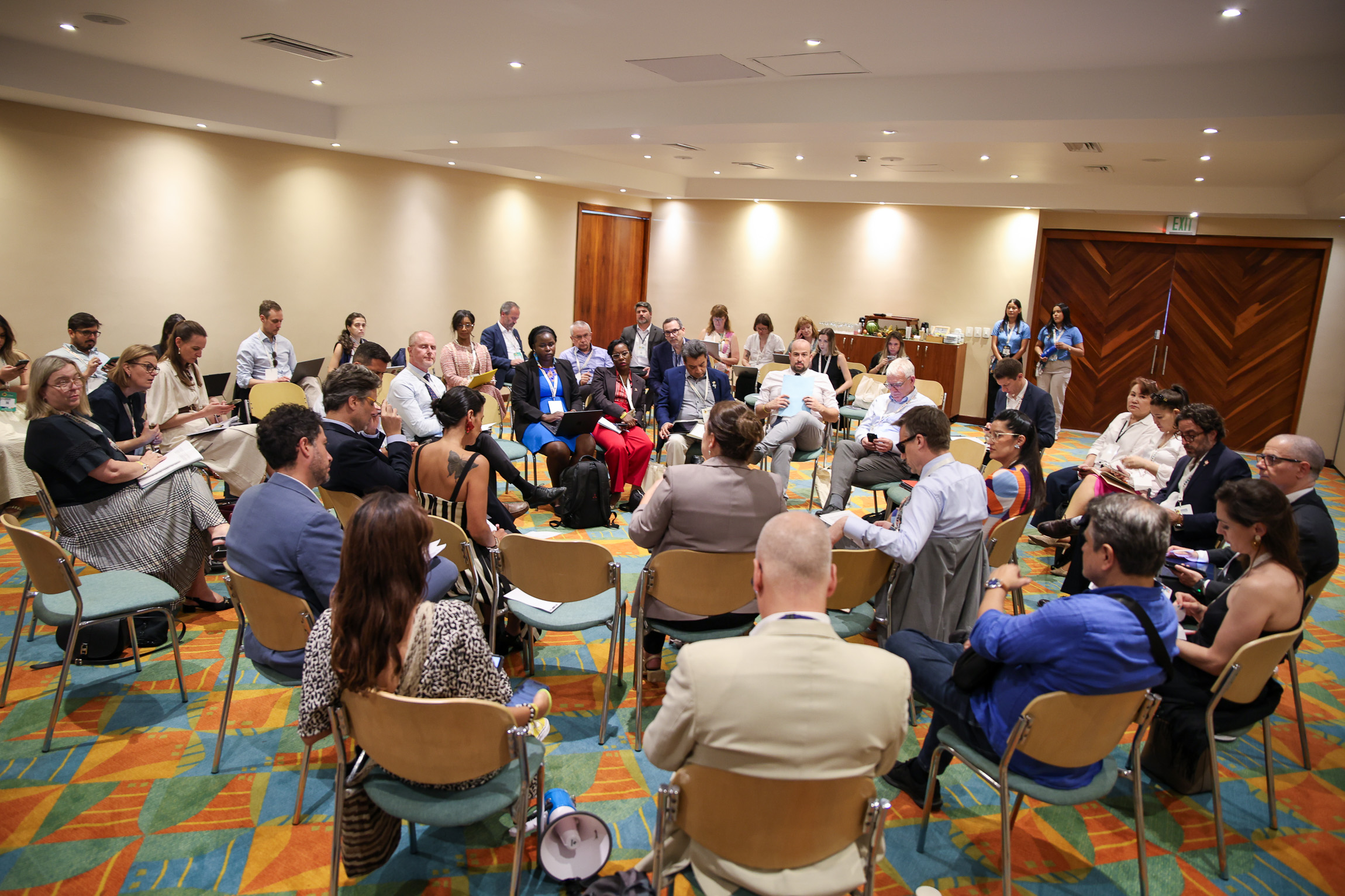
A breakout session during the High-Level Conference. Photo by IISD/ENB | Mike Muzurakis
High-Level Conference: Political pledges and final outcomes
The high-level session attended by governments focused on operationalising the global commitment to transition away from fossil fuel through three pillars: overcoming economic dependence; transforming supply and demand; and advancing international cooperation. Their discussions, summarised in the Chair’s Summary, highlighted that the energy transition is not a uniform process but requires differentiated national roadmaps.
Participants emphasised that for the Global South, the deployment of and access to renewable energy must be based on social participation that guarantees an inclusive, affordable, decentralised, and people-centred transition. Furthermore, focus was placed on remote areas, rural communities, and vulnerable groups through solutions such as biofuels, biomass, micro-grids, and community-owned renewable systems that support both energy access and energy sovereignty.
One of the most significant areas of consensus was the recognition that “justice” in the transition must be reflected in labour reconversion, territorial planning, and economic diversification. The dialogues highlighted the importance of territorial just transition plans that include social protection measures, workforce development, and early planning for workers and communities who depend on the fossil fuel economy. Participants also stressed that transition planning should be developed through social dialogue with workers, Indigenous Peoples, women, young people, rural communities, and other affected groups, while ensuring that the benefits are shared locally and avoiding new forms of extractive dependence linked to the green economy.
Moreover, it was stressed that financial justice is the enabler of territorial justice. This demands a reform of the international financial architecture through concessional and non-debt-creating finance, direct access mechanisms for territorial actors, and support to cover the “opportunity costs” of leaving coal, oil, and gas in the ground. Finally, it was agreed that subsidies and incentives must be designed within strict safeguards to ensure that support primarily reaches vulnerable households and prevent the concentration of benefits in higher-income groups.

Paula Padron, Children and Youth. Photo by IISD/ENB | Mike Muzurakis
Moving Forward: Next steps
The conference generated a shared understanding of how dependence on fossil fuel can be dismantled while respecting the principles of distributive, procedural, and restorative justice. Working groups were established to address three critical themes: developing national and regional roadmaps; macroeconomic dependencies and the financial architecture; and trade and investment balance for decarbonisation.
By bridging the gap between high-level science and territorial reality, the Santa Marta conference demonstrated that a fossil-free future is technically possible and socially urgent. The next conference, in Tuvalu and co-hosted with Ireland, will build on this legacy by focusing on the particular urgency faced by the world’s most vulnerable nations.
What this momentum brings in terms of tangible results remains to be seen, but one message is clear: the success of the transition will not be measured by reductions in emissions alone, but by the resilience of ecosystems and the ability to guarantee dignified lives for people who live in the territories undergoing transition.
Related Posts
Stay in the loop
Subscribe to the Just Energy Transition Knowledge Hub Newsletter
Get the latest just energy transition news, analysis, reports, and events delivered to your inbox.