

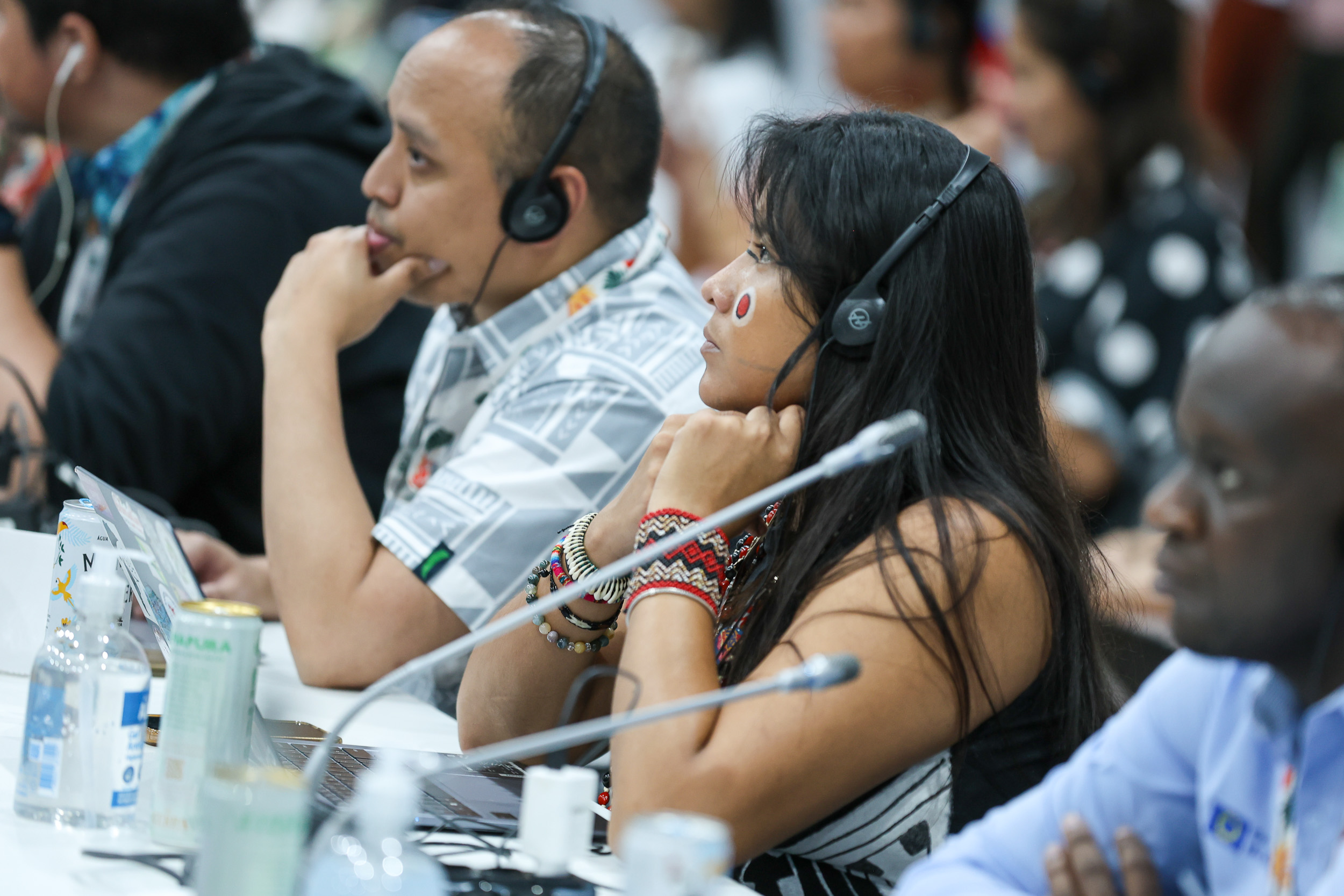
Photo by IISD/ENB | Mike Muzurakis
At COP 30 in Belém, Brazil, countries reached an important agreement under the United Arab Emirates Just Transition Work Programme (JTWP). Recognising principles based on human rights, decent work, social protection, gender equality, and international cooperation, they agreed to develop a Just Transition Mechanism (JTM) to strengthen technical assistance, capacity building, knowledge sharing, and global collaboration.
While the decision established the mechanism’s broad purpose, it left open how these functions would be delivered and through which institutional arrangements. At the June 2026 Bonn Climate Conference, countries began exploring how it could operate in practice.
Negotiations in Bonn concluded with an informal note prepared by the co-chairs, which brought together proposals on the mechanism’s purpose, functions, governance, timelines and relationship with the existing JTWP. The note provided a useful framework for further discussions, but countries did not negotiate or agree on the substance of the proposals.
Discussions continued at an intersessional workshop in Sydney, Australia, from 30 September to 2 October 2026, where countries explored the mechanism’s potential functions, institutional arrangements, and links to existing initiatives. The challenge now is to move beyond these initial exchanges and determine what the mechanism should deliver and how it could do so.
What could the mechanism look like?
Despite differences between countries over institutional design, there is considerable common ground. Most of the proposals envisage a mechanism that facilitates capacity building, knowledge exchange, technical support, and cooperation among existing institutions, helping countries integrate just transition considerations into national climate and development policies.
Differences emerge, however, over how these functions should be delivered and how far the mechanism’s mandate should extend. Some envisage a tiered structure, combining a body that provides political and policy guidance under the Paris Agreement with a technical component focused on implementation. Such arrangements could also help address structural barriers to just transitions, including limited budgets, technology access, and gaps in international finance.
Others favour a leaner, demand-driven approach that connects countries with existing expertise, partnerships, and financing opportunities, or a facilitative cooperation network that respects national priorities without introducing additional standards or reporting obligations. Another approach emphasises making better use of existing institutions and avoiding duplication, with activities organised through a time-bound workplan that covers technical cooperation and knowledge sharing.
More concrete proposals include matchmaking platforms that connect countries seeking support with potential partners and funding sources; technical assistance hubs that respond to country requests; and resource mobilisation groups that identify financing gaps and work with financial institutions to improve access to support.
The key questions still to be answered are about which functions require dedicated institutional capacity, how responsibilities should be allocated, and what role the mechanism should play in facilitating access to finance and technical support.
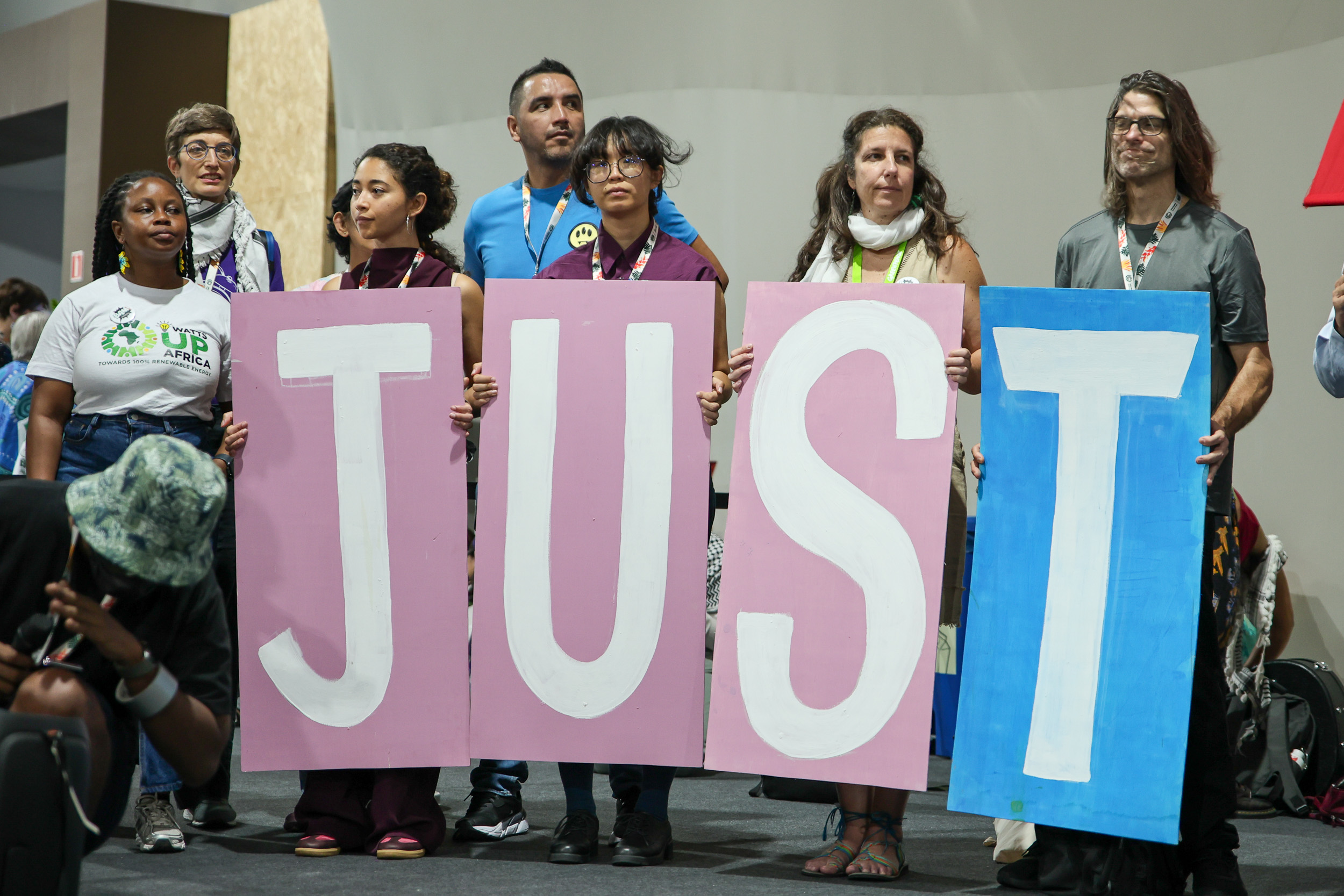
Photo by IISD/ENB | Mike Muzurakis
Who will participate, and what happens next?
The mechanism’s governance raises important questions about how the commitments to meaningful and inclusive participation recognised at COP 30 will be reflected in the governance arrangements – in particular, how they will involve workers, Indigenous Peoples, local communities, and other affected groups.
Civil society, trade unions, women’s organisations, and youth representatives have proposed various ways to strengthen participation in the mechanism. Their proposals include advisory bodies, practitioner networks, and assemblies that bring together those who are implementing just transitions on the ground. Some proposals go further, calling for formal representation of observers in the mechanism’s governing structures. Although countries broadly support meaningful stakeholder participation, their views differ on how far this should extend.
Finance is still a contentious issue. While some envisage a mechanism that primarily helps countries to access funding that already exists, others propose that it plays a stronger role in identifying financing gaps, mobilising additional resources, and providing guidance to financial institutions. How far the mechanism should go beyond facilitating existing support remains an important question for COP 31, which will take place in Antalya, Türkiye, from 9 to 20 November 2026.
Expectations also differ on how quickly the mechanism should become operational. Some parties and stakeholders are pushing for COP 31 to formally establish the mechanism, including its core functions and institutional structure, so it can be implemented as soon as possible. Others favour a more gradual approach, with COP 31 focusing on an initial framework or process and further decisions on the mechanism’s design and operation to be made in 2027.
COP 31 will also see a review of the existing JTWP, based on the terms of reference agreed in Bonn. Views differ on whether the work programme should continue as a separate dialogue platform, be integrated into the mechanism, or eventually be replaced by it. As in Bonn, where negotiations on the review took considerable time, there is a risk that these discussions could divert attention from preparing the mechanism for use.
Since COP 30 last year, just transition negotiations under the United Nations Framework Convention on Climate Change (UNFCCC) have moved beyond the question of whether a Just Transition Mechanism is needed. There is consensus that practical support should be available to countries pursuing just transitions, even if views differ on how to achieve this. The challenge in Antalya will be to translate this common ground into an institutional framework that can respond to countries’ needs and help turn the principles agreed in Belém into action.
Need a refresher? Here’s our Just Transition Work Programme explainer.
Related Posts
Stay in the loop
Subscribe to the Just Energy Transition Knowledge Hub Newsletter
Get the latest just energy transition news, analysis, reports, and events delivered to your inbox.