

Workshop
Indonesia Strengthens Just Transition Pathways in East Kalimantan's Coal-Dependent Region
The International Labour Organization (ILO), through its IKI-JET project, is advancing Indonesia’s just energy transition by equipping stakeholders with practical tools to support workers and communities in coal-dependent regions.
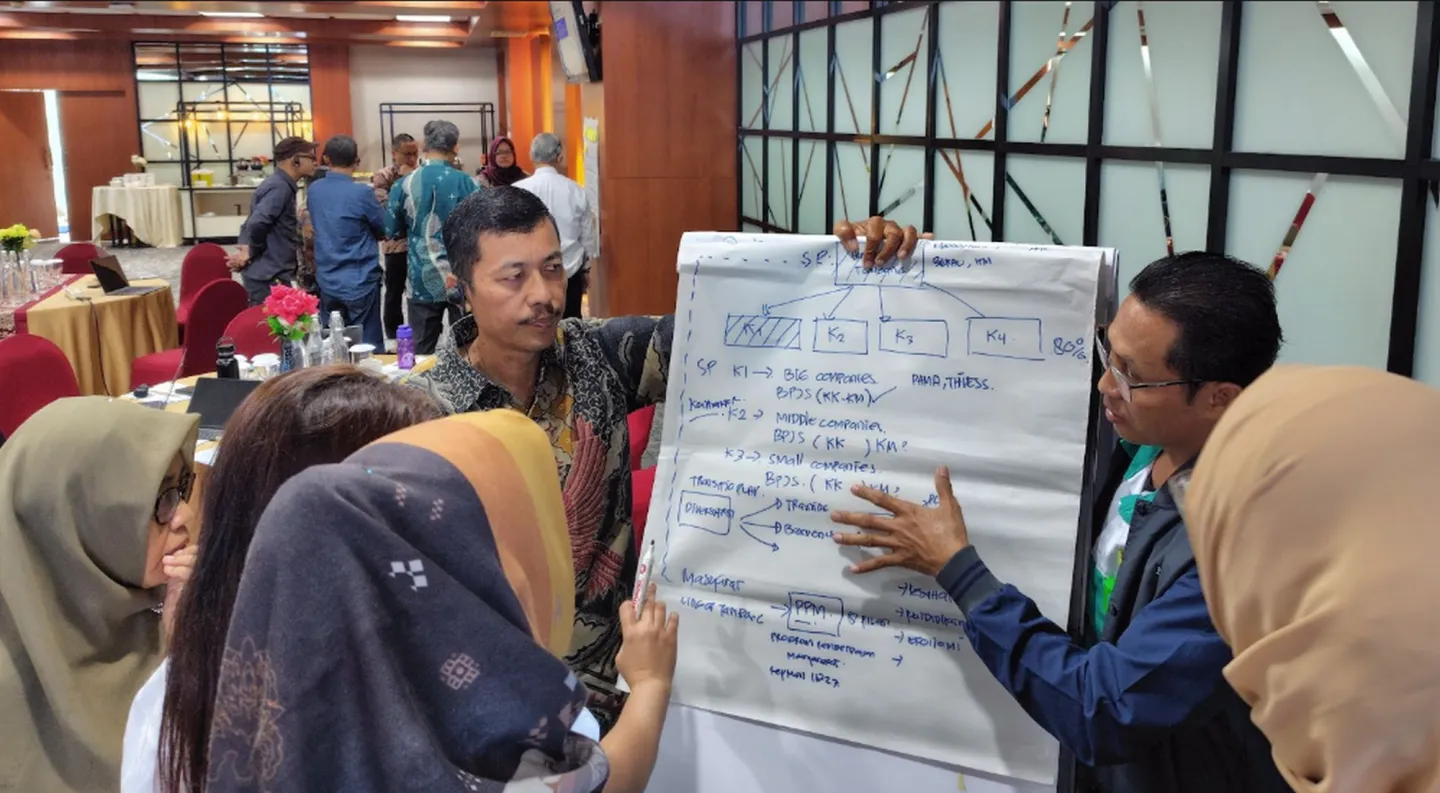
Participants of IKI JET workshop in East Kalimantan, Indonesia. Photo: © ILO
The International Labour Organization (ILO), through the Innovation Regions for a Just Energy Transition (IKI-JET) project, convened a workshop in from 23-25 June in Balikpapan, East Kalimantan to introduce the ILO Practical Guide on Just Transition Strategies for Coal Regions in Indonesia and support policymakers’ efforts in planning Just Energy Transition in the country.
This event came at a timely moment. During the same week, at London Climate Action Week, United Nations Secretary-General António Guterres called for a fast, fair and equitable transition to clean energy that delivers greater stability, energy security and sustainable development. The workshop reflected this vision by focusing on practical strategies to ensure that Indonesia’s energy transition creates decent work, strengthens communities and leaves no one behind.
“Our priority now is to maintain this momentum by working together to ensure that the transition creates new economic opportunities while protecting livelihoods and leaving no one behind.”
– Simrin Singh, ILO Country for Indonesia and Timor-Leste
The workshop brought together representatives from national and provincial governments, employers’ and workers’ organizations, businesses, academia, civil society organizations and Indigenous Peoples’ representatives to explore practical approaches for supporting people-centred transition pathways in Indonesia’s coal-dependent regions.
East Kalimantan was selected as the focus of the exercise due to their strong economic links to coal-related activities and the significant social and economic transformations expected as Indonesia advances its energy transition agenda. The workshop enabled participants to identify risks, opportunities and policy priorities while exploring how the Guide can support planning processes tailored to local realities.
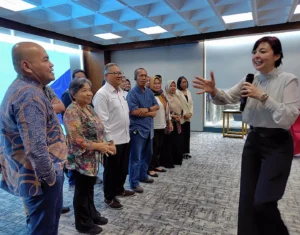
In her opening remarks, Simrin Singh, ILO Country for Indonesia and Timor-Leste, emphasized the importance of adopting a human-centred approach to Indonesia’s just energy transition. She highlighted five key priorities for advancing a just transition in coal-dependent regions: effective planning, strong social dialogue, economic diversification, skills development and social protection.
“East Kalimantan has made important progress towards a just energy transition. These elements are essential to ensuring that the transition creates opportunities for workers and communities while minimizing potential social and economic disruptions,” Simrin stated. “Our priority now is to maintain this momentum by working together to ensure that the transition creates new economic opportunities while protecting livelihoods and leaving no one behind.”
Developed by the ILO in collaboration with the IE-iGDP Just Transition Observatory (Institute for Global Decarbonization Progress), which is a global platform that advances knowledge, policy development and capacity building for a just transition at IE University in Madrid, Spain, the Practical Guide aims to support governments, employers’ and workers’ organizations and other stakeholders in designing and implementing people-centred transition strategies in coal-dependent regions. By translating just transition principles into practical actions, the Guide echoes the United Nations Secretary-General’s call for a fast, fair and equitable transition to clean energy.
“We are on the right trajectory with strong support. What is important now is that we continue these efforts and move forward together towards a just energy transition.”
– Sonny Widyagara Nadar, representative from Energy and Mineral Agency in East Kalimantan
Throughout the workshop, experts led technical sessions introducing the Guide’s methodology and facilitated practical exercises to help participants apply its different modules to real-world transition challenges. Participants worked through issues related to governance, economic diversification, employment, skills development, social protection, enterprise support, financing and social dialogue.
A reflection session on the final day collected structured feedback on the Guide’s usefulness, clarity as well as applicability, and invited participants to reflect about their own role and engagement in just energy transition processes. Participants provided recommendations on how the tool could be strengthened and adapted to better reflect the Indonesian context and the specific needs of coal-dependent regions.
During the validation session, Sonny Widyagara Nadar, representative from Energy and Mineral Agency in East Kalimantan remarked: “We are on the right trajectory with strong support. What is important now is that we continue these efforts and move forward together towards a just energy transition”.
On top of that, Saiduani, representative from Indigenous Peoples Alliance of the Archipelago (AMAN) East Kalimantan noted that “The meaningful participation of Indigenous Peoples is crucial to achieving a just energy transition, in line with the principles of the ILO Indigenous and Tribal Peoples Convention, 1989 (No. 169)”.
The workshop forms part of the broader efforts of the IKI-JET project to support coal regions globally in the transition away from coal towards more sustainable and inclusive economic pathways. A similar workshop with a focus on the Guide was organized in May in Colombia and a final global workshop will take place in Turin in July 2026. Through strengthened social dialogue, stakeholder engagement and institutional capacity development, the project seeks to promote decent work and ensure that no one is left behind in the transition process.
“The meaningful participation of Indigenous Peoples is crucial to achieving a just energy transition, in line with the principles of the ILO Indigenous and Tribal Peoples Convention, 1989 (No. 169).”
– Saiduani, representative from Indigenous Peoples Alliance of the Archipelago (AMAN) East Kalimantan
This piece was written by the ILO and co-published by the Just Energy Transition in Coal Regions Knowledge Hub as part of the IKI JET Project.
Related Posts
Stay Informed and Engaged
Subscribe to the Just Energy Transition in Coal Regions Knowledge Hub Newsletter
Receive updates on just energy transition news, insights, knowledge, and events directly in your inbox.