

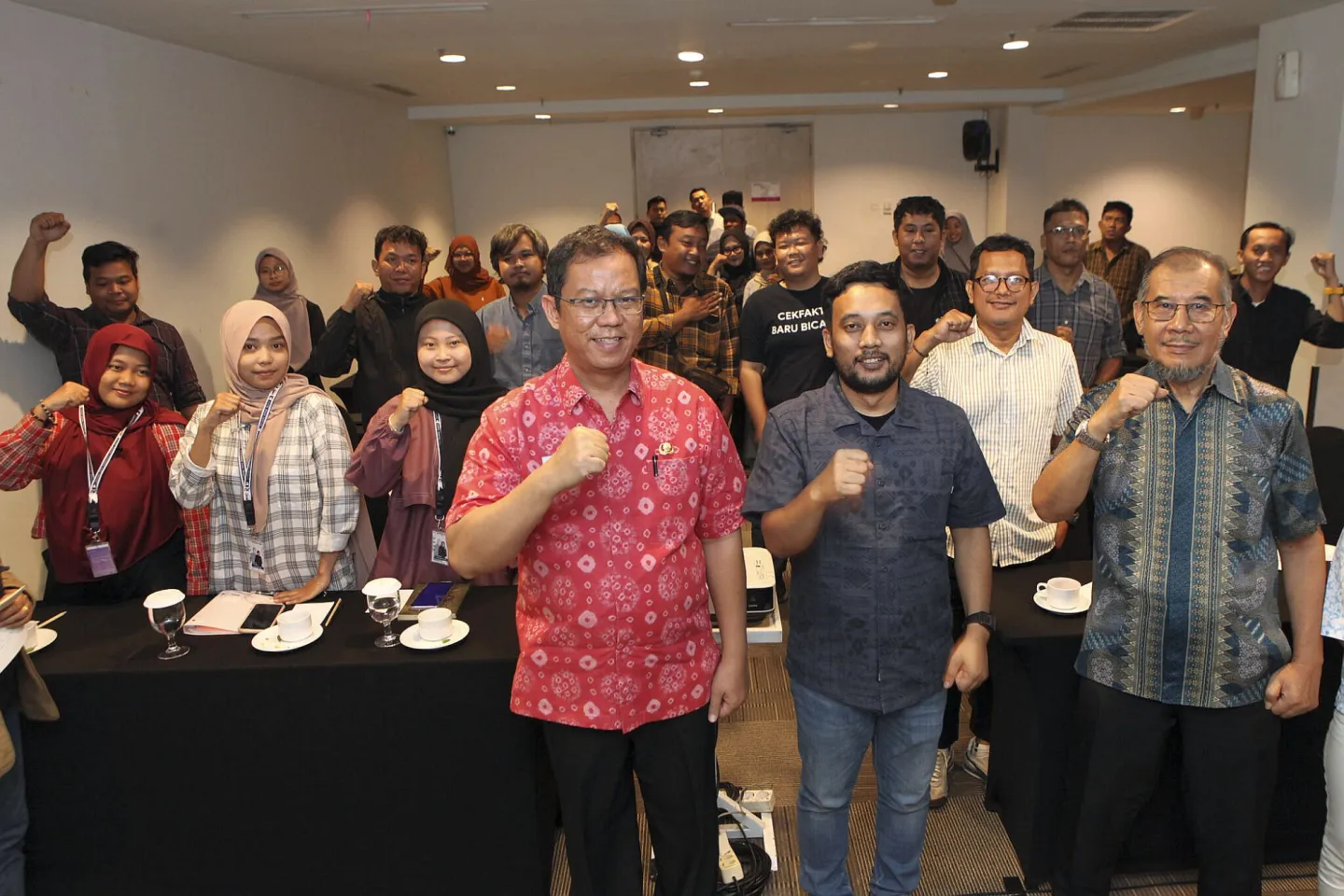
Hari Wibawa attends media training on just energy transition for journalists in collaboration with the Indonesian Journalists Association (AJI) Palembang) in July 2025. Photo: © Suarapublik.id
A dedicated provincial leader is driving South Sumatra’s just energy transition while advancing Indonesia’s broader commitment to renewable energy.
South Sumatra Province is transitioning towards a future that depends less on coal and increasingly on skilled workers and sustainable economic opportunities. In line with this shift, the province established the Regional Consultation Forum (FKD) for Accelerating Economic Transformation last year. Formally created through a Governor’s Decree, the FKD brings together local government, employers, trade unions, universities, civil society, and the media to jointly shape the province’s economic direction.
The province is currently developing a skills development roadmap for a just energy transition, designed to strengthen inter-ministerial coordination and ensure that upskilling and reskilling programmes adequately prepare workers affected by the transition. The roadmap aims to equip them with the competencies needed to adapt to a changing world of work.
At the forefront of these developments is Hari Wibawa, head of economics and development funding at the Provincial Development Planning Agency (Bappeda). A South Sumatra native, Hari has played a central role in strengthening collaboration among stakeholders and advancing the province’s just transition agenda.
“This is not a new topic for me,” Hari shared. “I have worked on greenhouse and renewable energy issues since 2014, when I was still at the Provincial Agricultural Office. I understand how crucial a just transition is for our province, which has long depended on coal production and mining.”
No matter what, South Sumatra must be ready. Our collaboration with the International Labour Organization (ILO) has helped prepare the province for a just transition and now we must ensure its long‑term sustainability.” – Hari Wibawa, head of economics and development funding at Bappeda
Over the past three years, Hari, who graduated from the University of Sriwijaya with a major in agriculture, has played an active role, supported by the ILO’s Innovation Regions for a Just Energy Transition (IKI JET) project, in accelerating South Sumatra’s shift from coal towards renewable energy and other sustainable economic activities. Through the FKD, he noted, the province has identified 13 potential sectors for development, strengthened inter‑ministerial collaboration, and broadened awareness of just transition and renewable energy across government, academia, and civil society.
“Today, we have strong awareness at these levels, which is essential during this preparation phase,” Hari said. “From the 13 potential sectors, coffee and tourism have been selected as priorities beyond coal, with technical support from the ILO. Our next step is to raise public and stakeholder awareness about these two sectors.”
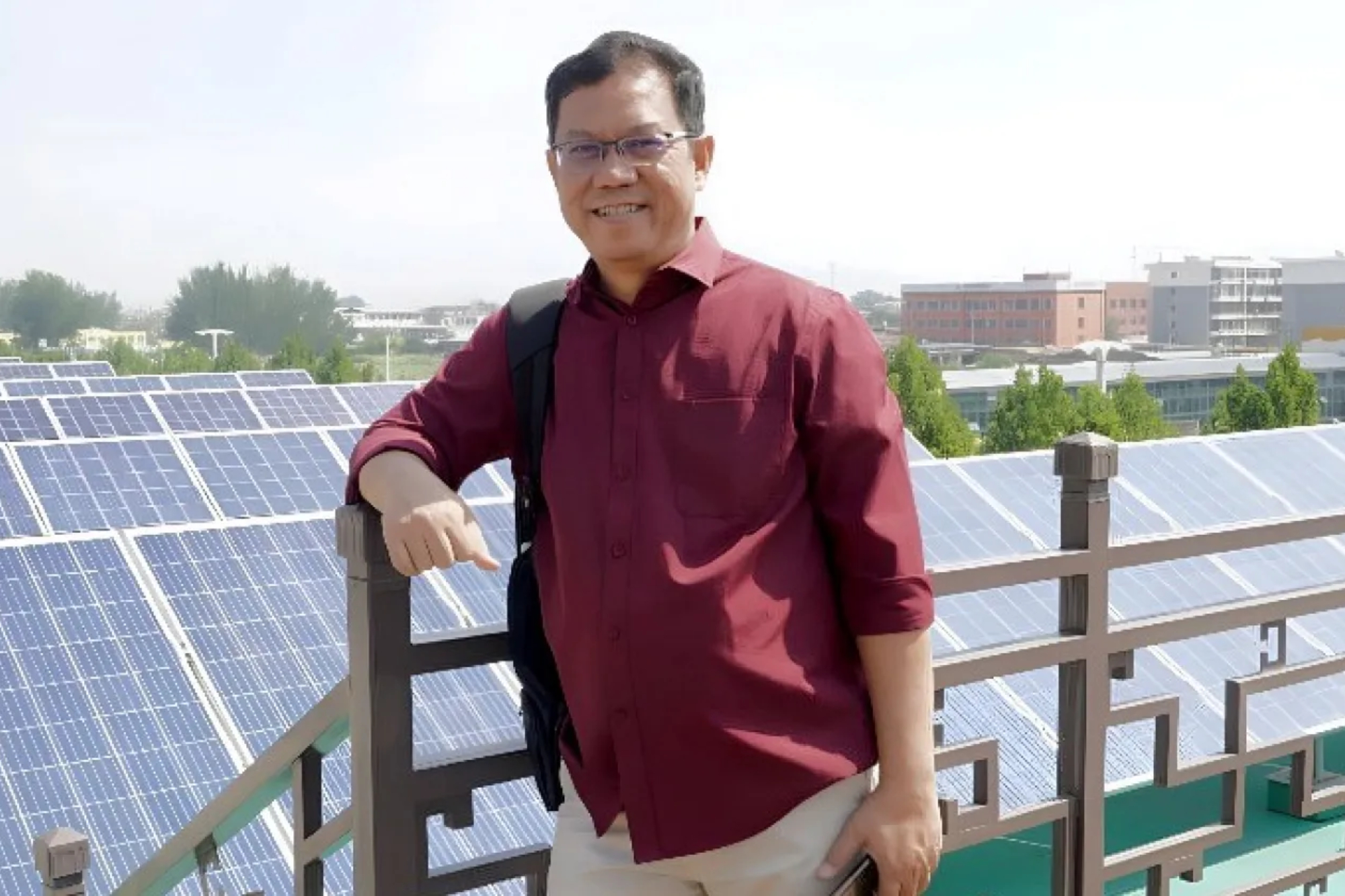
Hari Wibawa, head of economics and development funding at the Provincial Development Planning Agency (Bappeda), visits Shanxi Carbon Peak Carbon Neutral Energy Revolution Research Institute (CCERR) in China, August 2024. Photo: © Institute for Essential Services Reform (IESR)
Preparing future generations for the transition
Despite South Sumatra being Indonesia’s largest coffee‑producing province by land area, Hari observed that the province’s coffee remains relatively unknown among domestic consumers. The tourism sector, too, has significant untapped potential to support economic diversification beyond coal.
For this reason, Hari is now engaging universities to increase awareness of just transition and renewable energy within the education sector, encouraging curriculum adjustments that reflect green business practices. He is also promoting coffee and tourism as promising areas for future employment.
We need to prepare our young generation to recognise the opportunities in these two sectors. The key question is whether our future workers are ready. We must shift mindsets so they can envision the kinds of jobs available in these emerging sectors. – Hari Wibawa
Hari emphasised that the Provincial Manpower Office of South Sumatra plays a crucial role in preparing workers for this transition. “Our main focus is to strengthen government training centres so they can equip workers with the skills needed to adapt to these inevitable changes. We must prepare our local workforce.”
Ensuring the programme’s sustainability
Beyond the manpower office, representatives from enterprises, business associations, and trade unions have also been actively involved in the FKD. Their participation has helped Bappeda to identify employment needs. “Business associations have expressed their readiness for the just transition and trade unions have provided valuable feedback on labour rights, social protection, and livelihoods. Issues that are central to a just transition,” Hari noted.
Hari has also made strategic use of mass media organisations. Recognising the media’s vital role in public information and education, he has actively participated in journalist training programmes in collaboration with the Indonesian Journalist Alliance (AJI) Palembang.
“Media is key because they can help educate the public about social and environmental impacts, as well as fairness in energy distribution. We have also involved media representatives in the FKD. Their feedback is essential, as environmental and livelihood issues remain among the most pressing concerns for communities in South Sumatra,” Hari added.
Local leadership is essential for turning climate commitments into real change. South Sumatra’s proactive approach demonstrates how provinces can lead the way towards sustainable and resilient economic transformation. – Muce Mochtar, the ILO’s national project coordinator for just energy transition
With the ILO’s support being time‑bound, Hari underscored the provincial government’s commitment to sustaining just transition and renewable energy efforts. “No matter what, South Sumatra must be ready. Our collaboration with the ILO has helped prepare the province for a just transition and now we must ensure its long‑term sustainability.”
Applauding the commitment and progress shown by South Sumatra Province, Muce Mochtar, the ILO’s national project coordinator for just energy transition, stated: “Local leadership is essential for turning climate commitments into real change. South Sumatra’s proactive approach, through the FKD, skills roadmaps, and broad stakeholder engagement, demonstrates how provinces can lead the way towards sustainable and resilient economic transformation.”
This piece was written by the ILO and co-published by the Just Energy Transition in Coal Regions Knowledge Hub as part of the IKI JET Project.
Related Posts
Stay Informed and Engaged
Subscribe to the Just Energy Transition in Coal Regions Knowledge Hub Newsletter
Receive updates on just energy transition news, insights, knowledge, and events directly in your inbox.