

Report
Renewable Energy Benefit Sharing: From social licence to shared value
Coal-dependent regions in Indonesia and around the world face a double challenge: as coal use declines, they lose not only jobs but also a major source of public revenue.
At the same time, renewable energy projects often encounter local resistance when communities see turbines and panels but not the benefits. Benefit-sharing is therefore not a secondary issue but a precondition for a just and politically viable energy transition.
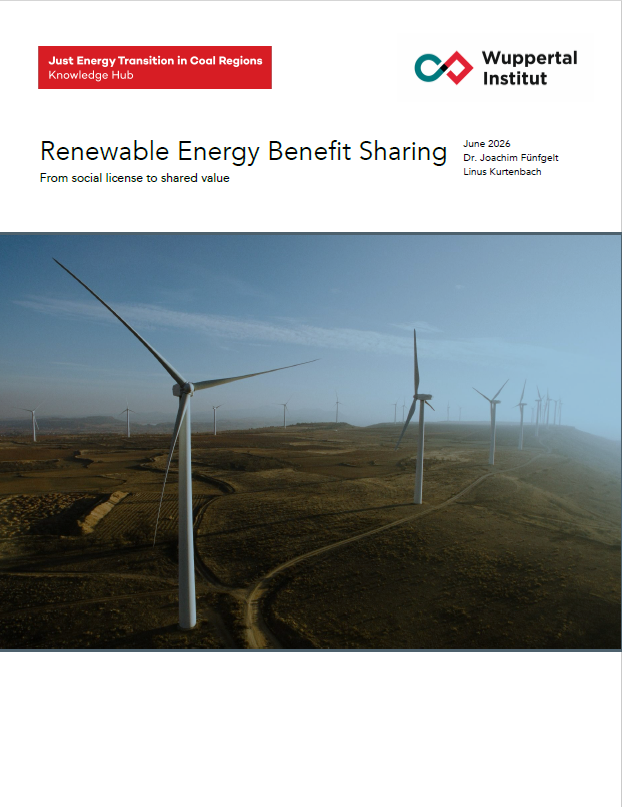
This report provides policymakers with a structured overview of the three main mechanisms through which renewable energy projects can share value with host regions. Each mechanism addresses a different part of the challenge:
- Fiscal mechanisms, such as taxes, royalties or mandatory revenue shares, provide predictable income for local governments.
- Community Benefit Schemes and Community Benefit Agreements offer direct, negotiated benefits to affected communities.
- Local ownership models, cooperatives, municipal utilities or shared-equity structures, allow communities to capture recurring income, local jobs and procurement.
International examples from Colombia, Germany, the United States and Indonesia show how these mechanisms work in practice and what conditions enable them to succeed. The evidence is clear: no single mechanism fits all contexts. Policymakers must match instruments to local needs and to the institutional and social realities of each region.
Related Posts

Stay Informed and Engaged
Subscribe to the Just Energy Transition in Coal Regions Knowledge Hub Newsletter
Receive updates on just energy transition news, insights, knowledge, and events directly in your inbox.