

Commentary
Ending Indonesia's Coal Export Duty Exemption: A necessary policy reform for a just energy transition
Baca artikel dalam Bahasa Indonesia.
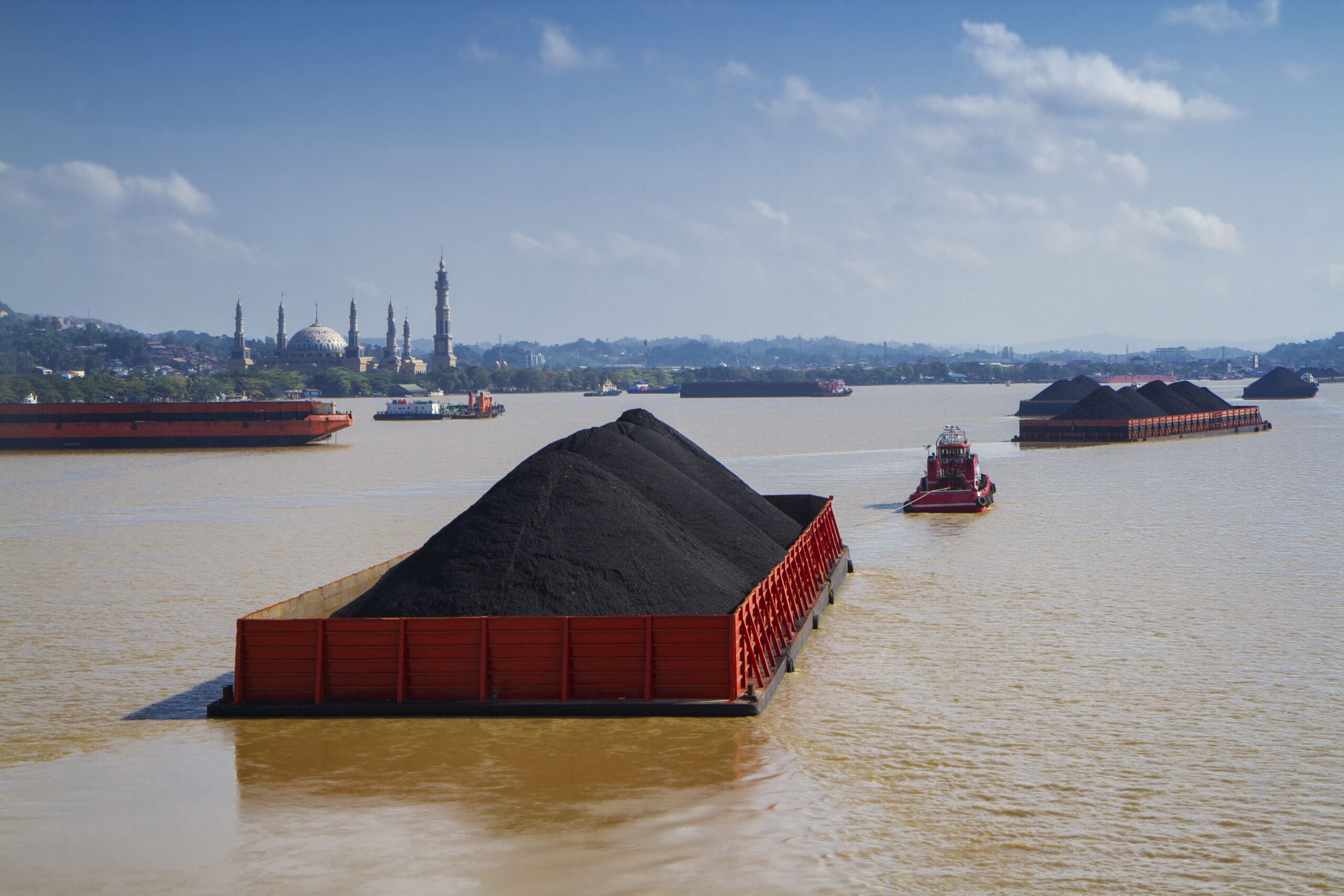
Indonesia’s energy policy is once again being tested by a crisis. The ongoing geopolitical turmoil in the Middle East has revived the spectre of “fossilflation”—a term coined to describe inflation driven by fossil fuel price shocks. For Indonesia, however, this is not just a story about inflation; it is about a structural vulnerability that exposes the contradictions at the heart of the country’s energy system. Indonesia is simultaneously a major coal exporter and a net oil importer, locking the country into a fossil-dependent development path that is both costly and economically distortive.
The immediate policy reflex in times of crisis—doubling down on domestic fossil fuel resources, including coal—is strategically flawed. Calls for energy independence through expanded coal use, including downstreaming into products like dimethyl ether (DME), risk deepening Indonesia’s carbon lock-in just as the global energy system is shifting away from fossil fuel. At the same time, rising coal prices are generating windfall profits for mining companies on top of their ongoing supernormal profits, which is creating strong incentives for expanding production, especially in export markets. This combination—fossil dependence at home and fossil profiteering abroad—undermines the country’s prospects of a just energy transition.
Nowhere is this contradiction clearer than in Indonesia’s long-standing exemption of coal from export duties.
A Distortion Hidden in Plain Sight
Indonesia’s coal sector has benefited from a fiscal regime in which coal exports, unlike other extractive commodities, have historically been exempt from export duties. Unlike crude palm oil (CPO), Indonesia’s other major export-oriented resource commodity has long been subject to export taxes. Under the latest policy revisions, export taxes for CPO and its derivatives can reach up to 12.5% of the Ministry of Trade’s CPO reference price (Harga Referensi CPO), while earlier schemes imposed taxes of around 10%. In technical terms, this means that coal producers—despite extracting non-renewable national resources and selling them into global markets at highly volatile prices—do not pay any additional tax on exports that could capture resource rent for the state.
Indonesia is simultaneously a major coal exporter and a net oil importer, locking the country into a fossil-dependent development path that is both costly and economically distortive.
This exemption emerged in the early 2000s in the aftermath of the Asian Financial Crisis and Indonesia’s political transition. At the time, the policy objectives were clear: attract investment, scale up production, and position Indonesia as a leading global coal supplier. The strategy worked—perhaps too well. Coal production has nearly doubled over the past decade, from around 400 million tonnes (Mt) in 2014 to more than 800 Mt in 2024, with most of it destined for export.
But the costs of this policy are now undeniable.
First, it has entrenched a distorted economic structure. Capital, credit, and political attention have disproportionately flowed into coal, crowding out investment in the manufacturing industry and higher-value-added sectors.
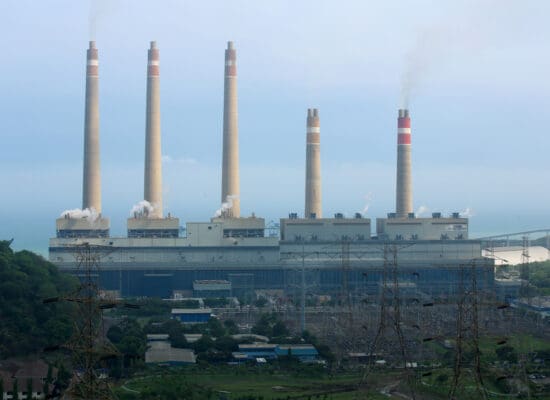
Second, it has delayed the energy transition. Abundant and cheap coal has made it politically and economically convenient to expand coal-fired power generation, which now accounts for roughly 60% of Indonesia’s electricity capacity. On the other hand, Indonesia’s energy transition has also progressed very slowly, with renewable energy accounting for only 15.75% of the energy mix in 2025, while annual capacity additions have remained relatively limited at around 1 gigawatt (GW) per year over the past 5 years. According to an analysis by the Institute for Energy Economics and Financial Analysis, Indonesia attracted just USD 1.5 billion in renewable energy investment in 2023. However, achieving the country’s 2034 renewable energy target under the Electricity Procurement Business Plan (RUPTL) will require an estimated IDR 1,682.4 trillion (USD 97.25 billion, using the exchange rate of 1 USD = 17,300 IDR) in investment over the next decade; equivalent to around USD 9.7 billion per year, this is significantly higher than current investment levels.
Third, it has reinforced what can only be described as a form of entrenched political capitalism: coal rent has become deeply intertwined with political financing, shaping policy outcomes in ways that are difficult to disentangle from vested interests.
In short, the export duty exemption is not a neutral policy—it is a central pillar of Indonesia’s fossil-dependent political economy.
Ending the Exemption: Fiscal reform as transition policy
Removing the coal export duty exemption is often framed narrowly as a revenue-raising measure. This framing is too timid. In reality, it is one of the most powerful—and most underutilised—policy levers for advancing a just energy transition in Indonesia.
The fiscal case is straightforward. At a time when the state budget (APBN) is under severe pressure from rising energy subsidies, debt obligations, and ambitious social programmes (such as the Free Nutritious Meals Programme), coal export duties could generate substantial revenues. Estimates by institute research Yayasan Kesejahteraan Berkelanjutan Indonesia (SUSTAIN) suggest that a progressive export tax could yield between IDR 85 trillion (USD 4.9 billion) and IDR 343 trillion (USD 19.8 billion) annually, depending on price and production scenarios.
However, the more important argument is structural.
An export duty would act as a calibrated disincentive to overproduction. Reducing the marginal profitability of coal exports—especially during price spikes—would gradually reduce coal production. This is precisely the kind of soft landing mechanism that a just transition requires: not an abrupt shutdown, but a gradual reorientation of investment and production.
An export duty would act as a calibrated disincentive to overproduction. This is precisely the kind of soft landing mechanism that a just transition requires: not an abrupt shutdown, but a gradual reorientation of investment and production.
Equally important is how the revenues are used. If designed properly, export duties can become an instrument of redistribution and economic diversification. Earmarking a significant share (say, 50%) for renewable energy deployment, green industrialisation, and support for coal-dependent regions would directly address the equity dimension of the transition. Regions such as East Kalimantan and South Sumatra, where coal dominates local economies, face real risks of economic dislocation. Redirecting coal rent into alternative livelihoods isn’t just good policy; it’s a political necessity.
Finally, there is the signalling effect. Ending the exemption would send a clear message to domestic and international financiers and investors: Indonesia is serious about transitioning away from coal.
Why Now? The Politics of Reform
The debate over coal export duties isn’t new, but it is intensifying. Discussions around introducing such a policy—initially through a Ministry of Finance regulation—have evolved into proposals for a presidential regulation, reflecting both the importance and the political sensitivity of the issue.
Support for the policy is growing among technocrats, fiscal policymakers, and segments of civil society who recognise the dual benefits of increased revenue and structural reform. The argument is strengthened by the current crisis: fossilflation has exposed the fragility of Indonesia’s fiscal position and the risks of continued dependence on fossil fuel.
Yet resistance remains formidable. The imposition of coal export duties has repeatedly been postponed: a pilot plan was to be implemented on 1 January 2026, and as of mid-May 2026, it is still being consulted on within the key ministries.
Indonesia stands at a crossroads. The current energy crisis could reinforce a regressive path—more coal, more subsidies, and deeper fiscal vulnerability—or it could catalyse reform.
Coal companies and their political allies argue that export taxes would undermine competitiveness, reduce investment, and threaten jobs. These claims should be treated with scepticism. In Indonesia’s coal sector, production costs are among the lowest in the world, with substantial profit margins even at moderate prices. Moreover, the notion that continued expansion is necessary for employment ignores the long-term risks of stranded assets and declining global demand.
The deeper issue is the political economy. Coal is not just an industry; it’s a source of power. Any policy that seeks to redistribute its excess profits will inevitably face opposition from those who benefit from the status quo. This is why the question of political courage is not rhetorical; it is central.
A new centralised export body, announced by President Prabowo in May 2026, will require all exporters to sell their products to the government instead of direct to foreign buyers. Whether the agency will also be tasked with implementing coal export duties in a transparent way remains to be seen.
A Necessary Break
Indonesia stands at a crossroads. The current energy crisis could reinforce a regressive path—more coal, more subsidies, and deeper fiscal vulnerability—or it could catalyse reform.
Ending the coal export duty exemption is not a silver bullet. But it would be a necessary break from a policy regime that has long favoured short-term gains over long-term resilience. It would align fiscal policy with climate objectives, create space for economic diversification, and begin to rebalance the relationship between the state and one of its most powerful industries.
Tata Mustasya is the executive director of Sustain, an independent Indonesian think tank, and board chairman of Trend Asia. He leads the Sustainability Hub of the Alumni Association of the Faculty of Economics at the University of Indonesia and specialises in the topics of energy transition, public policy, political economy, economic development, and green finance.
Related Posts

Stay Informed and Engaged
Subscribe to the Just Energy Transition in Coal Regions Knowledge Hub Newsletter
Receive updates on just energy transition news, insights, knowledge, and events directly in your inbox.