
The district of Nalaikh on the outskirts of Ulaanbaatar, Mongolia, has long been associated with coal. As well as being home to large-scale mining operations, the district has a significant informal mining sector that still provides livelihoods and heating fuel for households. As the district works to diversify its energy base and reduce its reliance on coal-fired heat and power, public institutions are becoming early testing grounds for renewable alternatives.
One such example is the Narnii Elch Family Health Centre, which provides primary healthcare services for around 11,000 residents of Nalaikh. As a key public health facility in the district, it is essential that the centre has a reliable and affordable energy supply so that services are not interrupted. However, there are long-standing challenges with electricity supply and operating costs.
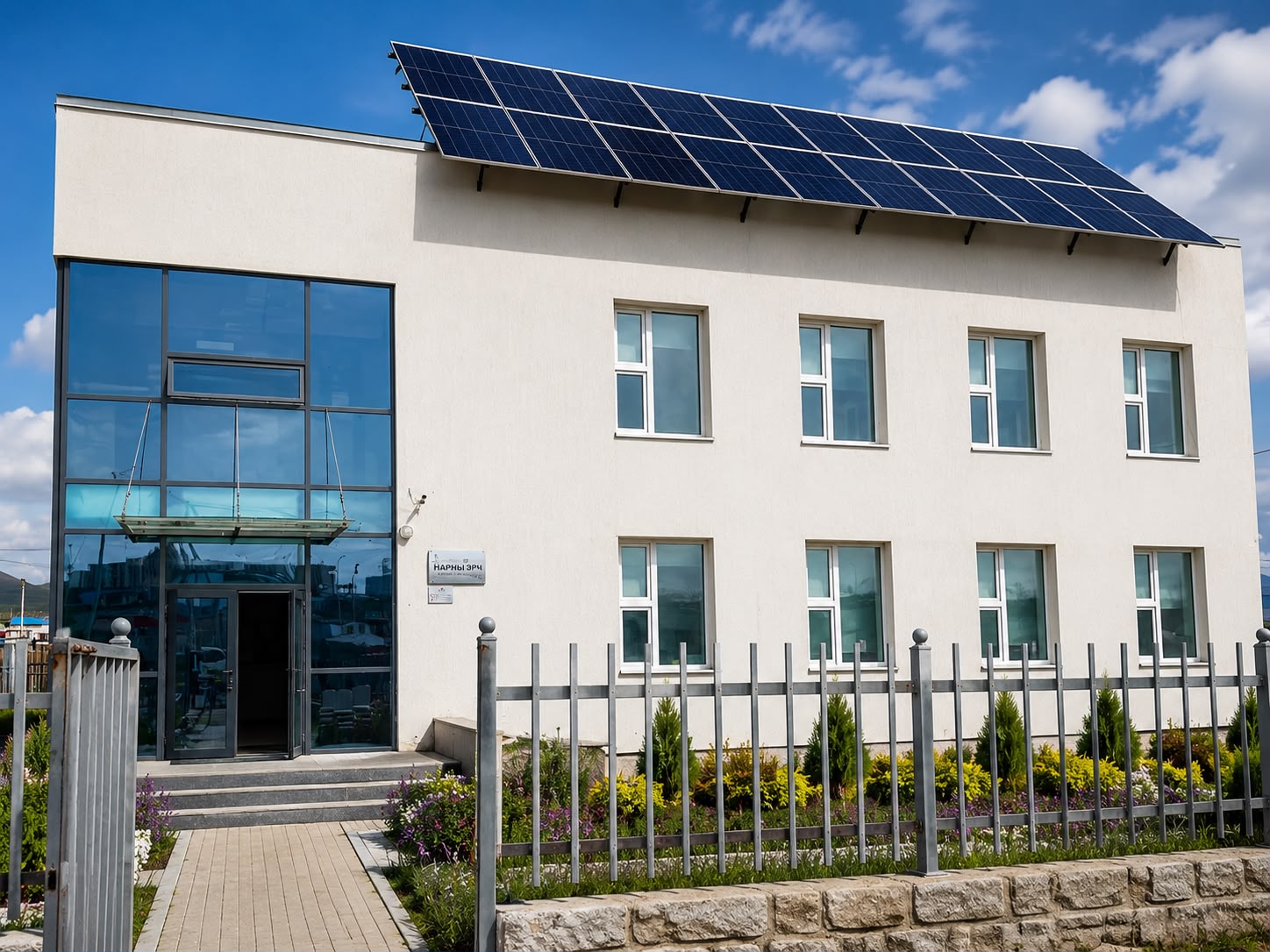
To address these challenges, the Innovation Regions for a Just Energy Transition (IKI JET) project financed the purchase and installation of a 30-kilowatt (kW) rooftop solar PV system for the centre, alongside 20 kilowatt hours (kWh) of battery storage. The system was officially handed over to the Nalaikh District Government on 8 July 2026, and it is now fully operational.
The Problem: Unreliable power, high winter costs
The Nalaikh District Government requested the installation after identifying two problems affecting the health centre. First, staff reported recurring voltage fluctuations, which disrupted medical equipment and other essential systems, especially in winter. The main cause was that the local energy system did not have sufficient power supply capacity during cold weather, when heating demand peaks. Site monitoring conducted from 6 to 9 March 2026 found that voltage levels were within the standard range (223–233 V) under normal conditions, indicating that the disruptions are best understood as capacity-driven outages during peak winter demand.
Second, the facility’s electricity costs were high because, unlike many other buildings in Nalaikh, it is not connected to the district heating network. It is not possible to extend the heating pipelines in some parts of the district, and the existing network infrastructure is outdated. This makes electric heating the most practical option for buildings like the health centre. This carries a real cost: district heating typically draws on centralised, larger-scale coal-fired heat (and combined heat and power) plants that convert heat more efficiently than an individual building’s electric resistance boiler does, and that boiler relies on electricity already generated (at a financial loss) from the same coal-dominated grid. In effect, the health centre was paying for two rounds of conversion losses instead of one.
To stay warm, the centre was relying on a 48-kW electric boiler and circulation pumps, consuming a large amount of electricity through Mongolia’s long, extremely cold winters. In 2025, the centre’s total electricity consumption reached 101,627 kWh at a cost of MNT 34.3 million – of which an estimated 93,969 kWh (or roughly 269 kWh per square metre per year) was attributable to heating alone. The centre’s consumption was heavily seasonal: monthly billing data shows electricity use climbing from under 600 kWh in June to nearly 21,000 kWh in February, illustrating how tightly the centre’s costs track the heating season rather than being spread evenly across the year.
The Solution: Solar PV and battery storage
The newly installed rooftop solar system supplies a large share of the health centre’s daytime electricity demand. The 20-kWh battery stores surplus solar energy generated during the day and discharges it to stabilise the supply and ride out grid fluctuations, giving the facility a buffer during voltage dips and capacity-driven outages. Overall, the system improves the centre’s operational reliability while significantly reducing its electricity costs. G-Power, the Mongolian company that designed and implemented the system, brought the full technical expertise required for the installation. IKI JET’s role was to provide technical guidance and quality assurance — ensuring the system met project standards and fit within the district’s broader energy strategy — while G-Power handled the execution. Initial estimates indicate that the system can reduce the centre’s electricity costs by more than 50%, freeing up public resources for healthcare services rather than utility bills.
This is a first, tangible step. The separate technical assessment frames rooftop solar as one of three priorities for turning the building into an energy efficient, low-carbon facility: first, to reduce heating demand through a phased thermal retrofit of the building envelope (improving glazing and adding insulation); second, to deploy renewable energy sources, such as solar PV, as has now happened; and third — once demand has been minimised — to consider high-efficiency heating equipment, such as air-to-water heat pumps, which could cut the centre’s remaining heating electricity use by a further 40–50%. The assessment estimates that a system of around 60 kW, well above what has currently been installed, would be needed to offset the centre’s full annual heating load, underscoring both the scale of the challenge and the room for follow-on investment.
Handover and Outlook
The installation is one of the first concrete outcomes to result from Nalaikh’s Just Energy Transition 2040 Strategy, developed by the Nalaikh District Government with support from IKI JET and integrated into the District Governor’s Action Plan.
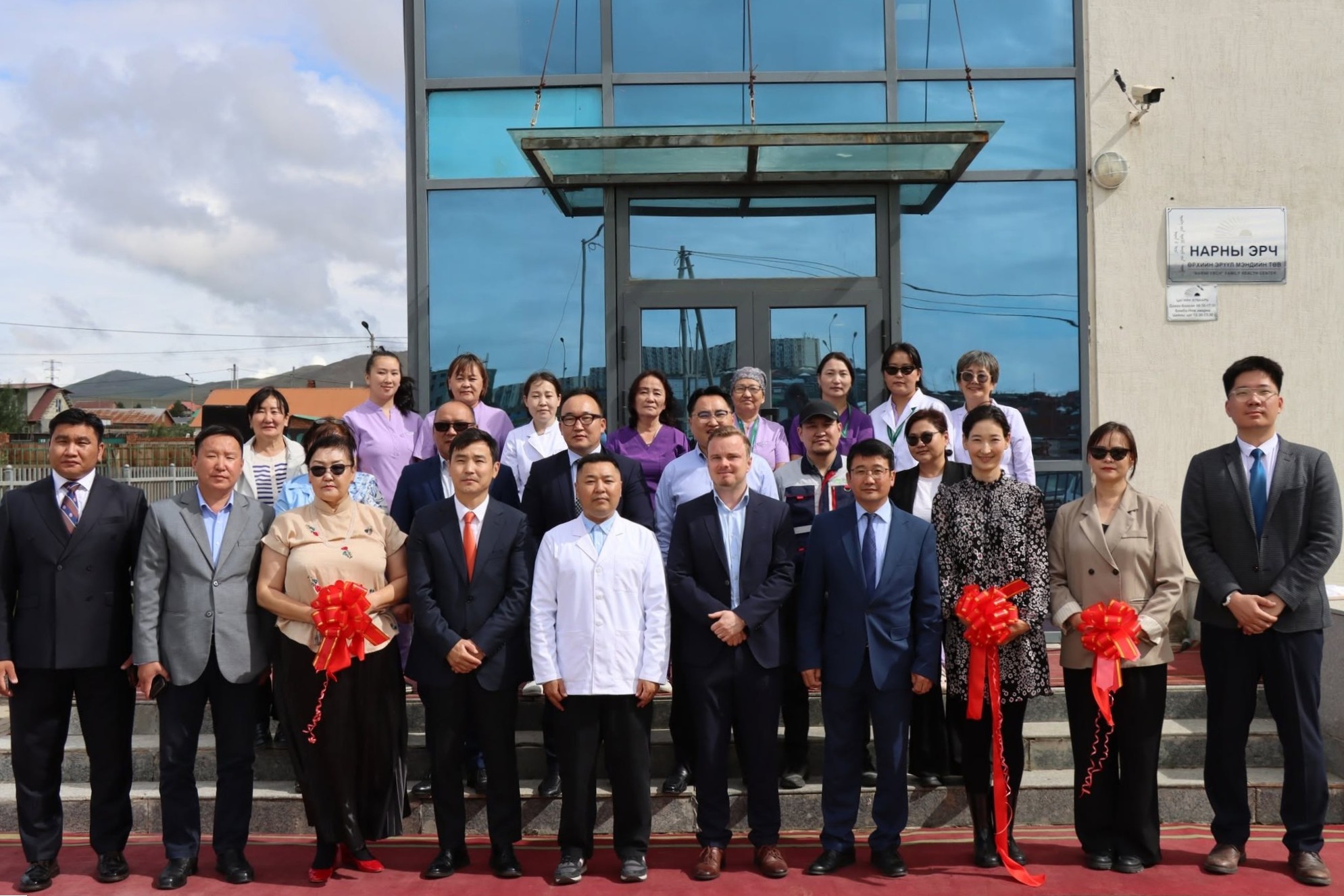
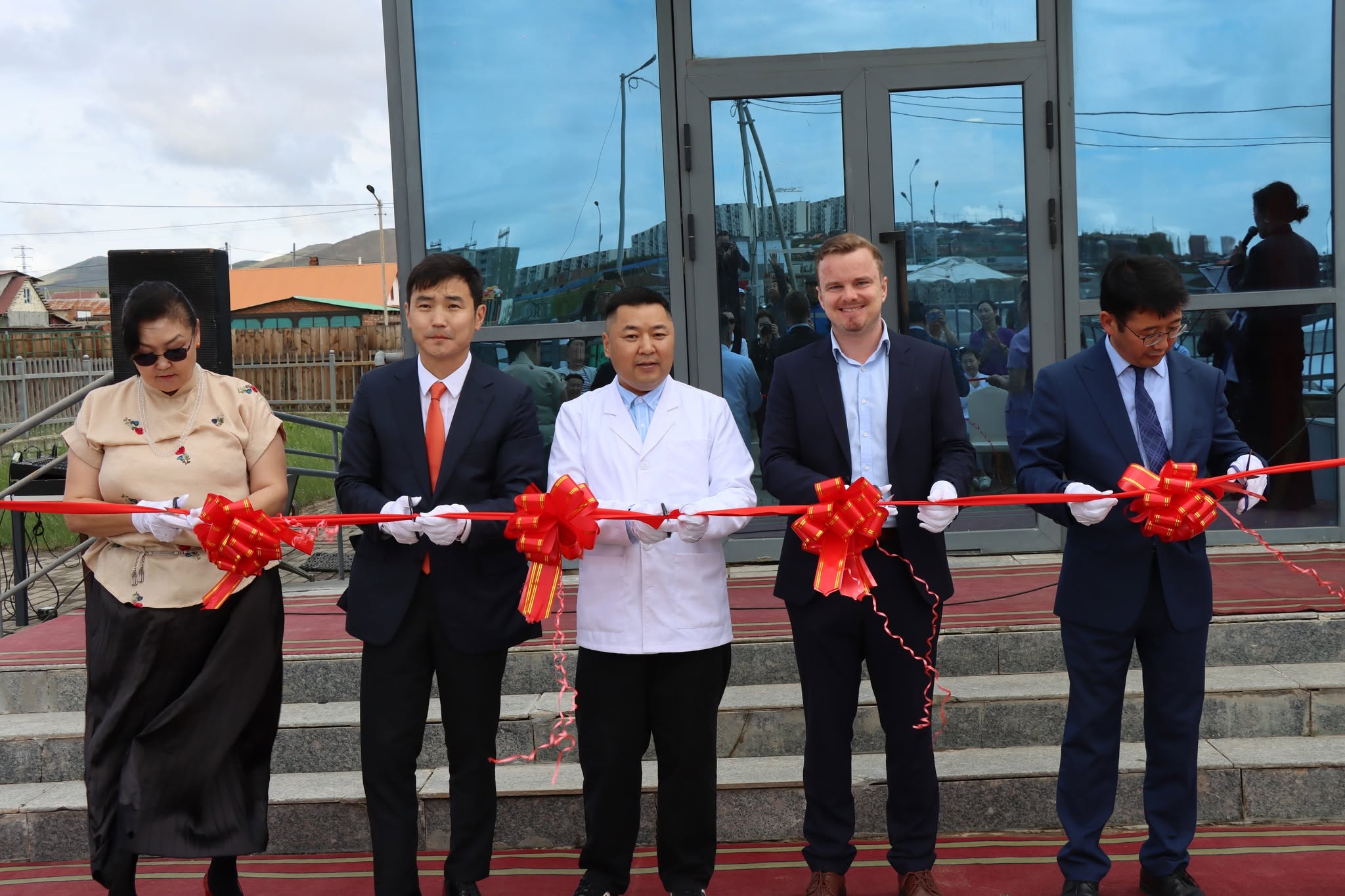
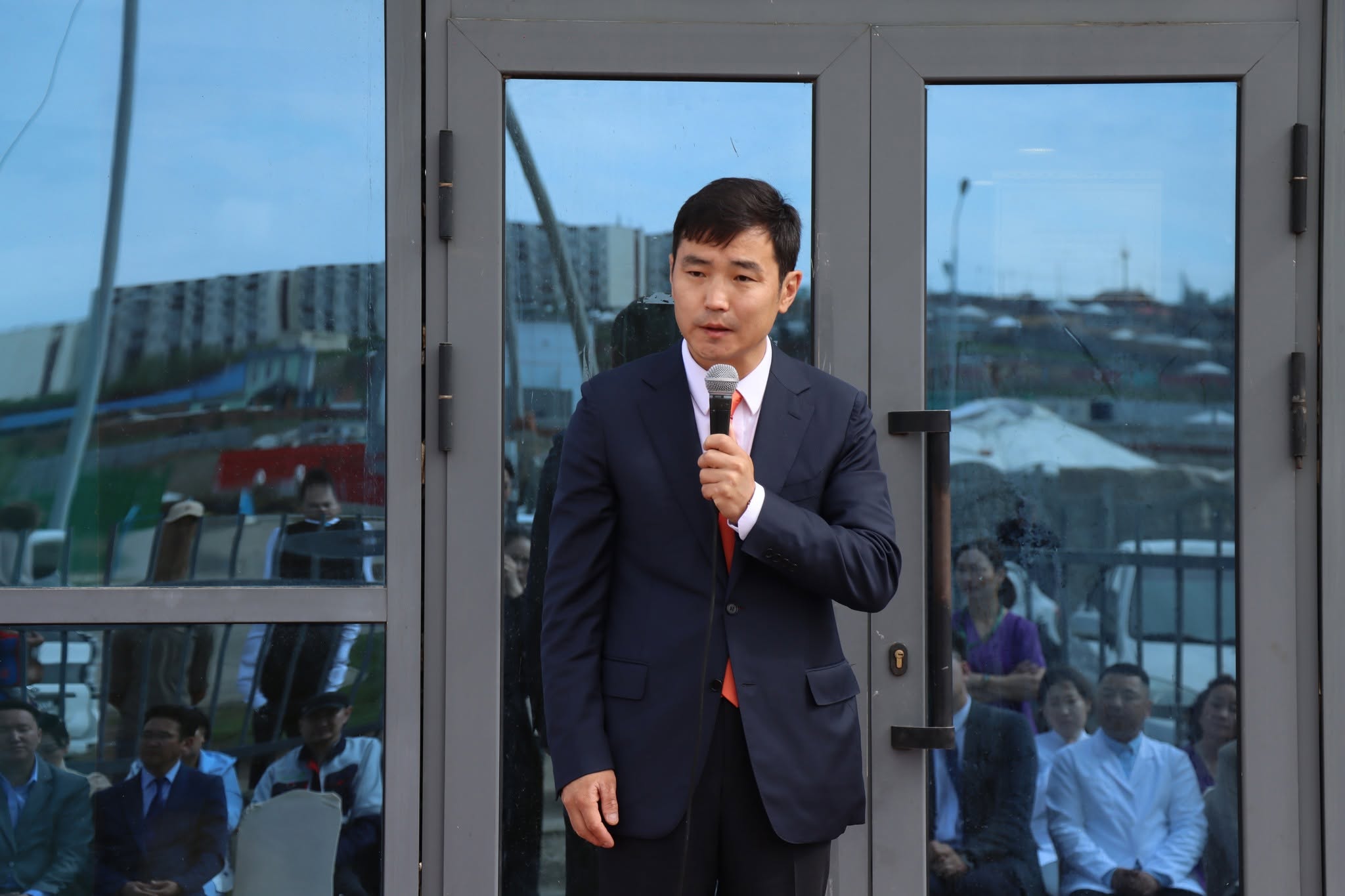
The handover ceremony on 8 July brought together representatives from the Nalaikh District Government, the Citizens’ Representative Khural, the District Health Department and Deutsche Gesellschaft für Internationale Zusammenarbeit (GIZ) Mongolia. Among those who attended were Nayanbayar Dashzeveg, Governor of Nalaikh District, Manduul N., Chairman of the Nalaikh Citizens’ Representative Khural, Baigal L., Head of the Nalaikh District Health Department, and Jonas Renner, Head of the Energy Portfolio at GIZ Mongolia. After the formal handover, the attendees visited the rooftop installation and discussed options for scaling similar solutions across the district.
District Governor Nayanbayar Dashzeveg described the project as a practical example of how renewable energy solutions can improve public services while lowering costs and outlined the district’s aim to replicate similar systems at other public facilities. He said that the district intends to apply the same approach to other public service buildings where reliable electricity and heating supply are essential – a priority he linked to the country’s current energy shortages.
The Narnii Elch Family Health Centre is an example of how relatively small investments can deliver multiple benefits: more reliable essential services, lower operating costs, reduced greenhouse gas emissions, and a larger share of renewables in public infrastructure. As Nalaikh continues to implement its Just Energy Transition 2040 Strategy, the district government sees this installation as a model for other public facilities. Supported by the IKI JET project, further activities will explore how renewable energy and battery storage can contribute to a cleaner, more resilient, and more affordable energy system for the district – and, by doing so, support Mongolia’s broader shift away from dependence on coal.
Related Posts

Stay in the loop
Subscribe to the Just Energy Transition Knowledge Hub Newsletter
Get the latest just energy transition news, analysis, reports, and events delivered to your inbox.