
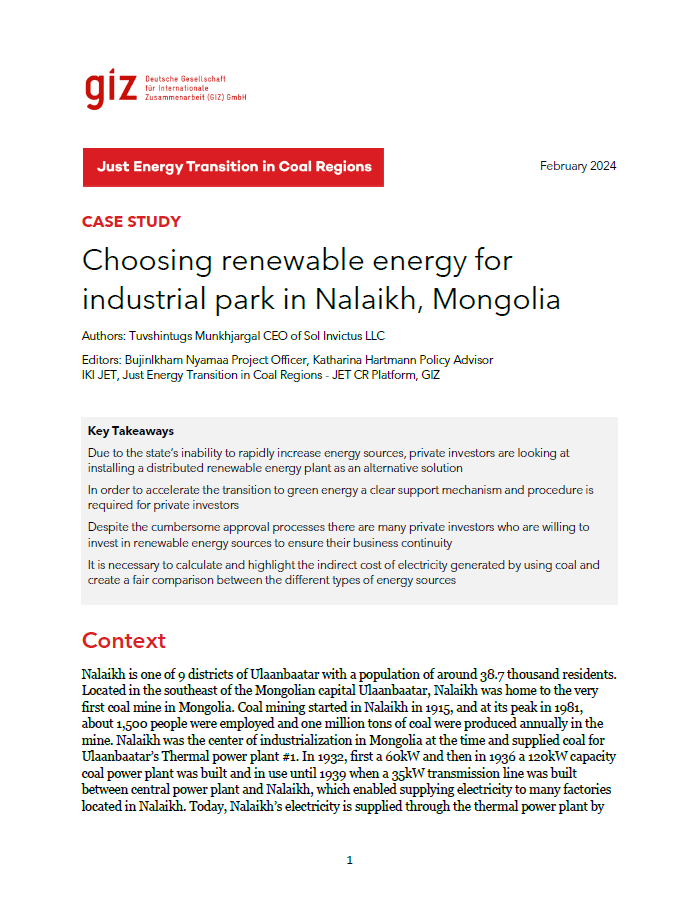
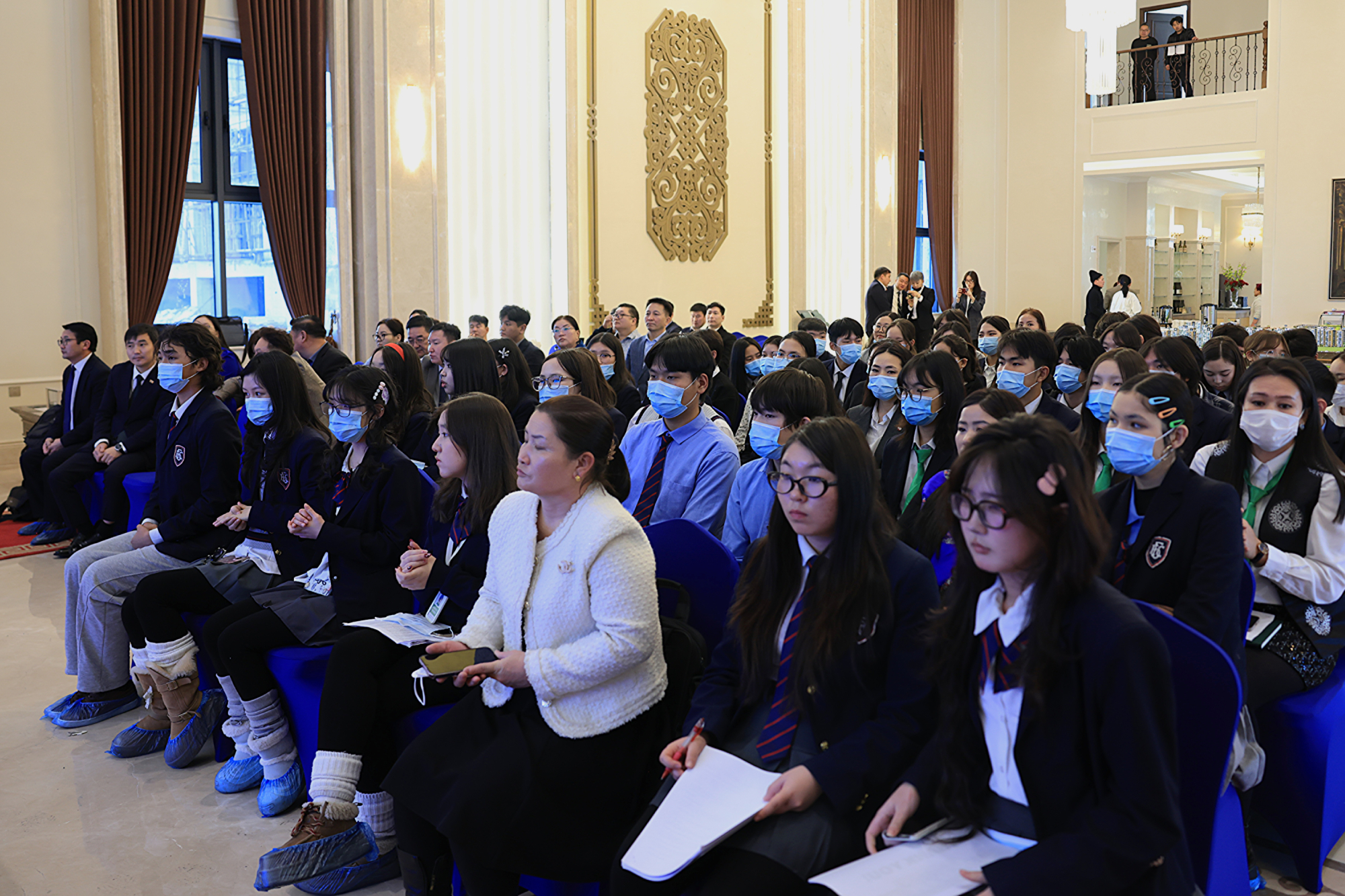
Participants of the school competition in Nalaikh, December 2025.
The district of Nalaikh—once home to Mongolia’s only state-run underground coal mine—has been facing several environmental and social challenges since the mine’s closure. To address these challenges through a holistic framework for the region’s transformation, the Just Energy Transition Strategy 2040 for Nalaikh was jointly developed between the district government and Deutsche Gesellschaft für Internationale Zusammenarbeit (GIZ). This strategy has now been integrated into the District Governor’s Action Plan (2024–2028). A central pillar of the plan is to raise public awareness to ensure a transition that “leaves no one behind.”
Engaging Young People as Active Contributors to the Transition
To support the objectives of the strategy, the Nalaikh District Authority, with support from the Innovation Regions for a Just Energy Transition (IKI JET) project, has launched a competition for students in local schools. The initiative informs young people about the environmental issues their district is facing due to coal mining and consumption, and allows them to actively contribute their ideas and solutions for the district’s transition. Student teams developed and presented scalable projects to address environmental and energy-related issues, facilitating direct dialogue between young people and district authorities. Seven high schools and one polytechnic college participated in the competition.
The challenge showcased several scalable, data-driven projects that addressed the district’s most pressing environmental issues, including:
- The Cycle Wardrobe Project: Rewear, Recare, Reset. Developed by a team of six students and their social studies teacher, this project targets the hidden environmental cost of textile waste. By researching international best practices, the team designed specialised collection boxes to reduce the economic burden on households while preventing old clothing from reaching landfill. They even integrated technology, proposing a QR-code-based information board that would allow users to scan and see their immediate environmental impact, such as the litres of water saved and the kilograms of textile waste reused.
- The Green Habit Initiative. The Eco Evolution team focused on the foundational level of change: education. Their project targeted the growing volume of waste per person in Mongolia by installing triple-compartment waste bins and developing educational materials specifically for kindergarten and school-age children. Their goal was to move beyond simple disposal and foster a lifelong habit of waste sorting among the district’s youngest citizens.
- Plastic and Metal Recovery (Nalaikh Polytechnic College). Recognising that waste management is a top concern for nearly 70% of local students, this team designed a new system for the recovery of plastic and metal cans. Their approach was dual-purpose: reducing soil and air pollution while supporting the local recycling sector. Their detailed six-month implementation plan included pilot phases and final evaluations to ensure that the system is both efficient and sustainable.
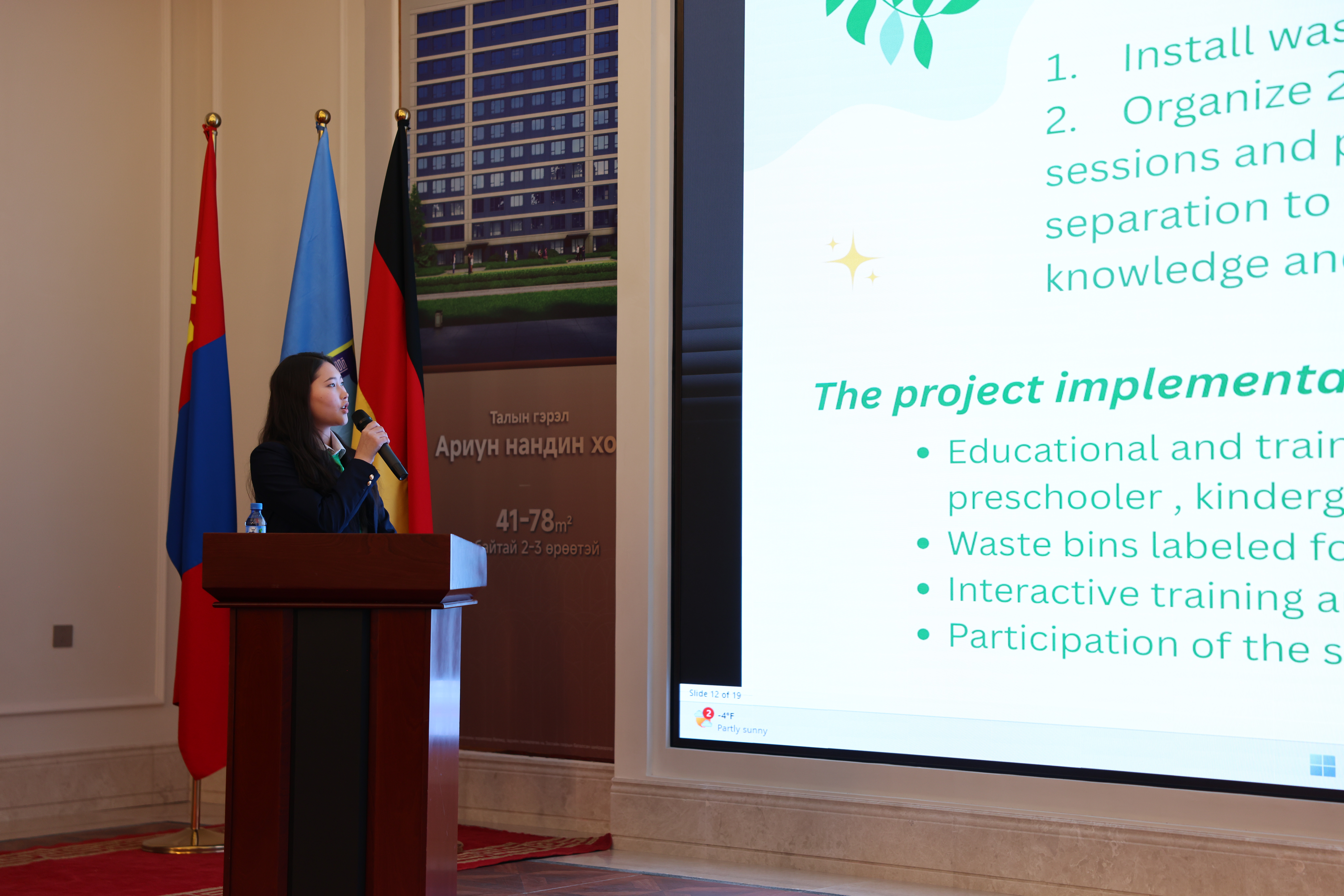
Presentations at the event.
Reflections from Participants and Local Leaders
To celebrate this challenge, an award ceremony was held in December 2025. In his opening remarks, Manduul Natsag, chairman of the Citizens’ Representative Council, noted that Nalaikh is undergoing a complex transition following the mine closure. While significant progress has been made, he emphasised that the local approach to a just transition serves as a vital blueprint for other regions. He highlighted that the Nalaikh JET Strategy 2040 is the first of its kind at a local level in Mongolia and is gaining significant international momentum.
Nayanbayar Dashzeveg, the governor of Nalaikh, expressed gratitude for the long-standing and trustful partnership with GIZ Mongolia, stating that a truly fair transition must incorporate every citizen’s voice. Jonas Renner, head of energy portfolio at GIZ Mongolia, noted in his opening remarks that while many technical milestones have been reached in the collaboration with Naliakh, this activity represents a significant turning point as the first initiative dedicated exclusively to youth engagement. He commended the students’ courage and willingness to present innovative environmental solutions directly to local government representatives clearly demonstrates that young people are interested in helping to create a healthy environment.
Although not all of the teams received an award, the participants valued the opportunity to have their work taken seriously by local government officials. One student highlighted the importance of seeing their proposal generate substantive discussions among decision-makers. This shift from passive observation to active participation strengthened the students’ sense of responsibility and engagement. At the same time, the exchange created a feedback loop in which local authorities gained community-based insights, while students developed confidence through direct interaction with decision-makers.
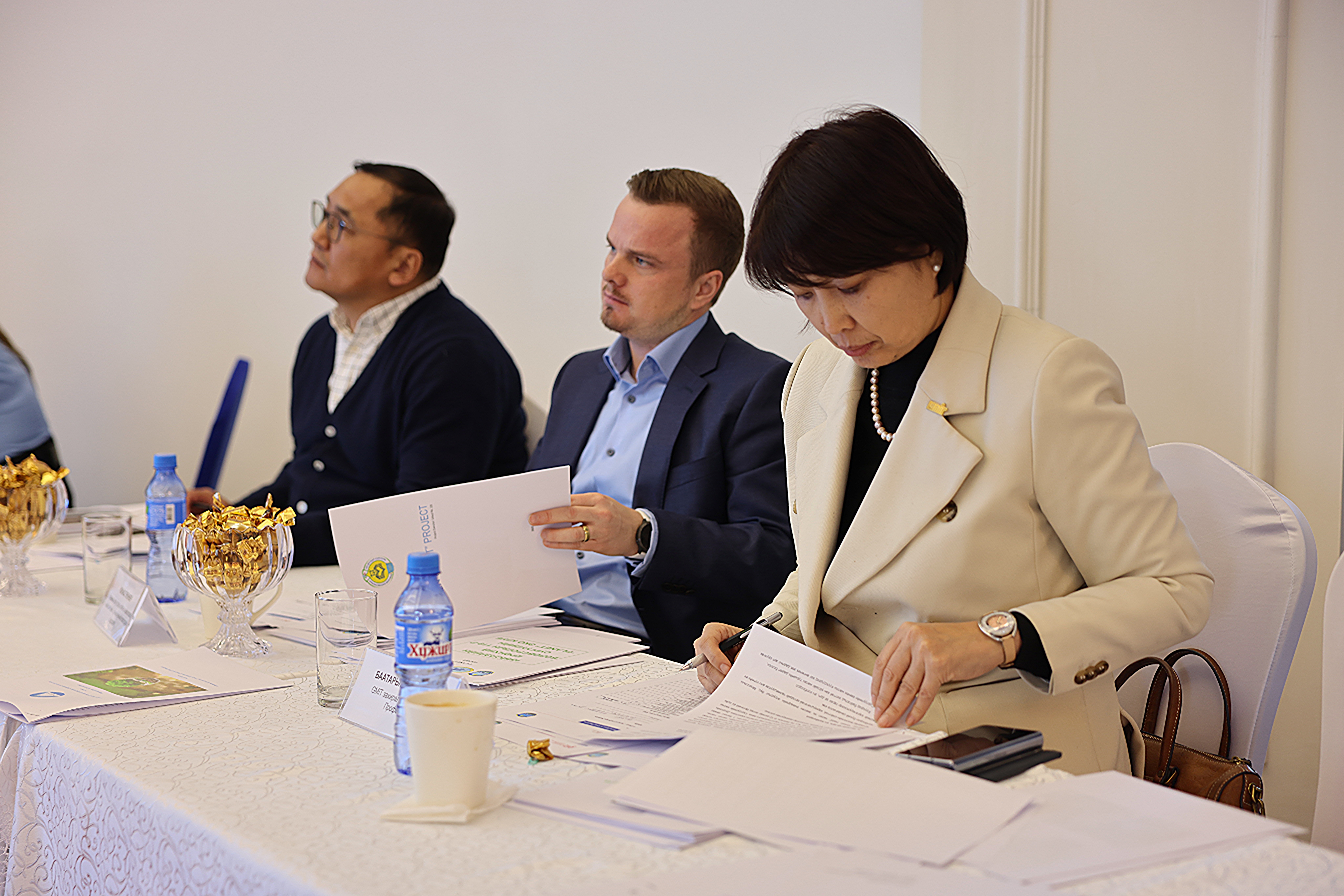
The competition jury panel.
Key Takeaways and Next Steps
Beyond the technical solutions, the school challenge functioned as a powerful platform for human capacity development and knowledge exchange. By bringing together the local authority, schools, universities, an international organisation and the younger generation, the challenge built a level of trust and social capital.
Moving forwards, the district aims to integrate such approaches into long-term plans. By ensuring that the spirit of innovation and the rigorous research methods demonstrated by the students become a permanent part of the district governor’s action plan, Nalaikh is securing a sustainable future that is truly built from the ground up.
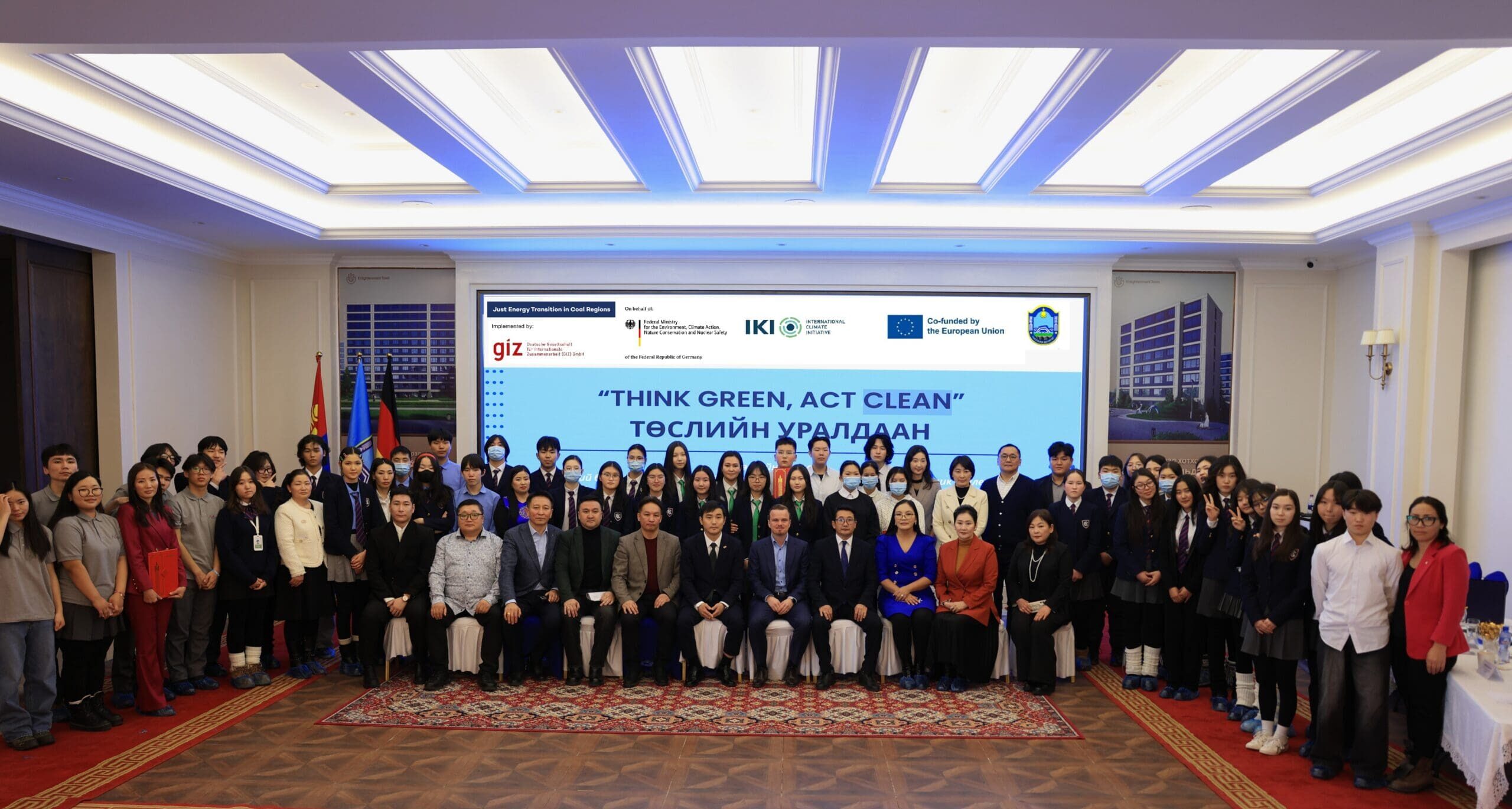
Attendees and participants at the school competition event in December 2025.
Related Posts
Stay Informed and Engaged
Subscribe to the Just Energy Transition in Coal Regions Knowledge Hub Newsletter
Receive updates on just energy transition news, insights, knowledge, and events directly in your inbox.