
News post
Powering Change from the Ground Up: Komati's just energy transition
Country:
South Africa,
Organisation:
GIZ,
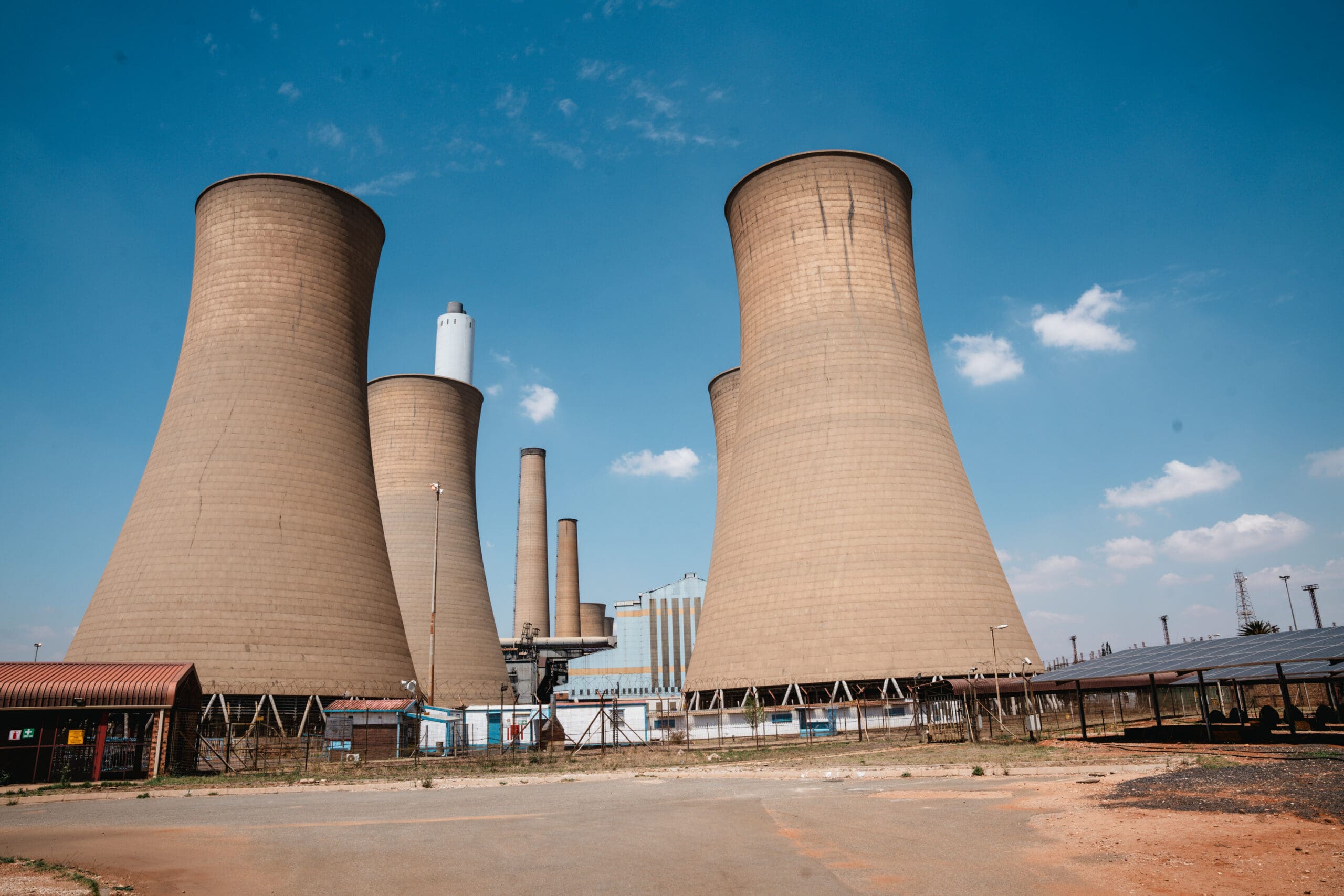
The decommissioned Komati power plant in Mpumalanga, South Africa. Photo: Jess Meniere
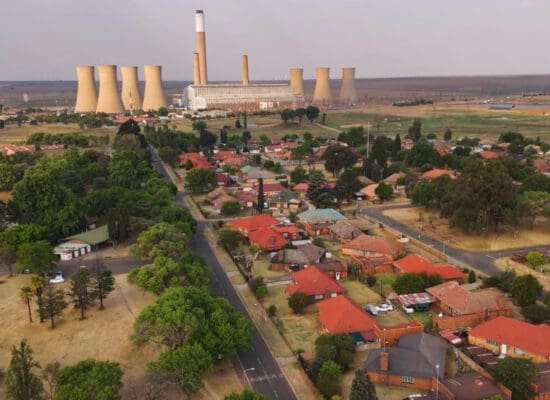
The Komati Just Energy Transition Community Engagement and Interventions Co-Creation Project (K-JET CEICC) represents a pivotal effort in South Africa’s journey towards a low-carbon, climate-resilient future that is fair and inclusive. Centred in the coal-dependent region of Mpumalanga, in the area around the now-closed Komati power station in particular, the project embodies the principle of procedural justice to ensure that communities who are directly impacted by the transition have a meaningful voice and ownership throughout the process.
Funded by the Innovation Regions for a Just Energy Transition (IKI JET) project in collaboration with the Just Transition to a Decarbonised Economy for South Africa (JUST SA) project, the initiative is implemented by Indalo Inclusive South Africa NPC, with strong support from key national and provincial partners. Together, these partners drive a collaborative, multi-stakeholder approach to ensure the K-JET CEICC project advances a just, inclusive, and locally owned energy transition in the Komati region. Structured awareness and co-creation workshops led to five community-lead enterprises being created, which are now working on integrated crop farming, water purification, eco-briquettes, and sustainable textiles. The enterprises are receiving ongoing support in the form of continued training and workshops.
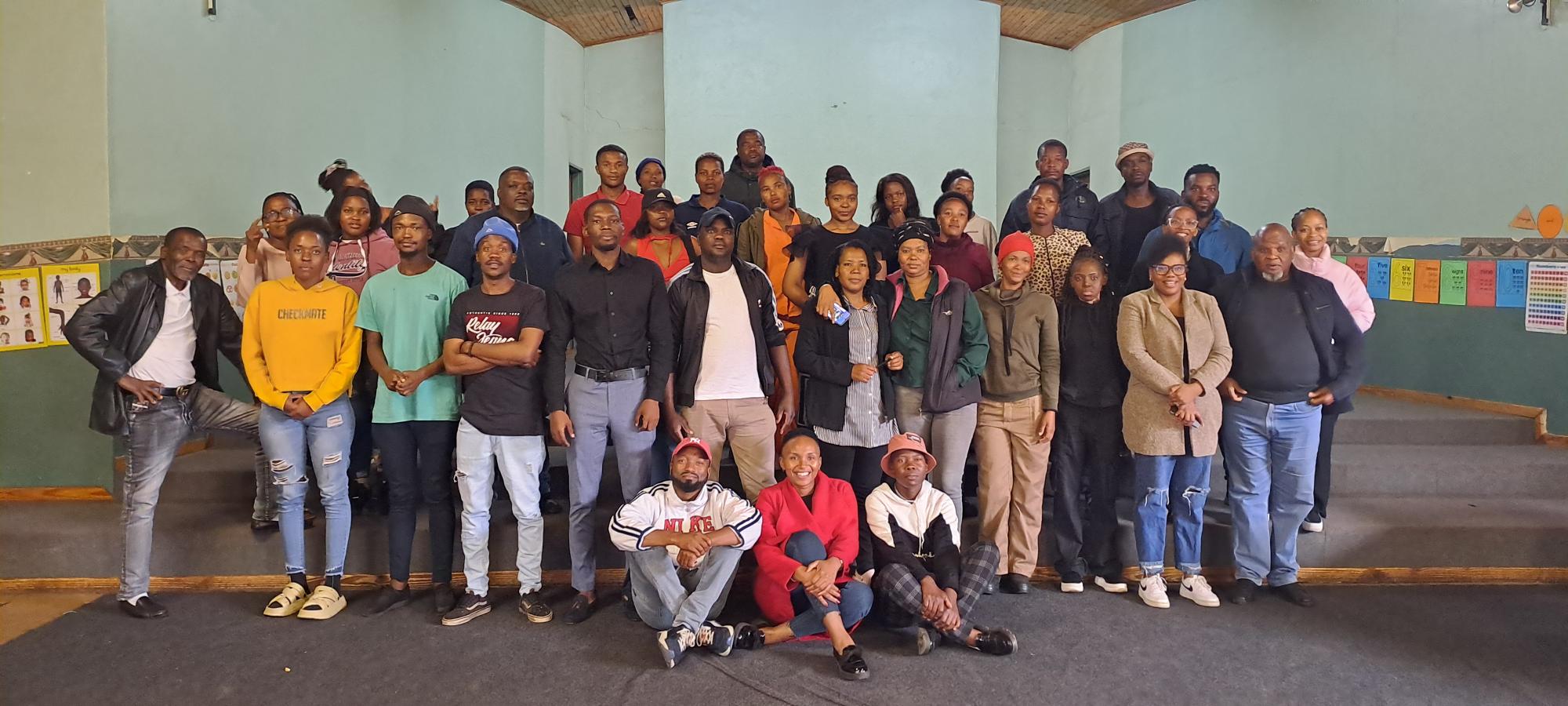
Photo: GIZ South Africa
Justice, innovation, engagement: Empowering the Komati community
South Africa faces an intricate challenge as it seeks to decarbonise its energy system while addressing pressing social issues such as unemployment, poverty, and inequality. The closure of the Komati power station, the country’s oldest coal-fired plant, back in October 2022 marked a significant step away from reliance on coal towards renewable energy alternatives like wind and solar. Although the power plant was shut down for economic reasons due to its age, Komati is considered to be a just energy transition pilot project that integrates new ways to repower and repurpose existing coal assets. However, without inclusive engagement and community ownership, the transition risks deepening socio-economic exclusion.
The K-JET CEICC project is a community-driven initiative supporting Mpumalanga’s shift from coal to a low-carbon, climate-resilient economy. It aims to ensure that communities who are affected by the decommissioning of the Komati power station are not passive recipients of decisions, but are active co-creators of new livelihoods and local development pathways. The project is responding directly to calls for procedural justice, local economic diversification, and inclusive participation in just transition processes. This initiative is being implemented in coordination with key national and provincial institutions: the National Department of Forestry, Fisheries and the Environment; the Presidential Climate Commission; the Mpumalanga Department of Agriculture, Rural Development, Land and Environmental Affairs; the Nkangala District Municipality; the Steve Tshwete Local Municipality; the Mpumalanga Green Cluster Agency; and the Komati Steering Committee.
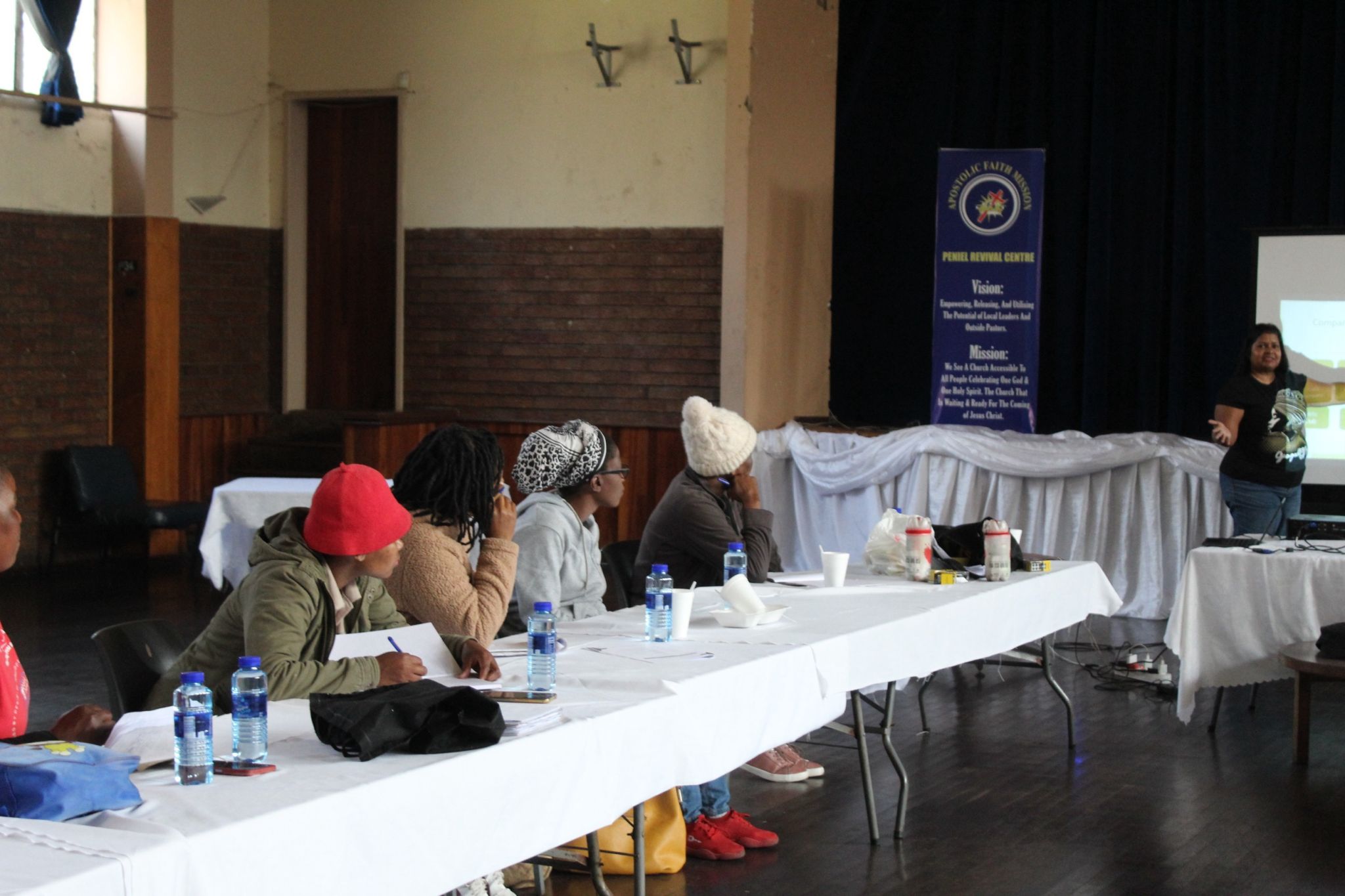
Photo: Indalo Inclusive
Methodologically, the initiative is grounded in an asset-based community development approach, which starts by considering community strengths, skills, and existing networks rather than any deficits. It follows a structured four-stage process: awareness and exposure; innovation and co-creation; ownership and testing; and sustainability and impact. This journey began with climate and just transition awareness workshops attended by more than 150 residents. It then moved on to co-creation sessions, where participants identified and prioritised socio-economic and environmental challenges. Ultimately, innovation bootcamps were held to refine and test ideas, with ongoing enterprise formalisation, mentorship, and governance support. Engagement is intentionally inclusive, using local languages, gender and age analysis, blended communication methods, and community-led decision-making.
A key objective of IKI JET’s work is to facilitate international knowledge exchange and experience-sharing between coal regions in the Global South. Through this collaborative approach, participating communities and stakeholders can learn from each other’s successes and challenges, strengthening their efforts towards a just and sustainable energy transition. As part of these efforts, Álvaro Daniel Pinzón Velásquez of GIZ Colombia presented insights from Colombia’s just transition journey, sharing experiences and perspectives that resonated deeply with the Komati community’s challenges and aspirations. The presentation highlighted Colombia’s economic dependence on coal, focusing on employment, coordinated policies for coal-fired power plant abatement and mine closures, and advancing renewable energy to drive economic diversification.
The project’s overall aim is to convert the disruption caused by coal plant closures into an opportunity for locally rooted green economic solutions. By incubating community innovations—such as integrated crop farming, water purification, eco-briquettes, and sustainable textiles—the project seeks to support new livelihoods while addressing pressing local issues like unemployment, pollution, and social exclusion. In doing so, it aspires to create a replicable model of a just, participatory transition that will strengthen community agency, foster economic resilience, and contribute to climate objectives in Komati and other coal-dependent regions in South Africa.
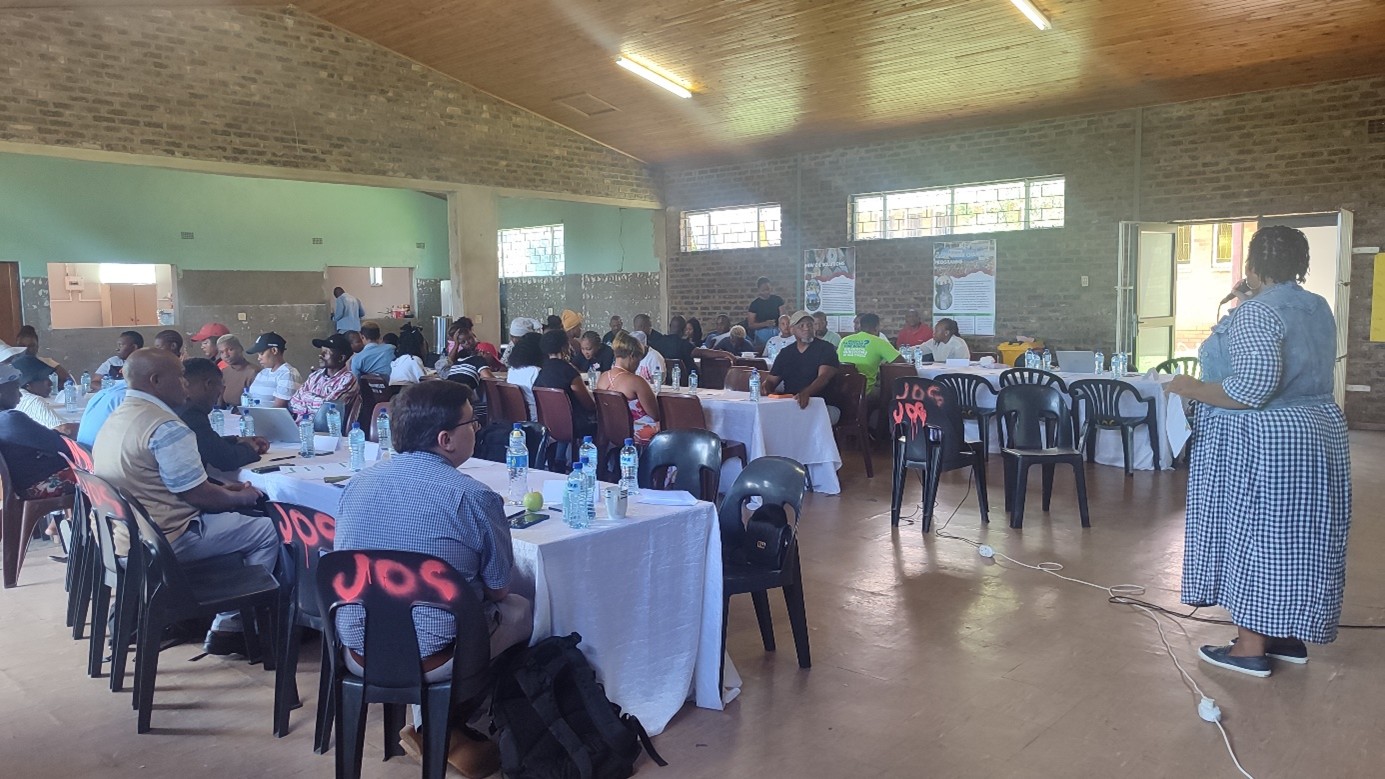
Photo: GIZ South Africa
Key highlights
- More than 150 Komati residents have gained climate and just transition knowledge through workshops, with co-creation yielding solutions for environmental, social, and economic challenges in the area.
- Five innovation teams completed bootcamps, formalising enterprises in sustainable farming, water purification, eco-briquettes, and sustainable textiles, with support from Indalo Inclusive through mentorship, governance training, and tranche funding.
- Inclusivity is emphasised through targeted gender and youth focus groups, using local languages in workshops and training, integrating digital mitigation strategies to address technology-related risks, and aiming to foster community ownership.
- The project featured in the Presidential Climate Commission’s June 2025 report titled Komati’s Just Transition: Assessing Progress, Challenges, and Lessons and the Indalo Symposium 2025 event, amplifying lessons for coal transitions nationally and globally.
Related Posts
Stay Informed and Engaged
Subscribe to the Just Energy Transition in Coal Regions Knowledge Hub Newsletter
Receive updates on just energy transition news, insights, knowledge, and events directly in your inbox.