


As a major coal producer seeking to diversify its fossil-fuel-dependent economy, Indonesia offers unique lessons for a just energy transition. Faced with the prospect of decreasing global coal demand and domestic plans to reduce emissions and expand the share of renewables, it must balance the twin goals of economic growth and shared prosperity, ensuring that the transition to new economic avenues is just for workers and local communities.
In October 2025, a group of international policy-makers and coal region stakeholders from civil society, labour, academia, and business visited East Kalimantan, on the densely forested island of Borneo, to see firsthand how the coal- and oil-rich province is managing this transition.
The 3-day capacity-building programme, organised by the Deutsche Gesellschaft für Internationale Zusammenarbeit (GIZ) as part of the Innovation Regions for a Just Energy Transition (IKI JET) project, showcased ongoing energy transition projects and their practical learnings to delegates from Chile, Colombia, Kazakhstan, Mongolia, South Africa, Thailand, and Vietnam.
Day 1: Creating jobs outside the coal value chain
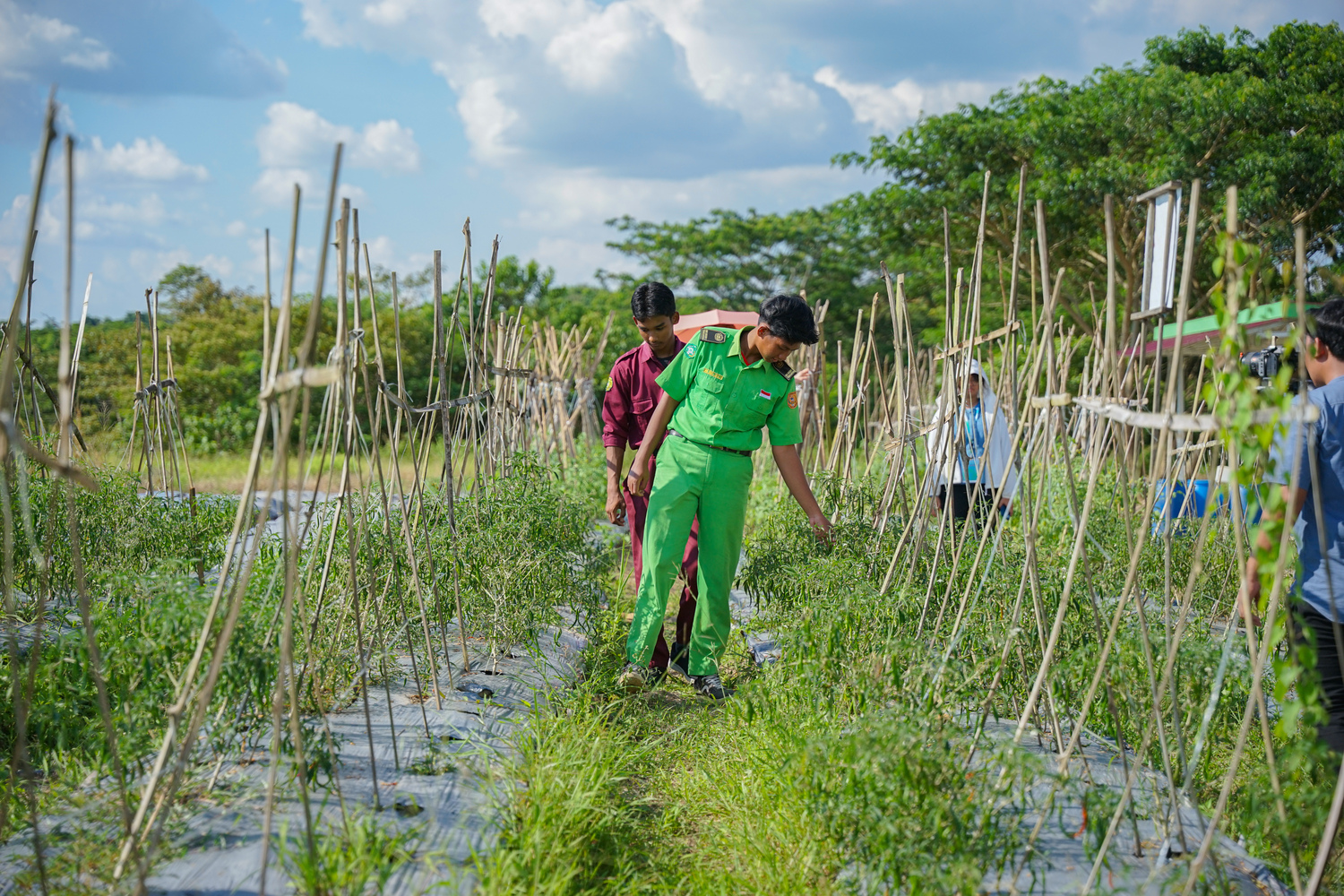
In regions long shaped by coal mining, the rehabilitation of former mining land is a vital part of the green transformation, paving the way for sustainable economic alternatives such as agriculture. At the Jonggon Jaya Village, in Kutai Kartanegara Regency, East Kalimantan, participants of the capacity-building programme had the chance to observe how mining company Multi Harapan Utama (MHU) approaches land rehabilitation around depleted coal mines.
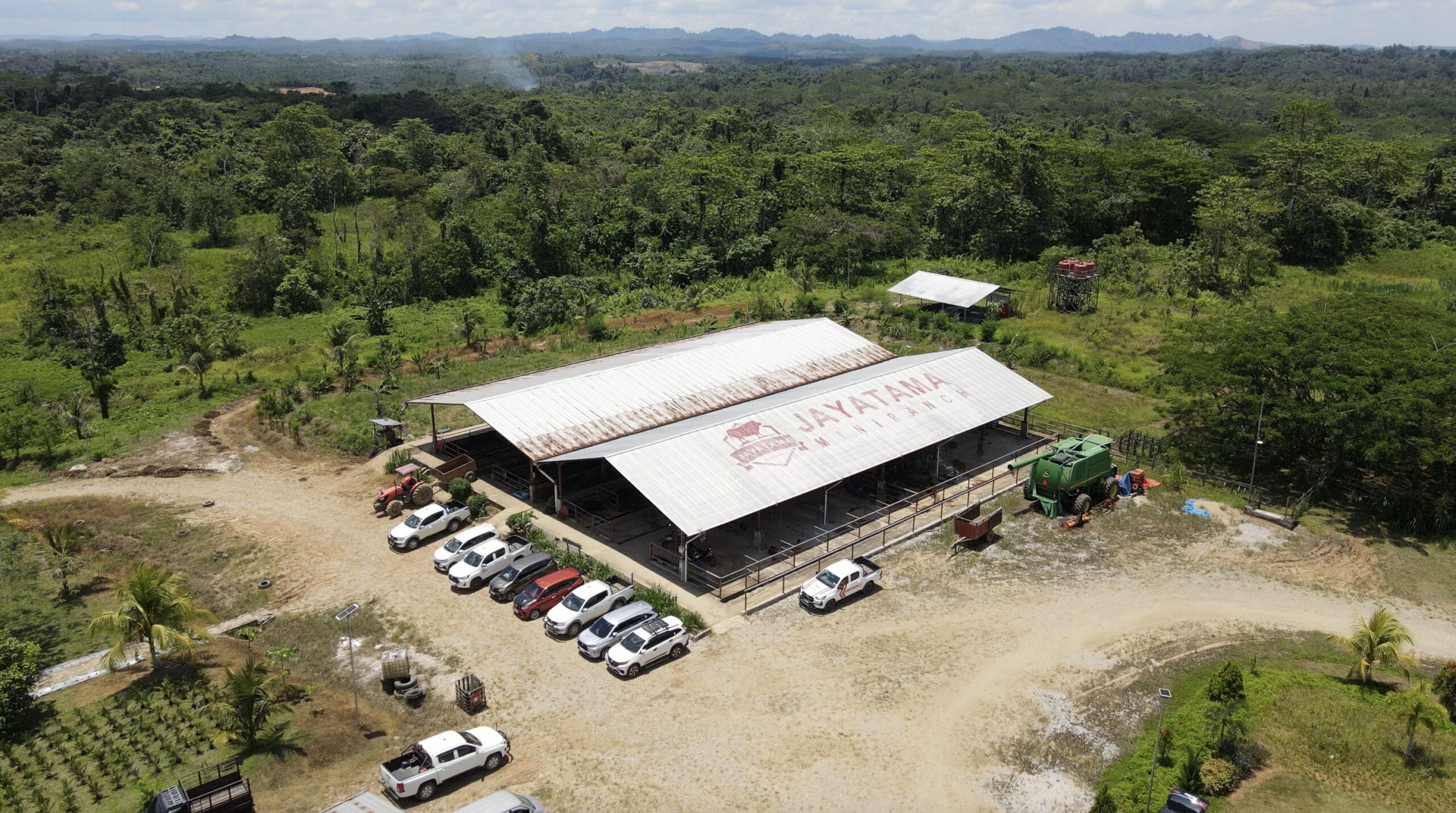
With a focus on sustainable agriculture, cattle farming, conservation education, and eco-tourism, MHU runs rehabilitation and post-mining activities on its former mining sites over 250 hectares. The years-long rehabilitation effort, which forms part of MHU’s corporate social responsibility programme, is designed to restore land, spur diverse economic opportunities, and create local jobs. To do this, MHU develops and supports models that integrate the local community into the economic value chains of promising sectors in order to sustain these businesses long-term, explained Akhmad Maulana, Sustainability and Project Division Head at MMS Group Indonesia, the parent company of MHU.


As part of the rehabilitation process, MHU works with Samarinda State Agricultural Polytechnic to research and implement innovations in land restoration practices, one example of which is the loading of organic fertiliser from cattle waste into eroded topsoil. While MHU supplies the materials and produces solid and liquid nutrients, the local community packs and distributes the fertilising products. Once the soil is restored, local farmers can grow organic crops for domestic consumption.
MHU’s post-mining area also provides field study opportunities for vocational students who would otherwise lack access to modern farming facilities, allowing them to make use of professional tools and gain practical experience.
Other initiatives to support local communities include an artisanal chocolate factory, which trains and employs a dozen Indigenous women of the Kenyah Dayak sub-ethnic group to directly process their cocoa harvests, eliminating the need to trade through a third party and allowing them to maximise profits. Other opportunities have been created through a village-owned enterprise that uses a business-to-business model to match the local workforce with demand for service-based jobs. This has provided local opportunities in food catering and construction, among others, creating over 200 jobs for single mothers and those living in poverty.
Day 2: Exploring Indonesia’s visionary new capital city

Jakarta, Indonesia’s low-lying capital, is particularly vulnerable to the impacts of climate change due to ongoing population growth and the overuse of natural resources. With ambitious plans underway to relocate the country’s administrative centre to East Kalimantan, participants had the opportunity to visit the new capital, known as Ibu Kota Nusantara (IKN), to find out more about its sustainable vision and how it aims to transform the surrounding area.
Agung Indrajit, Deputy for Green and Digital Transformation of the Nusantara Capital City Authority, explained that the goal is to build a nature-based and climate-resilient city, one that can absorb rainwater like a sponge to secure clean water and control flooding. IKN aims to develop nine economic areas, including economic and financial centres, innovation and research centres, agro- and food industries, and tourism and leisure centres, to stimulate economic growth and help the coal province transition to a net-zero future by 2045.
To meet its carbon-neutral objectives, more than USD 5 billion has been invested in IKN’s infrastructure over the past 3 years, including to secure a renewable electricity supply. To date, a 50-MW solar farm, accompanied by a 14.2 MWh battery energy storage system, has been constructed and is now being operated. Situated on rolling hills and surrounded by eucalyptus trees, the farm employs former coal plant engineers to manage the electrical systems, according to Adrian Ova Triandi, project engineer at the solar farm.
Day 3: Empowering communities with waste-to-fuel initiatives

As Indonesia seeks to reduce its economic reliance on fossil fuels, the country’s state oil company, Pertamina, has begun integrating clean energy programmes into its operations.
On the final day of the capacity-building programme, Pertamina senior analyst Agung Fibrianto explained to delegates how the company aims to build a successful business legacy with low-carbon and decarbonisation initiatives throughout its value chain. This includes implementing energy efficiency and ending gas flaring during oil production operations.
Pertamina has also entered the renewable sector, incorporating geothermal energy into its portfolio and solar power into its units. Among them is the 2.5 MWp rooftop solar farm at its Refinery Unit V in the seaport city of Balikpapan, the second largest oil refinery in Indonesia, which supplies power to the warehouse and workshop building, among others.
Pertamina also aims to drive the local economy and reduce environmental impacts through community development. One of its flagship corporate social responsibility programmes, known as Independent Energy Villages, supports coastal and agricultural villages by installing renewable technologies, providing training in sustainable practices, and fostering tourism. These programmes operate within a roadmap structure, with the aim for the villages to become sustainable once the support ends. Roadmap indicators include identifying local heroes and formal institutions, monitoring income from tourism, sustainable food and fishery production, utilisation of renewable energy, reduction of emissions, and waste collection and processing. As of October 2025, Pertamina has launched a total of 252 Independent Energy Villages across Indonesia, benefitting 96,000 people.

On the final day, delegates visited the Waste-to-Energy for Community (Wasteco) project at Manggar landfill in Balikpapan, East Kalimantan, one of the projects to have benefited from Pertamina’s Independent Energy Villages programme. The initiative, jointly developed by the city government and the subsidiary Pertamina Hulu Mahakam, empowers communities to capture methane generated from decomposing organic waste in local landfill sites, allowing small-scale cooking and heating technologies to run on biogas.
To operate the site, local women are trained to install and maintain the pipeline network and manage the finances. As of now, the network covers the whole village, powering kitchens in 300 homes and 22 small businesses, most of which are run by women, that produce artisanal snacks. This new and sustainable energy source reduces bills, with each household paying just IDR 10,000 (EUR 0.5) per month for its fuel supply, which is approximately 2.5 to 6 times cheaper than buying LPG cylinders, depending on the time of year.
Throughout the capacity-building programme, participants exchanged knowledge and best practices from their respective countries, identifying parallels between coal regions and strengthening their understanding of the elements needed for a truly just energy transition. With its ambitious, people-focused initiatives, Indonesia provided a rich set of learnings for the global community.
All photos by Dil Fadilah / Ranam Production. See video highlights of the IKI JET study tour here and subscribe to our newsletter to stay up to date.
See highlights of IKI JET’s 2024 capacity building programme in Mpumalanga, South Africa, here.
Related Posts
Stay Informed and Engaged
Subscribe to the Just Energy Transition in Coal Regions Knowledge Hub Newsletter
Receive updates on just energy transition news, insights, knowledge, and events directly in your inbox.