
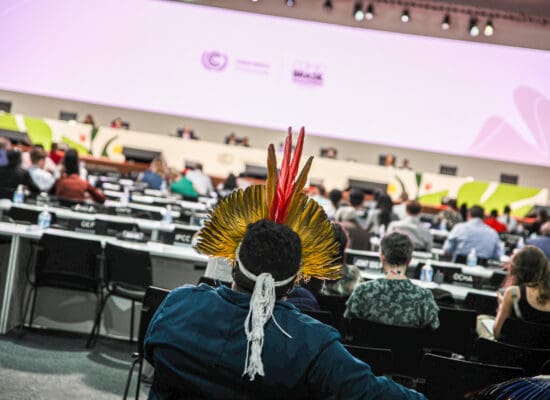
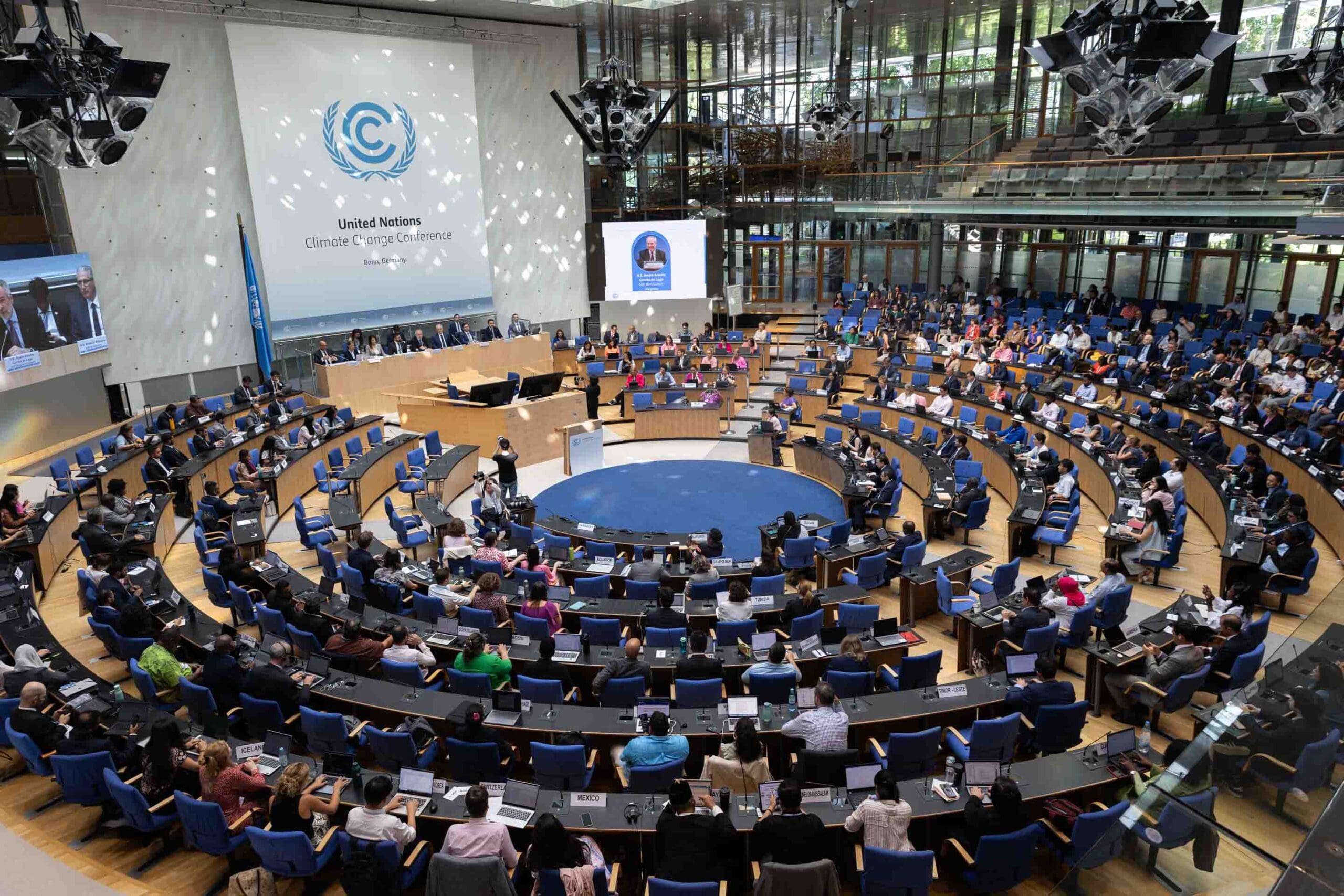
Negotiations at Bonn Climate Change Conference, June 2025. Photo by IISD/ENB | Kiara Worth
What is the Just Transition Work Programme?
The Just Transition Work Programme (JTWP) is an initiative of the United Nations Framework Convention on Climate Change (UNFCCC) that aims to promote pathways that ensure that the goals of the Paris Agreement are achieved in a just and equitable way. These pathways should be multi-faceted (including energy, socio-economic, workforce, and other dimensions), must include social protection, and must be specific to country contexts by considering nationally defined development priorities.
The JTWP was established in 2022 as a part of the COP 27 cover decision outlined in the Sharm el Sheikh Implementation Plan. The Subsidiary Body for Scientific and Technological Advice (SBSTA) and the Subsidiary Body for Implementation (SBI) then created a draft decision to be considered at COP 28, where the programme’s objectives were defined and adopted on 13 December 2023. As per the decision taken at COP 28, the programme’s efficacy will be assessed at COP 31. On the basis of this assessment, the parties to the Paris Agreement will decide whether to extend its duration.
Has anything like this been done before?
The JTWP is not the first initiative of its kind that has been set up under the UNFCCC. Other thematic programmes and dialogues have been convened, usually running for various numbers of years, including those on action for climate empowerment; mitigation ambition and implementation; the impacts of response measures; transparency arrangements; and children and youth in climate action. However, none have revolved around just transition specifically. The programme’s recognition of labour rights, social protection, and social dialogue has notably been celebrated by workers, who had been leading the just transition conversation thus far. There is also emphasis on the importance of inclusive and participatory approaches that leave no one behind for just transition, and on international cooperation as an enabler of such pathways. The International Labour Organization (ILO) has described the JTWP as “a historic new work programme on just transition,” emphasising both the significance and uniqueness of the programme.
How does the JTWP work in practice?
A key element of the work programme is knowledge exchange via multilateral collaboration, with biannual round table dialogues as its primary modality. The first of these dialogues took place in June 2024—in a hybrid format to allow both in-person and virtual participation—immediately before the 60th sessions of the SBSTA and the SBI, the two permanent subsidiary bodies of the UNFCCC. Since then, three more dialogues have been held, two in 2025, both of which coincided with UNFCCC climate weeks. Negotiations, which take place at COPs, constitute the formal process through which parties define and agree on the elements and implementation of the JTWP. The purpose of these negotiations is to further shape the direction of the work programme, including potentially translating the outcomes of the dialogues into concrete actions. A first decision (after the decisions that set up the work programme and outlined its objectives) was taken at COP 30.
In addition to the dialogues and negotiations, a high-level Annual Ministerial Round Table on Just Transition was launched at COP 28, providing a platform for parties to exchange perspectives, insights, and strategies on advancing the goals of the Paris Agreement, as outlined in Article 2.1 (temperature goals, adaptation capacity, etc.), in alignment with the principles of equity and national context described in Article 2.2 (“common but differentiated responsibility”).
Who participates in the JTWP, and what are the logistical processes?
The JTWP is implemented under the guidance of the SBI and SBSTA, with support from the UN Climate Change Secretariat. As is the case for all formal negotiations under the UNFCCC, only the parties —the 198 countries that have ratified the UNFCCC convention—can take decisions under the JTWP, while non-party stakeholders, notably non-governmental organisations (NGOs), can observe the negotiations and, at certain times, are invited to share their standpoints.
In contrast, at the biannual dialogues organised under the JTWP, observers and parties can participate more equally, allowing them to both engage in discussions and shape the discourse. To guide these discussions, all parties, observers, and other non-party stakeholders are invited to submit inputs through the UNFCCC submission portal at the beginning of each year, including their views on relevant aspects of the work programme and possible topics for the dialogues.
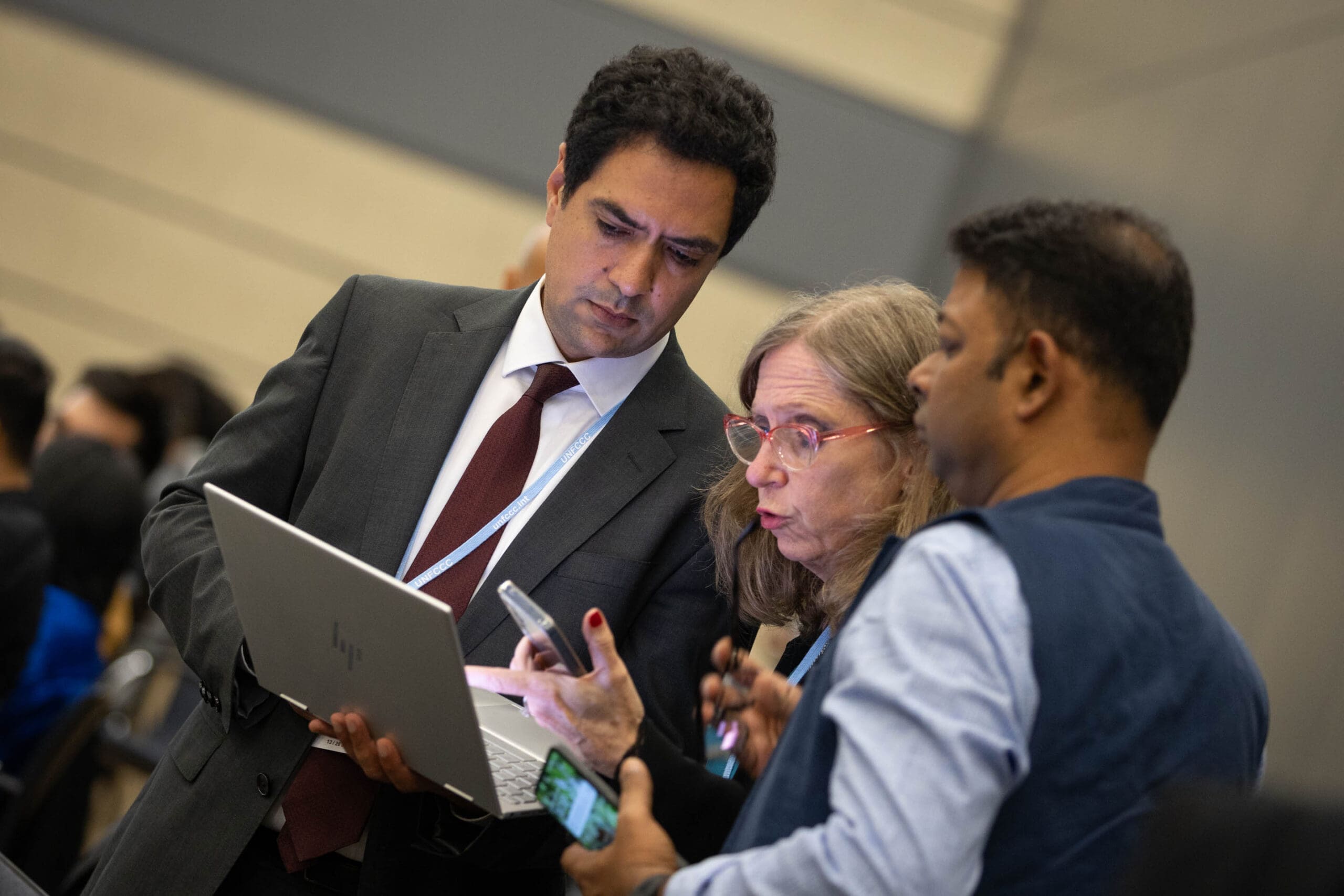
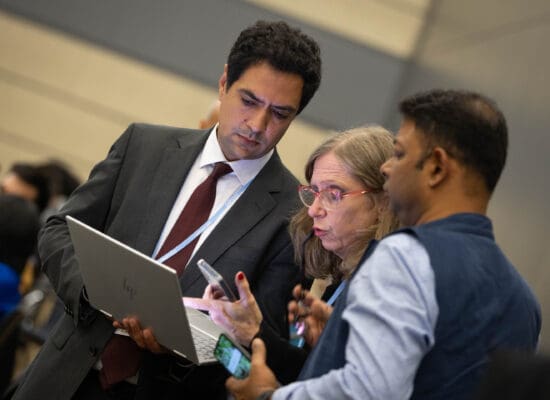
Negotiators discuss details of the Just Transition Work Programme at the Bonn climate talks, June 2025. Photo: IISD/ENB | Kiara Worth
What is discussed at the dialogues?
Two concrete follow-ups are designed to track the progress made by this initiative. First, the UN Climate Change Secretariat has the mandate to prepare a report summarising information on the activities under the JTWP with a view to that report informing the second global stocktake, including its technical dialogue. Second, the chairs of the subsidiary bodies are required to prepare an annual summary report on the dialogues (the report for 2024 can be found here; the report for 2025 can be found here).
During the first dialogue of the JTWP, discussions focused on incorporating a just transition into nationally determined contributions (NCDs), national adaptation plans (NAPs), and long-term low emission development strategies (LT-LEDS). The discussion emphasised the importance of a systematic approach, which includes socio-economic assessments and active participation from a wide range of stakeholders. Parties also stressed the importance of a whole-of-society approach, which must incorporate local knowledge and social protection measures to ensure that vulnerable groups are protected.
At the second dialogue, participants discussed how to ensure support for people-centric and equitable just transition pathways, with a strong focus on the whole-of-society approach and the workforce. Key topics included empowering all segments of society—especially workers, women, young people, Indigenous Peoples, and local communities—through inclusive stakeholder engagement and institutionalised social dialogue.
The third dialogue explored how to integrate just transition principles into adaptation and climate-resilience efforts. Discussions highlighted the importance of locally led adaptation, the inclusion of Indigenous Peoples and vulnerable groups, and avoiding maladaptation. Participants stressed the need for decent work, support for micro, small, and medium-sized enterprises (MSMEs), and stronger social protection systems as key enablers of resilience.
The fourth dialogue focused on just energy transition pathways, highlighting how nationally determined pathways can expand affordable and reliable clean energy, support clean cooking, and ensure equitable decarbonisation. Those taking part stressed the importance of decent work, social protection, responsible critical minerals development, and meaningful community participation. Discussions on energy security underscored the need for resilient systems, diversified renewables, and strong multilevel governance.
Which challenges has the JTWP faced in its implementation?
At the 60th sessions of the UNFCCC subsidiary bodies in Bonn in June 2024, challenges emerged regarding the concrete outcome of the JTWP. A proposal from the G77 group of developing countries advocated for a detailed work plan but was opposed by several developed countries, who argued that it was too early for such a plan and that further consensus-building was necessary before specific implementation measures could be laid out. Disagreements also arose over the timing and format of future dialogues, including the selection of topics.
COP 29 in Baku (11–22 November 2024) also ended without a formal decision on the JTWP, because the parties could not reach consensus on a final draft text. While the developed countries viewed the draft as a compromise that incorporated several key priorities outlined by developing countries, such as adaptation, international partnerships, and Common but Differentiated Responsibilities and Respective Capabilities (CBDR-RC), some developing countries felt that the overall text was imbalanced and still lacked vital elements. There were also significant disagreements over the scope of the JTWP and over the inclusion of specific references that might shift the dynamics of the programme. In addition, concerns were raised about the absence of guidance for just transition pathways, as well as the lack of economic equity and strong financial commitments from developed countries to developing ones. As a result, no consensus was reached. However, despite the lack of final agreement, progress was made in numerous areas, including references to broader stakeholder inclusion and a focus that extends beyond the existing workforce.
The root of the challenges lies in the fundamentally different understandings of what a “just transition” means for developed and developing countries. Developed countries tend to focus on domestic efforts, therefore promoting practices relating to transitioning the jobs market, while developing countries advocate for a transition that is deeply rooted in the principle of CBDR-RC. They push for a broader transition, which emphasises a fair and equitable pathway without sacrificing development goals. This divide between the parties has so far left many issues unresolved and prevented agreement on a clear roadmap for implementing the JTWP.
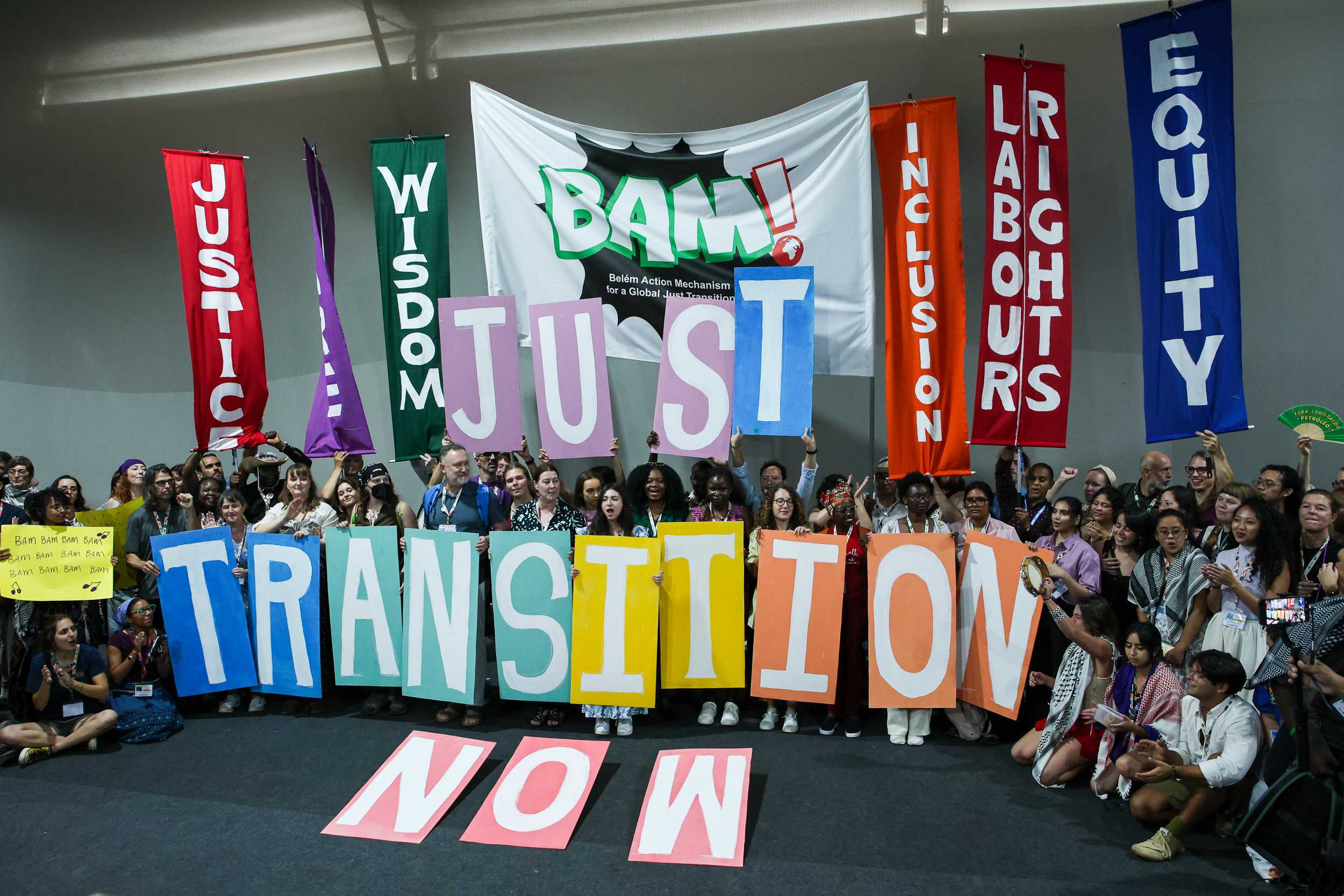
Just transition activists call for a "Belém Action Mechanism" (BAM) at COP 30 in Belém, Brazil, in November 2025. Photo by IISD/ENB | Mike Muzurakis
What happened in 2025, and what are the next steps for the JTWP?
2025 marked a decisive year for the JTWP. During the subsidiary body sessions in Bonn, the parties agreed on an informal note that identified areas of emerging convergence and laid the groundwork for a decision at COP 30.
On that basis, the parties reached a major breakthrough in Belém by agreeing to develop a Just Transition Mechanism to enhance international cooperation, technical assistance, capacity-building, and knowledge-sharing. This is the first forward-looking institutional pathway for the JTWP and responds to long-standing calls—particularly from developing countries and observers—for a more concrete and substantive organisational basis from which to design and implement just transition pathways.
The COP 30 decision also strengthens the rights-based and inclusive foundation of just transition under the UNFCCC. It contains the strongest language to date on human rights, labour rights, Indigenous Peoples’ rights, gender equality, decent work, social dialogue, and social protection. The decision emphasises broad and meaningful participation and reframes just transition as a contributor to accelerated climate action, recognising energy access, adaptation, biodiversity and renewables, among others, as key elements. It further reaffirms that just transitions must be country-driven, tailored to national circumstances and integrated into existing national planning instruments, including NDCs, NAPs, and LT-LEDS.
Looking ahead, parties and observers have been invited to submit views on the operationalisation of the Just Transition Mechanism by March 2026. Building on this, parties will then be requested to prepare a draft decision in Bonn in June 2026 for adoption at COP 31, alongside the first effectiveness review of the JTWP.
Cece Coleman is a third-year Biochemistry student at Smith College, a private liberal arts women’s college in the U.S., and an intern at the International Institute for Sustainable Development working with the Just Energy Transition in Coal Regions Knowledge Hub.
Related Posts

Stay Informed and Engaged
Subscribe to the Just Energy Transition in Coal Regions Knowledge Hub Newsletter
Receive updates on just energy transition news, insights, knowledge, and events directly in your inbox.