
Research
TRAJECTS: Cross-Regional Reflections on Just Energy Transitions
Country:
Colombia,
South Africa,
Organisation:
IISD,
As countries around the world grapple with the impacts of climate change and the need to shift away from fossil fuels, equity has emerged as a guiding principle—ensuring that social and environmental justice remain central to climate action. However, pathways to a just transition are not uniform; they depend on national contexts, local histories, and the capacity for shared learning.
The Transnational Centre for Just Transitions in Energy, Climate, and Sustainability (TRAJECTS) was created to support these learning processes. Connecting universities, researchers, and practitioners from Latin America, Africa, and Europe, TRAJECTS facilitates academic mobility, collaborative research, and capacity building across regions. Its aim is to strengthen South-South-North dialogues on key themes, such as fossil fuel phase-out, sustainable land use, and climate justice.
South Africa opened up new perspectives for me. Seeing how African movements articulate climate justice as a historical debt—with dignity and clarity—was inspiring. — Maria José, TRAJECTS participant
TRAJECTS supports junior and senior research stays, allowing participants to spend time with host institutions across different regions. According to Grace Quiceno, Academic Coordinator at TRAJECTS’ European Hub, the structure of each stay is tailored: “Junior stays are typically more practice oriented, enabling early-career researchers to participate in the work of their host organisations. Senior stays are more focused on research outputs—policy briefs, articles, or comparative studies.” Across both formats, the programme emphasises mutual learning and collaborative knowledge production.
So far, 77 junior and 23 senior researchers have participated in the programme through 3-month stays. This research mobility has profound impacts on participants, fostering a deeper understanding of both the complexities and the commonalities of just energy transitions in different parts of the world. At the same time, each participant’s experience is unique, shaped by their background, interests, and host context.
Rethinking Energy from the Ground Up: Aranza Banda in Berlin
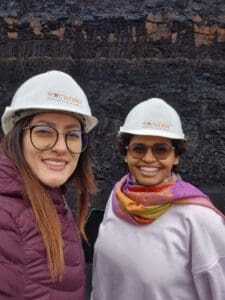
For Aranza Banda, an environmental engineer from Colombia’s Caribbean region, joining TRAJECTS marked a turning point in her professional development. After graduating from the University of Magdalena in 2020, Aranza had worked in recycling and circular economy initiatives. But her interest in renewable energy and the broader implications of energy transitions led her to apply for a TRAJECTS-supported master’s programme in Sustainable Territorial Development.
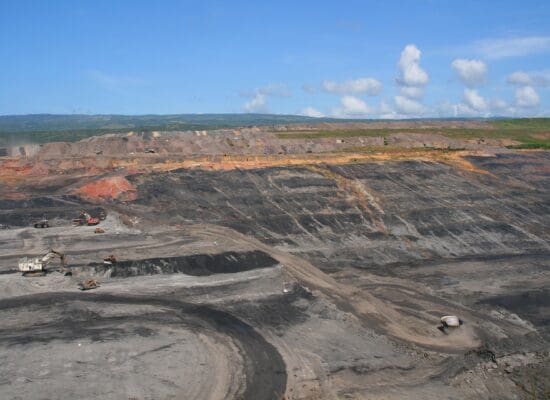
Aranza had initially approached energy transition as a technical matter, but her perspective shifted when she joined a university research group focused on coal regions in Colombia. “Before TRAJECTS, I thought the solution was simple—just install solar panels. But when I visited La Jagua de Ibirico and saw what was happening after the mining company Prodeco returned its titles, I realised how complex the transition really is,” she explains. “It’s not just about energy. It’s about livelihoods, land, identity, and community.”
Her subsequent 3-month research stay in Berlin offered her an opportunity to explore similar themes in a different context. There, she collaborated with the TRAJECTS EU Hub on the development of a comparative learning module about South Africa’s coal transition. “I didn’t know much about South Africa before,” she recalls. “But their concerns—about labour reconversion, about projects not being located in former mining areas—were strikingly similar.”
Although she had initially expected to assist a senior researcher with data collection, Aranza found that the experience also expanded her own knowledge. “I thought I was going to contribute something, but I ended up learning far more,” she says. “The stay helped me see that transitions are not only technical—they’re political and deeply social.”
Comparative Lessons from South Africa and Colombia: Jesse Burton’s senior stay
Jesse Burton, a senior researcher at the University of Cape Town, travelled in the opposite direction—from South Africa to Colombia—for a TRAJECTS senior stay. Jesse is part of the Energy Systems Research Group and has spent over a decade researching South Africa’s coal transition. Her visit to Colombia enabled a deeper dialogue between the TRAJECTS hubs in Africa and Latin America.
“Colombia and South Africa have similar levels of GDP per capita, and both rely on coal for regional economies,” Jesse explains. “But there are differences too. Mpumalanga, South Africa’s main coal region, has more industrial infrastructure and is closer to urban centres. Colombia’s coal regions—like Cesar and La Guajira—are more isolated, which affects their diversification potential.”
Jesse participated in field visits to mining municipalities like La Jagua de Ibirico and La Victoria. She found clear parallels between the regions—not only in terms of extractive histories, but also in the social and political dynamics shaping their transitions. “In both places, there’s a strong history of resistance to extractive industries. That legacy is shaping how communities respond to renewable energy too—often with scepticism.”
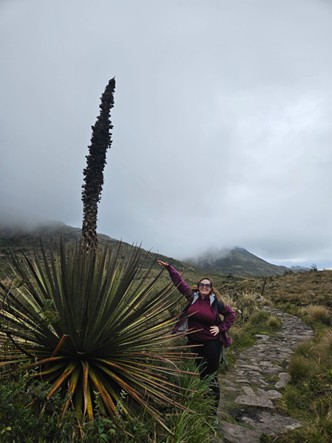
She also noted the environmental complexity of Colombia’s transition. “The páramos (high-altitude tropical alpine ecosystems that regulate water, store carbon, and host unique biodiversity) and the biodiversity of Colombia really stood out to me. Phasing out fossil fuels is hard, but land use and ecological protection may pose even bigger challenges in some areas.”
Jesse’s research stay contributed to a broader comparative project between South Africa, Colombia, and Indonesia. “Each context is unique, but there are enough shared dilemmas—about labour, infrastructure, social inclusion—to make comparison worthwhile,” she says.
South-South Learning and Political Imagination: María José Andrade Tafur in Cape Town
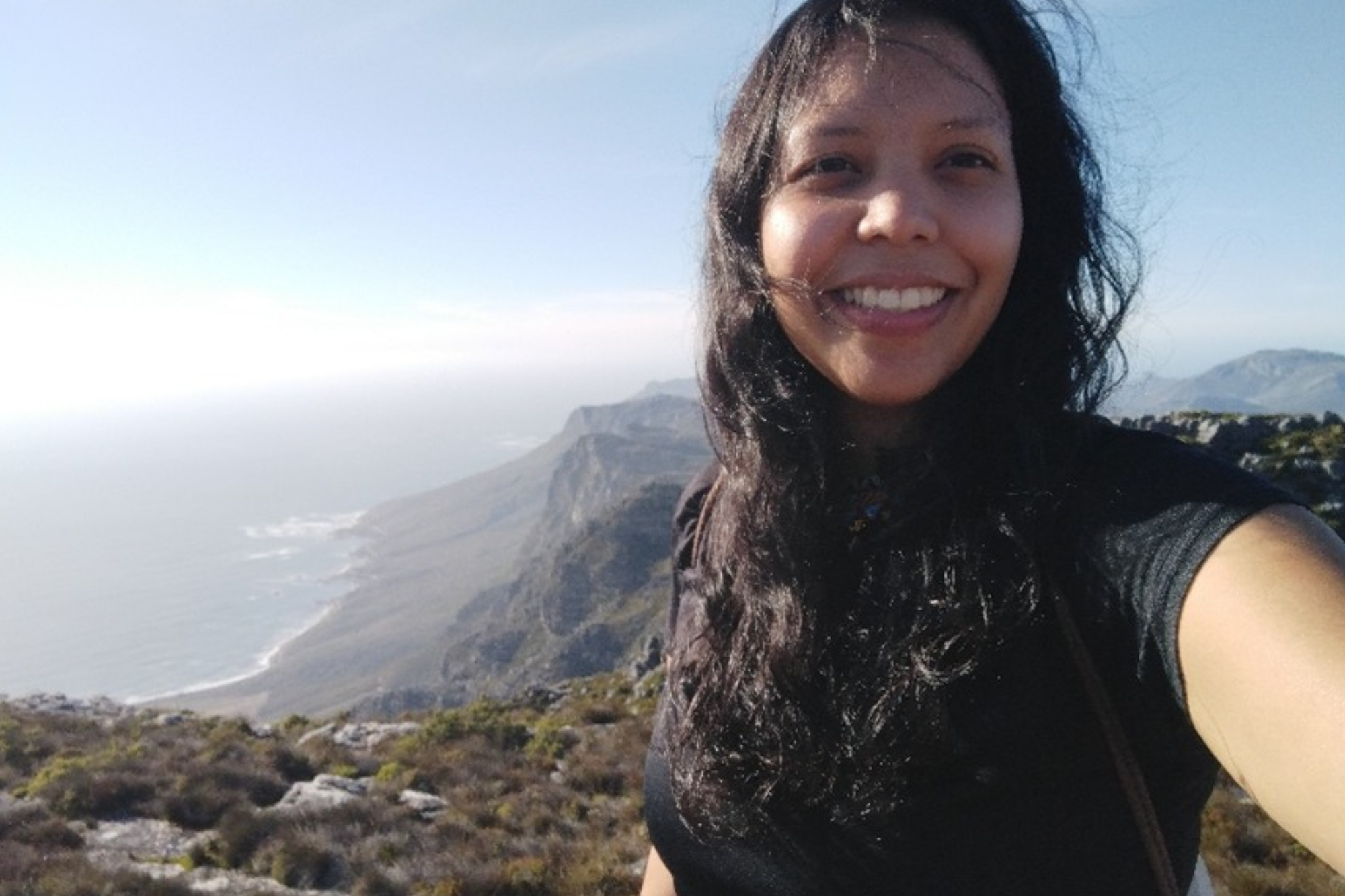
For María José Andrade Tafur, a Colombian environmental engineer and activist, TRAJECTS provided a rare opportunity to engage in a South-South exchange. A long-standing member of Jóvenes por la Defensa del Territorio—a youth collective working on environmental justice—she had been involved in grassroots education and research on extractivism, gender, and popular resistance.
She applied for two placements—one in Berlin, one in Cape Town—and was ultimately selected for South Africa. “It wasn’t a place I had ever imagined visiting,” she says. “But I was drawn by the themes: racial justice, climate responsibility, extractivism—issues I was already working on in Colombia.”
In Cape Town, María José collaborated with the African Climate and Development Initiative on research related to the implementation of nationally determined contributions (NDCs) in the Global South. “At first, I felt overwhelmed. I didn’t arrive with a clear research agenda. But my supervisor helped me see that learning and personal reflection were also valuable outcomes.”
The experience had a lasting impact. “South Africa opened up new perspectives for me. Seeing how African movements articulate climate justice as a historical debt—with dignity and clarity—was inspiring,” she says. “It also helped me see our own struggles in Colombia in a new light.”
She points out the importance of cross-regional learning, especially when it comes to avoiding repeating mistakes. “Colombia’s experience with hydropower has left scars. If Africa is investing in similar projects, maybe our story can offer lessons. And vice versa—mining conflicts in Africa could be warnings for Colombia.”
Shared Knowledge, Different Realities
The experiences of Aranza, Jesse, and María José show how international collaboration can create space for reflection, dialogue, and practical learning. While transitions are often discussed in global terms, they are felt and contested locally—in the coalfields of Cesar, the townships of Mpumalanga, and communities across Latin America and Africa.
TRAJECTS provides a platform for researchers and practitioners to examine what a just transition might mean in specific places, and how lessons from one context might inform another. Through local placements, collaboration, and shared reflection, the initiative is contributing to a growing body of situated knowledge about how to move away from fossil fuels—without reproducing old injustices in new forms. As transitions accelerate, such connections become not just useful, but more essential than ever.
TRAJECTS will open calls for PhD, master’s, and junior and senior research stays around March 2026.
Related Posts
Stay Informed and Engaged
Subscribe to the Just Energy Transition in Coal Regions Knowledge Hub Newsletter
Receive updates on just energy transition news, insights, knowledge, and events directly in your inbox.