
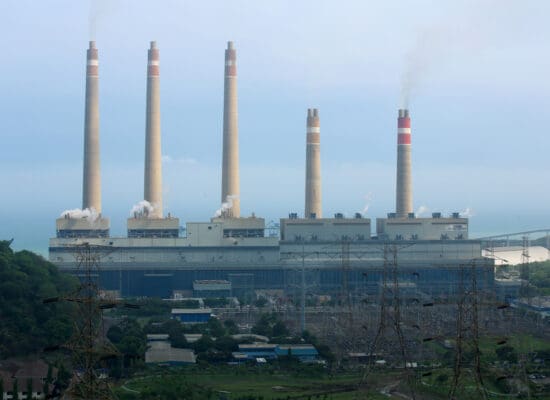
As part of the Emissions Ambition for Sustainable Economies (EASE) in Southeast Asia project, the International Institute for Sustainable Development (IISD) partnered with the Indonesia Climate Modeling & Policy Hub (I-CLIMB) to host a technical Focus Group Discussion (FGD) in Jakarta on 5 November, 2025. Photo: I-CLIMB
Inclusive modelling can turn carbon pricing into a strategic tool that both cuts emissions and delivers economic justice to marginalised communities. It is key to ensure that the impact of carbon pricing doesn’t amplify challenges related to justice—such as job losses, reduced access to energy, and worsening poverty. It is also important to make sure the tactical allocation of emerging revenues from carbon pricing enhances justice by reducing the emissions associated with climate change; by stimulating economic and employment development; and by boosting social empowerment.
The Indonesian Context
As climate change intensifies, countries must balance economic growth with the urgent need to reduce emissions. To tackle this issue, various tools have been developed to put a price on carbon: where polluters pay fees to offset their emissions and environmental damages, resulting in more expensive products that can discourage consumer demand.
This trend has been seen across national and international initiatives. The European Union (EU) is set to launch its Carbon Border Adjustment Mechanism in 2026, which will tax emissions from imports to EU countries. Meanwhile, emerging countries have also announced carbon pricing mechanisms. In early 2023, for example, Indonesia launched a mandatory trading scheme for the power sector: Economic Value of Carbon. This mechanism requires coal-fired power plants to accrue enough carbon allowances to cover their emissions or risk having to purchase extra allowances via auctions. Indonesia’s carbon market, launched in September 2023 and named IDX Carbon, seeks to promote emissions reduction through forestry and renewables projects by selling carbon credits.
The Emissions Ambition for Sustainable Economies (EASE) Project
The EASE in Southeast Asia project aims to build a shared understanding of the links between energy transition projection, climate targets, and energy access within the broader reality of international trade and socio-economic variables, which include poverty, gender inequality, and social exclusion. By focusing on the emerging countries of Southeast Asia, the EASE project aims to facilitate discussion about how to design carbon pricing models and strategies that are fair and inclusive. These insights are critical for informing policies that can advance equitable, low-carbon development.
As part of the EASE project, the International Institute for Sustainable Development (IISD) partnered with the Indonesia Climate Modelling & Policy Hub to host a technical focus group discussion in Jakarta on 5 November 2025. The discussion brought together Indonesian modellers and policy-makers to share their approach to modelling the impacts of carbon pricing. The full-day event sought to compare models and explain the logic behind these policy tools, with the goal of strengthening the design of carbon-pricing impact analysis by capturing several economic, social, and environmental dimensions.
The Discussion
Session 1: Modelling Proposals for Carbon Pricing in Indonesia
The first session of the focus group discussion focused on the technical designs used by economists to simulate carbon-pricing impacts, highlighting common practices and ways to improve them.
In quantitative analysis, for example, modellers typically approach the analysis of carbon pricing by using global modelling, sectoral modelling, and national modelling. Each model offers a specific perspective and insights: global models support trade analysis; sectoral models inform policy analysis for technology uptake; and national models analyse the role of carbon pricing in national development. Thus, there is a need to integrate this knowledge—tailoring existing models to make them more granular and systemic, while still allowing for comparison.
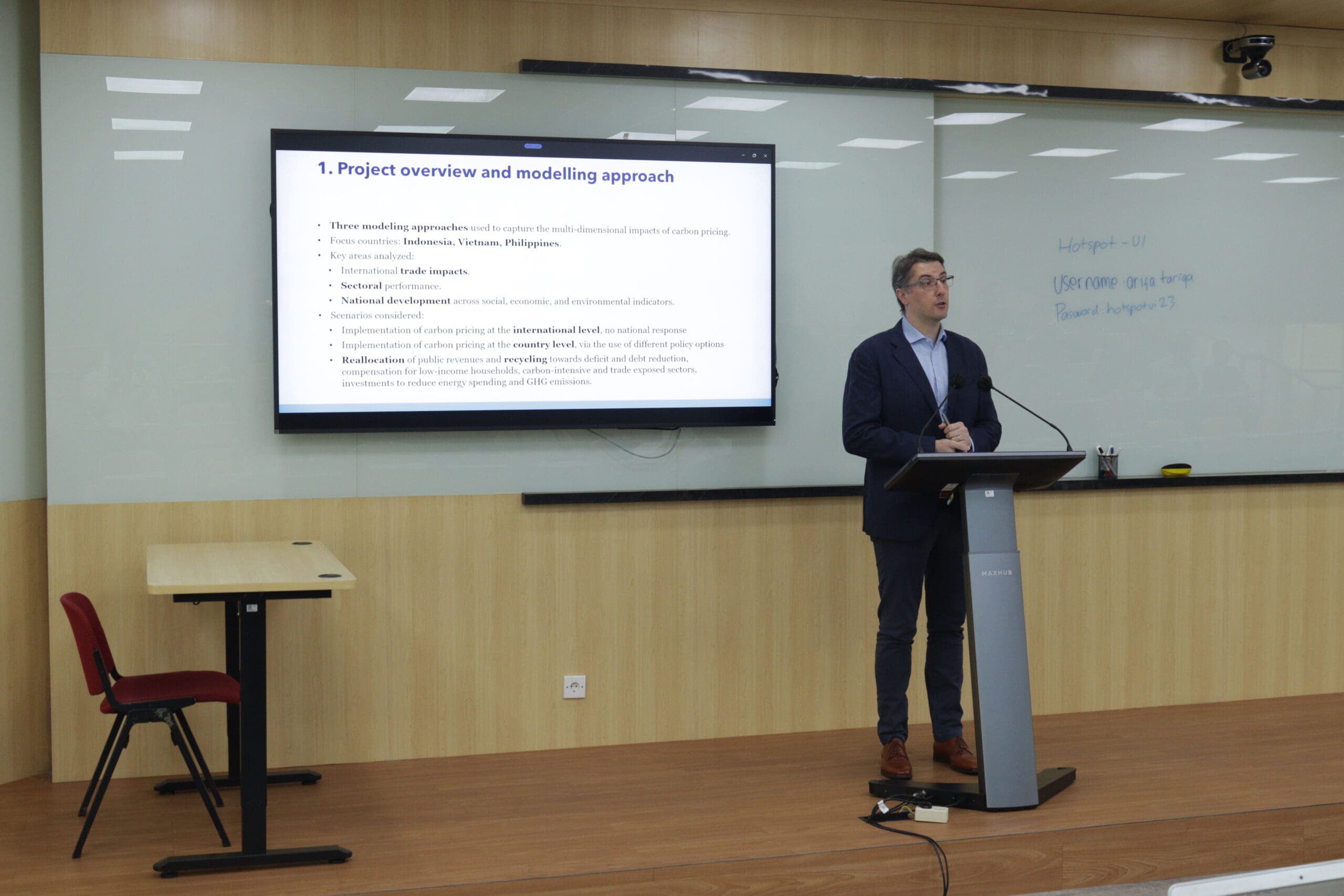
Andrea Bassi, a systems modeller from IISD, presented an overview on carbon pricing modelling. Photo: I-CLIMB
Andrea Bassi, a systems modeller from IISD, explained how the EASE project runs quantitative models with three dimensions: computable general equilibrium models to assess impacts on production across sectors; sectoral models to analyse the financial viability of investments in decarbonisation; and the green economy model to explore the “what-ifs” in national economic projections, considering social, economic, and environmental indicators.
Because mathematical models cannot accurately capture the full complexity of the real world, the project also uses systems thinking—specifically, a tool called a causal loop diagram—to identify key drivers of change in the system and to highlight the emergence of potential synergies and trade-offs when carbon pricing policies are introduced.
The session showcased a range of methods and models used to analyse the impacts of carbon pricing. While the overarching multi-model approach developed under the EASE project was presented as the central framework, additional speakers provided complementary perspectives on macroeconomic impacts, energy sector dynamics, and carbon market mechanisms.
Three additional speakers shared their experiences of modelling different facets of carbon pricing: at the macroeconomic level, for the energy sector, and for the emissions trading systems carbon market. Agus Sari of the Landscape Group touched on carbon market modelling in Indonesia and its implications for energy transition; Fahri Santosa of the World Resources Institute discussed the socioeconomic implications of Indonesia’s net-zero energy transition; and Sarah Gultom from the Institute for Economic and Social Research, University of Indonesia outlined the role of market-based instruments in achieving Indonesia’s climate goals.
These presentations aligned closely with the EASE modelling approach, which aims to integrate multiple analytical tools to deliver a comprehensive assessment of carbon pricing impacts. The discussions made clear the interconnections between macroeconomic and sectoral analyses, energy system responses, and the demand–supply dynamics that shape emissions trading systems.
The session also explored the use of shared scenarios, which would allow different models to simulate comparable policy cases. This coordinated approach facilitates model comparison, strengthens collaboration within the modelling community, and enhances the government’s capacity to use diverse analytical insights to inform evidence-based carbon pricing policy.
Finally, the discussion also touched on learnings from other countries, including Canada’s experiences of carbon pricing, as well as regional modelling insights from experts in Vietnam and the Philippines.
Session 2: GESI-Responsive Carbon Pricing Pathways in Indonesia
The second session addressed the modelling used to assess the social impacts of carbon pricing—in particular, the impact on vulnerable groups, such as women and poor households. The discussion called for a more detailed database to improve estimates of impacts on these groups.
Leading the event, Lorelie Astrera, Senior Policy Advisor for Gender Equality and Social Inclusion (GESI) at IISD, explained that in order to understand the urgency of this topic, we must understand that energy transitions are not neutral. Women and marginalised groups should also be able to enjoy the benefits of the transition, whether this means accessing new technologies, finding green jobs in renewables sectors, or participating in community decision making.
Carbon pricing, an important instrument for curbing emissions and promoting clean energy, can be used to respond to the needs of women and vulnerable groups to secure a just energy transition for all, she continued
To achieve inclusive carbon pricing mechanisms, governments should collect comprehensive data on gender, age, disability, and income to understand who bears the carbon costs and who benefits from the revenues. Energy policies and pricing mechanisms must integrate diverse perspectives to ensure that marginalised communities are protected and to lessen inequality, explained Astrera. Canada’s carbon pricing programme, for example, reallocates its revenues to support families who are on lower incomes.
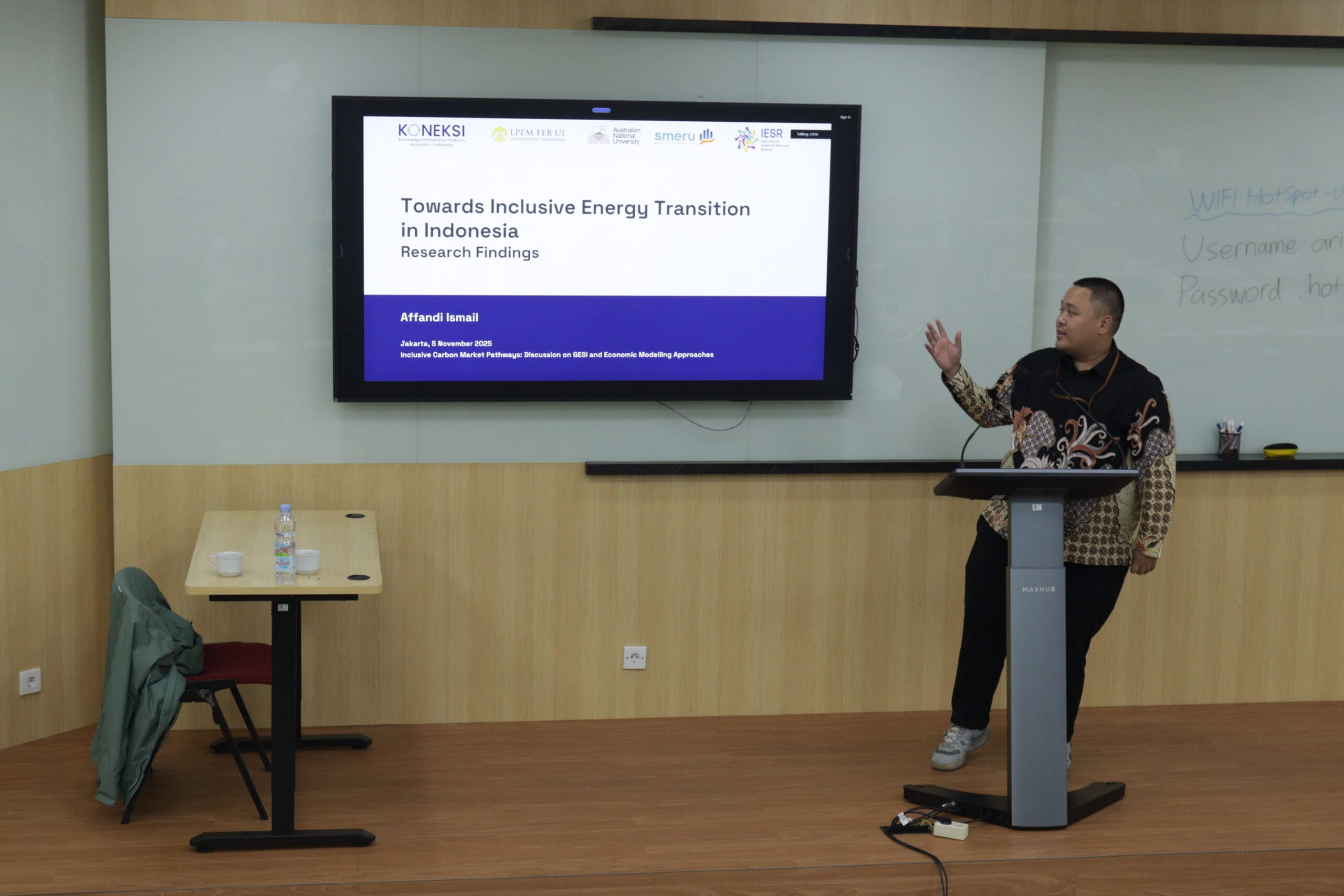
Affandi Ismail, an economist from the SMERU Research Institute, shared his modeling for an inclusive energy transition. Photo: I-CLIMB
Affandi Ismail, an economist from the SMERU Research Institute, presented his modelling under the framework of Indonesia’s 2045 vision to become a developed country, which also includes poverty rate reduction targets and net-zero goals with various deadlines. The models use micro-simulations to assess impacts on vulnerable groups, including single mothers, low-income families, disabled people, children, and elderly people.
The results suggest that the country’s net-zero measures will hinder the reduction of poverty and inequality, hurting vulnerable households. The more ambitious the climate efforts, the more severe the socio-economic impacts are projected to be. Thus, government interventions are needed, utilising fiscal policies and reallocating carbon pricing revenues to protect the most vulnerable.
“The energy transition itself is pronounced in regulations, but unfortunately, the protection of vulnerable groups and other GESI aspects are often overlooked in government regulations and programmes,” said Affandi. “Vulnerable communities are the ones most impacted by climate change and also by efforts to reduce climate impacts. So, they are really between a rock and a hard place.”
Affandi highlighted that gathering granular data that incorporates GESI dimensions is challenging, and that current climate models are limited to socio-economic indicators. Further research on GESI will be useful for improving data collection and integrating more indicators so existing climate models can assess welfare and social inclusion.
Rus’an Nasrudin, a lecturer at the Department of Economics of the University of Indonesia, explored the impacts of carbon pricing policies across different groups. He explained that Indonesia has been grappling with energy inequality and the fiscal burdens of inefficient fossil fuel subsidies.
He argued that introducing a carbon tax could generate substantial revenue, delivering targeted support for lower-income households as well as contributing towards environmental goals.
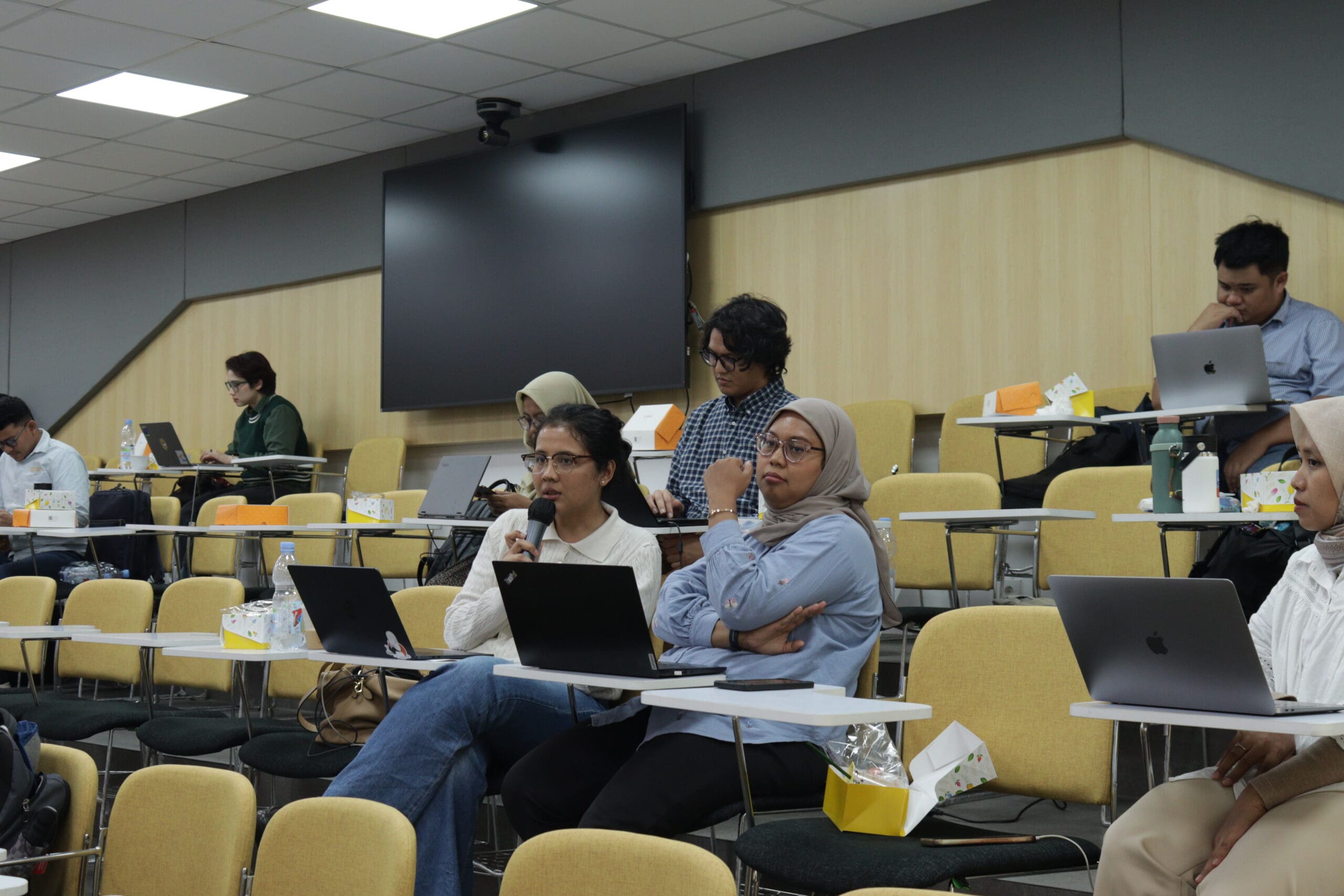
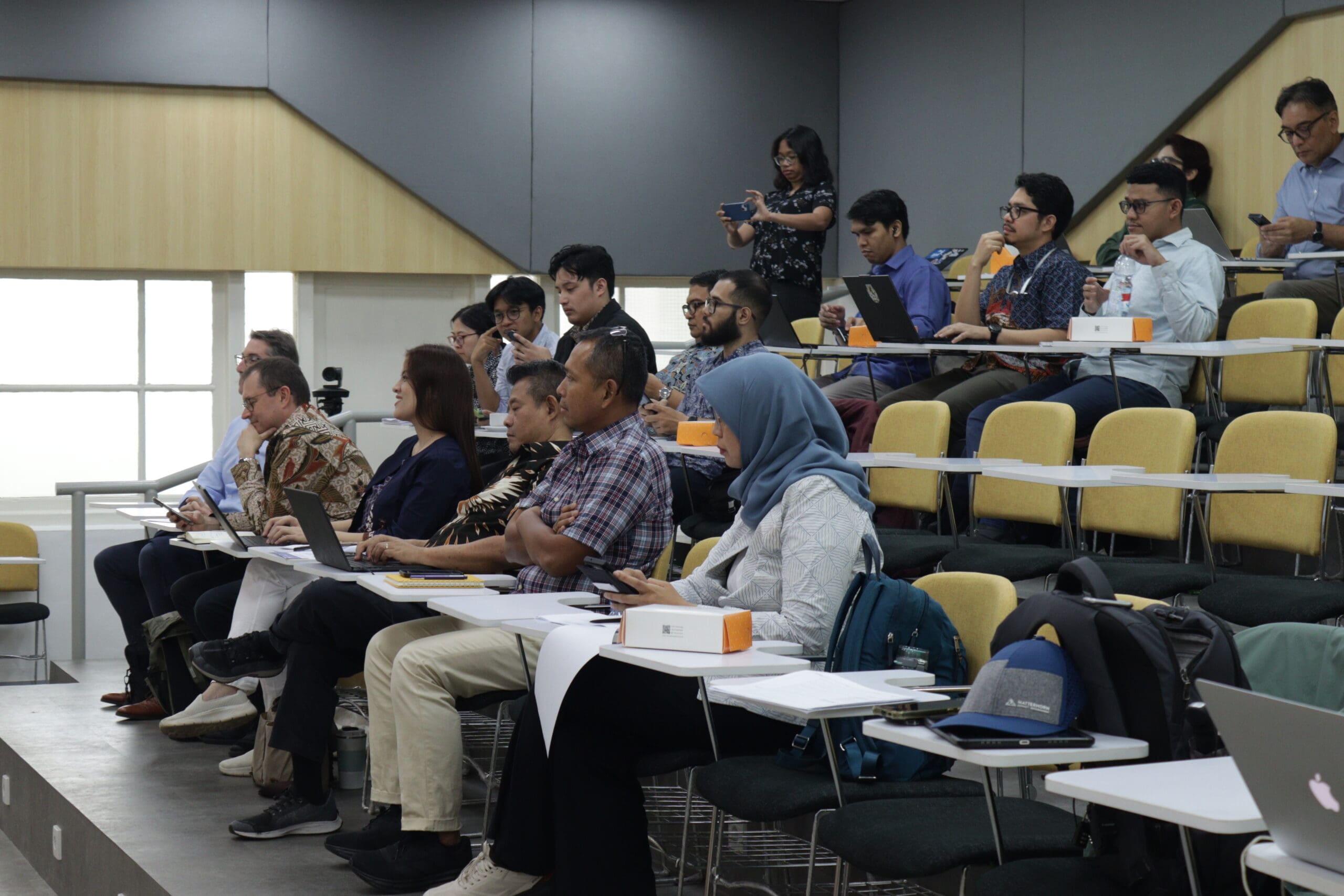
Participants at the EASE focus group discussion in Jakarta, 5 November, 2025. Photo: I-CLIMB
However, he advised against implementing a robust carbon emissions–based taxation system as a first step, highlighting Indonesia’s ongoing struggle to reduce fossil fuel subsidies. Simultaneously taxing and subsidising fossil fuel is self-defeating and would create inconsistencies in the taxation system.
A feasible starting point, Rus’an noted, would be a fuel-based carbon tax. This mechanism would allow for a gradual transition while minimising the burdens on isolated regions that are dealing with energy insecurity. At the same time, revenues could be channelled into these regions to improve energy access.
During the discussion, participants highlighted the challenges involved in evaluating climate justice and adaptation dimensions due to a lack of spatial data. Assessing distributional impacts, such as gender-based obstacles, requires a specific dataset. It was agreed that future workshops could help scope data and develop GESI criteria.
To ensure that women and vulnerable groups can participate meaningfully in the modelling and policy-making process, future workshops for these groups should focus on education around carbon pricing topics and support with public speaking skills. This would allow participants to voice their needs, share their perspectives, and become leaders in their communities.
Importantly, to ensure that these modelling tools and scenarios contribute to just transitions in Indonesia and beyond, the results should be shared with advocacy groups to strengthen and underpin their messaging.
Find all presentation materials here.
Related Posts
Stay Informed and Engaged
Subscribe to the Just Energy Transition in Coal Regions Knowledge Hub Newsletter
Receive updates on just energy transition news, insights, knowledge, and events directly in your inbox.